
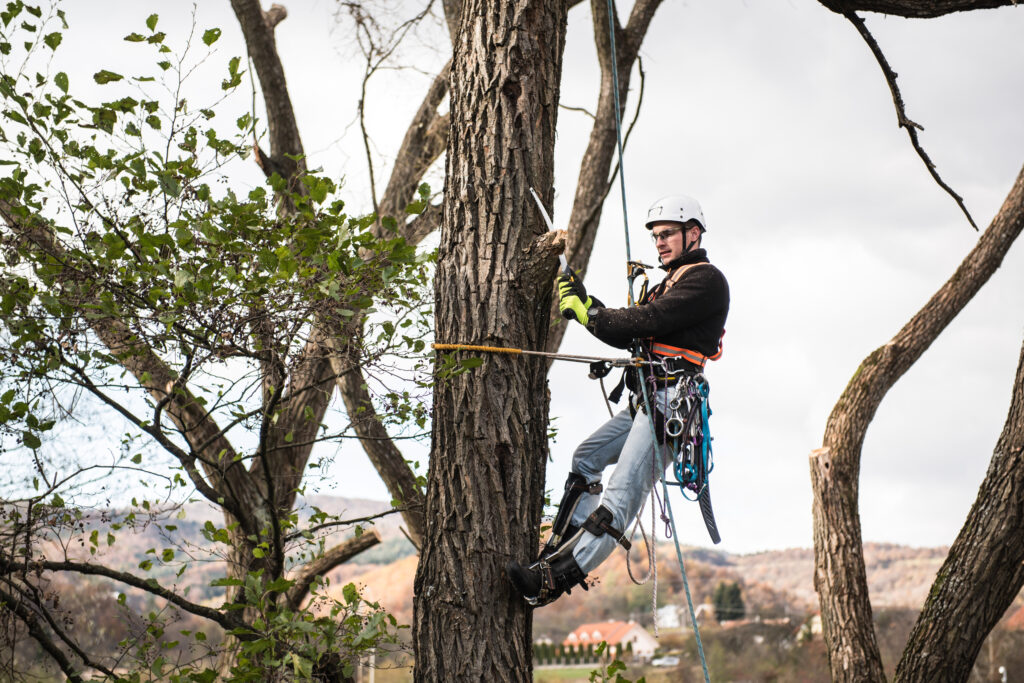
Qualified Arborists Melbourne document their findings in a written report supported by photographs, site observations, measurements, and professional judgement. This documentation helps homeowners, businesses, councils, insurers, and developers make informed decisions about tree pruning Melbourne, ongoing monitoring, or tree removal Melbourne. In this guide, we’ll explain what a Tree Risk Assessment report includes, why documentation matters, and how professional arborists ensure their recommendations are clear, objective, and defensible.
Quick Summary
A professional Tree Risk Assessment report typically documents:
- Tree species
- Tree location
- Tree dimensions
- Overall health
- Structural condition
- Root condition
- Visible defects
- Site conditions
- Potential targets
- Risk level
- Recommended actions
- Supporting photographs
The purpose is to provide an accurate record of the tree’s condition and explain why specific management recommendations have been made.
Table of Contents
- What Is a Tree Risk Assessment Report?
- Why Documentation Is Important
- Information Collected Before the Inspection
- Recording Tree Health
- Documenting Structural Defects
- Assessing the Root Zone
- Recording Site Conditions
- Photographs and Supporting Evidence
- Risk Ratings and Professional Recommendations
- Arborist Reports for Councils and Insurance
- Australian Standards and Best Practice
- Common Mistakes in Tree Assessments
- Frequently Asked Questions
- Final Thoughts
What Is a Tree Risk Assessment Report?
A Tree Risk Assessment report is a written record of a professional arborist’s inspection and findings.
It explains:
- What was inspected
- What defects were identified
- The level of risk presented
- Why certain recommendations have been made
- Whether the tree can be retained safely
The report provides a clear, evidence-based assessment rather than relying on assumptions or opinions.
For many property owners, it becomes an important document when making decisions about tree management or applying for council approval.
Why Documentation Is Important
Good documentation protects everyone involved.
It helps:
- Property owners understand the condition of their trees
- Councils assess permit applications
- Builders plan around existing trees
- Insurance companies review claims
- Future arborists compare changes over time
Perhaps most importantly, it creates a permanent record of the tree’s condition on the day it was inspected.
Information Collected Before the Inspection
Every assessment begins with basic site information.
This usually includes:
- Property address
- Inspection date
- Client details
- Purpose of the assessment
- Weather conditions if relevant
The arborist also records the location of each tree so there is no confusion about which tree the report refers to.
On larger properties, trees may be numbered or mapped.
Recording Tree Details
Each tree is individually identified.
Information commonly includes:
Species Identification
Correct identification is essential because different species have different growth habits, structural characteristics, and expected life spans.
Examples include:
- River Red Gum
- Spotted Gum
- Lemon-Scented Gum
- English Oak
- Plane Tree
- Canary Island Date Palm
Tree Dimensions
Measurements may include:
- Approximate height
- Trunk diameter
- Crown spread
- Estimated age class
These details help establish the scale of the tree and assist with future inspections.
Recording Tree Health
Professional arborist services Melbourne assess overall vitality rather than relying on a single symptom.
Observations may include:
- Leaf colour
- Leaf size
- Canopy density
- New growth
- Deadwood
- Pest activity
- Disease symptoms
The arborist records both positive observations and areas of concern.
For example:
“Canopy displays good density with normal seasonal growth. Minor deadwood observed in upper eastern canopy.”
This provides a balanced assessment rather than simply listing defects.
Documenting Structural Defects
Structural condition is one of the most important sections of any Tree Risk Assessment.
The arborist records observations such as:
- Trunk cracks
- Cavities
- Included bark
- Weak branch unions
- Previous pruning wounds
- Storm damage
- Leaning
- Stem movement
- Decay
Each defect is described in context.
Rather than stating “tree is dangerous,” the report explains:
- Where the defect occurs
- Its extent
- How it affects structural integrity
- Whether it increases the likelihood of failure
Assessing the Root Zone
Many tree failures originate below ground.
A professional inspection includes observations of:
- Root flare
- Soil condition
- Root damage
- Root plate movement
- Drainage
- Soil compaction
- Evidence of fungal decay
The arborist also records nearby activities that may have affected the roots, such as:
- Excavation
- Driveway construction
- Landscaping
- Trenching
- Changes to ground level
Recording Site Conditions
A tree cannot be assessed in isolation.
The surrounding environment plays a major role in determining risk.
Typical observations include:
- Distance from buildings
- Nearby roads
- Pedestrian traffic
- Driveways
- Schools
- Parks
- Neighbouring properties
- Powerlines
The report explains how these surroundings influence the consequences if part of the tree were to fail.
Photographs and Supporting Evidence
Photographs form an important part of professional documentation.
Images commonly show:
- The entire tree
- Structural defects
- Root zone
- Fungal growth
- Cracks
- Dead branches
- Site conditions
- Nearby targets
Photographs help property owners and councils understand the arborist’s findings without needing to inspect the tree themselves.
Where appropriate, annotated photographs may be included to highlight specific defects.
Risk Ratings and Professional Recommendations
After documenting the inspection findings, the arborist evaluates the level of risk.
Rather than making vague statements, recommendations are usually specific and practical.
Examples include:
No Action Required
The tree is healthy and requires routine monitoring only.
Tree Pruning
Professional Tree Pruning Melbourne to remove deadwood, reduce canopy weight, or improve structural balance.
Ongoing Monitoring
Follow-up inspections after 12 or 24 months.
Further Investigation
Where additional assessment is needed before final recommendations can be made.
Tree Removal
Professional tree removal Melbourne may be recommended when the likelihood of failure and potential consequences create an unacceptable level of risk.
Each recommendation is supported by the observations recorded during the inspection.
Arborist Reports for Councils and Insurance
A Tree Risk Assessment often forms part of a broader Arborist Report.
These reports may be required for:
- Council tree removal applications
- Planning permits
- Development Applications
- Building approvals
- Insurance claims
- Legal matters
- Neighbour disputes
Because these reports may be reviewed by multiple parties, they need to be accurate, objective, and professionally prepared.
Australian Standards and Professional Best Practice
Qualified arborists prepare assessments using recognised arboricultural principles and Australian Standards where appropriate.
AS 4373 – Pruning of Amenity Trees
Supports recommendations relating to:
- Structural pruning
- Crown reduction
- Tree preservation
AS 4970 – Protection of Trees on Development Sites
Provides guidance when documenting:
- Tree Protection Zones
- Root management
- Construction impacts
- Tree retention
Professional reports also draw on current arboricultural research, practical field experience, and accepted risk assessment methodologies.
Real-World Example
A body corporate contacted Banyan Tree Care after residents raised concerns about a mature gum tree beside a shared driveway.
During the inspection, our arborist documented:
- The species and dimensions of the tree.
- Moderate canopy density with good seasonal growth.
- A large cavity at the base of the trunk.
- Fungal fruiting bodies indicating advanced decay.
- Heavy pedestrian and vehicle traffic beneath the canopy.
- Photographs showing the extent of the decay and the location of nearby parking spaces.
Although the tree appeared healthy from a distance, the documented evidence demonstrated that the structural integrity of the trunk had been significantly compromised. Based on the likelihood of failure and the potential consequences, tree removal Melbourne was recommended.
On another property, a mature eucalyptus displayed minor deadwood and a dense canopy but no significant structural defects. The Tree Risk Assessment documented good trunk integrity, stable roots, and healthy growth. Rather than recommending removal, the report advised tree pruning Melbourne and reinspection after two years.
These examples show how professional documentation supports transparent, evidence-based decision making.
Common Mistakes in Tree Assessments
Professional documentation helps avoid assumptions that can lead to poor decisions.
Common mistakes include:
- Judging a tree by appearance alone.
- Failing to inspect the root zone.
- Ignoring surrounding targets.
- Overlooking fungal fruiting bodies.
- Not recording photographs.
- Providing recommendations without supporting evidence.
- Confusing tree health with structural safety.
A properly documented assessment provides a complete picture rather than relying on a single observation.
Frequently Asked Questions
1. What is included in a Tree Risk Assessment report?
Most reports include tree identification, health, structural condition, root assessment, site observations, photographs, identified defects, risk evaluation, and management recommendations.
2. Why are photographs included?
Photographs provide visual evidence of the tree’s condition and help explain the arborist’s recommendations to property owners, councils, insurers, and other stakeholders.
3. Can a Tree Risk Assessment be used for council applications?
Yes. Many councils accept professionally prepared assessments or Arborist Reports as supporting documentation for tree-related applications.
4. Does every tree need a written report?
Not always. Routine inspections may not require a formal report, but written documentation is recommended where safety, council approvals, insurance, or legal matters are involved.
5. How detailed is a professional report?
The level of detail depends on the purpose of the assessment, but professional reports are typically thorough enough to explain the arborist’s observations, reasoning, and recommendations.
6. Can a report recommend monitoring instead of removal?
Yes. Many assessments conclude that a tree can be safely retained with periodic inspections or maintenance rather than immediate removal.
7. Are measurements important?
Yes. Recording tree dimensions helps identify the tree accurately and provides a reference point for future inspections.
8. Can reports identify hidden decay?
Some defects can be identified during a visual inspection, while others may require further investigation if hidden decay is suspected.
9. How long is a Tree Risk Assessment valid?
Tree conditions can change over time. Reports represent the tree’s condition at the time of inspection, and follow-up assessments may be recommended depending on the level of risk.
10. Who should prepare a Tree Risk Assessment?
A qualified arborist Melbourne with experience in tree inspections, risk assessment, and report writing should carry out the assessment and prepare the documentation.
Final Thoughts
A professional Tree Risk Assessment is much more than a checklist. It is a carefully documented evaluation that records the condition of a tree, explains the reasoning behind management recommendations, and provides a reliable basis for decision making. Whether the outcome is routine maintenance, tree pruning Melbourne, ongoing monitoring, or tree removal Melbourne, detailed documentation ensures recommendations are transparent, evidence-based, and capable of standing up to scrutiny from councils, insurers, developers, and property owners alike.
At Banyan Tree Care, we prepare detailed Tree Risk Assessments and Arborist Reports for residential properties, commercial sites, schools, body corporates, builders, developers, and councils across Melbourne. Our experienced team combines practical field experience with recognised arboricultural standards to deliver clear, professional documentation that supports informed decisions and responsible tree management.
If you need a Tree Risk Assessment or Arborist Report for a tree on your property, contact Banyan Tree Care on 0432 277 627 We’ll provide a thorough assessment, practical recommendations, and documentation you can rely on.