
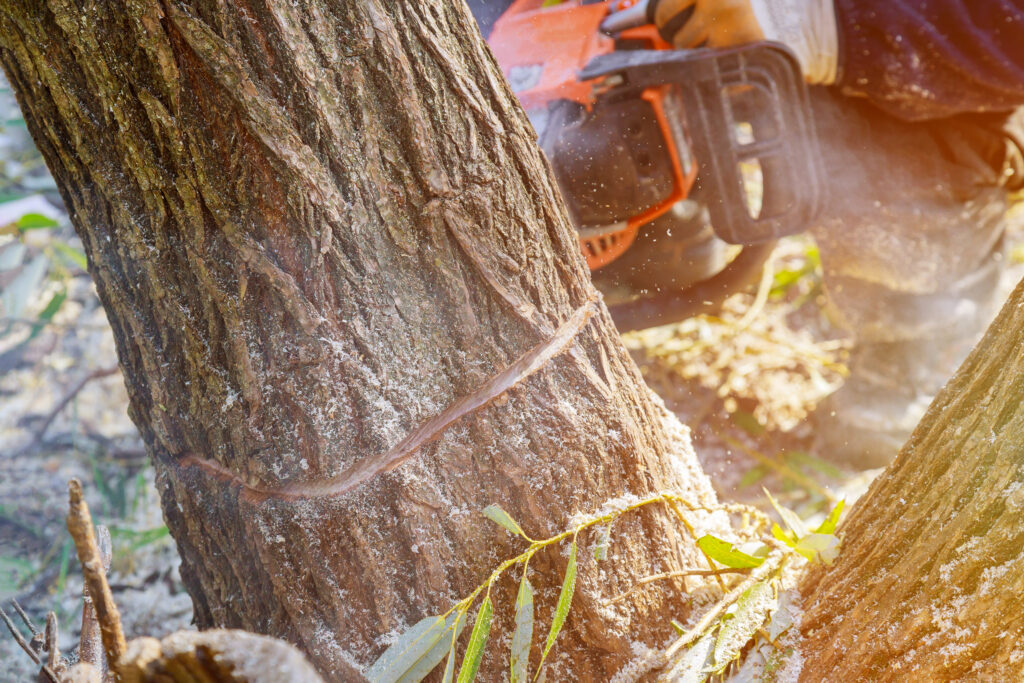
A tree growing close to your home can add shade, privacy, and value to your property, but it can also become a serious hazard if it develops structural defects or declines in health. The challenge is that many dangerous trees show few obvious signs until they fail. That’s why qualified arborists Melbourne don’t judge a tree by appearance alone. They assess its health, structure, root system, surroundings, and the likelihood of failure before deciding whether it requires tree pruning Melbourne, ongoing monitoring, or Tree Removal Melbourne. In this guide, we’ll explain how professionals assess tree risk, what warning signs homeowners should look for, and when it’s time to arrange a Tree Risk Assessment.
Quick Summary
If you have a mature tree near your home, regularly check for:
- Dead or hanging branches
- Cracks in the trunk
- Sudden leaning
- Mushrooms or fungi near the base
- Exposed or damaged roots
- Hollow sections in the trunk
- Sparse or dying canopy
- Branches overhanging your roof
- Storm damage
While these signs may indicate increased risk, only a qualified arborist can determine whether the tree requires pruning, monitoring, structural support, or removal.
Table of Contents
- Why Tree Risk Assessment Is Important
- What Makes a Tree Dangerous?
- Step 1: Look at the Overall Tree Health
- Step 2: Inspect the Trunk
- Step 3: Check the Root System
- Step 4: Assess Large Branches
- Step 5: Consider the Tree’s Location
- Step 6: Think About the Tree Species
- Step 7: Consider Recent Weather Events
- When to Call a Qualified Arborist
- What Happens During a Professional Tree Risk Assessment?
- Common Mistakes Homeowners Make
- Frequently Asked Questions
- Final Thoughts
Why Tree Risk Assessment Is Important
Trees naturally change as they grow.
Some changes are harmless.
Others increase the likelihood of failure.
A Tree Risk Assessment helps determine:
- Whether the tree is healthy
- Whether structural defects are developing
- Whether nearby buildings or people are at risk
- Whether maintenance can reduce the risk
- Whether tree removal Melbourne is necessary
The goal isn’t to remove every tree near a house. The goal is to identify genuine hazards before they become emergencies.
What Makes a Tree Dangerous?
A dangerous tree is one that has both:
- A reasonable likelihood of failure.
- A target that could be damaged if it fails.
For example:
- A tree with minor decay in the middle of a paddock may present very little risk.
- The same tree leaning over a bedroom or driveway requires much closer attention.
Professional arborists assess both the condition of the tree and what could be affected if it fails.
Step 1: Look at the Overall Tree Health
Begin by standing back and looking at the entire tree.
Ask yourself:
- Is the canopy full and healthy?
- Are leaves normal for the season?
- Is new growth present?
- Are large sections dead?
Warning signs include:
- Thin canopy
- Extensive dead branches
- Premature leaf drop
- Discoloured foliage
- Sections of the tree dying back
Poor health doesn’t automatically mean the tree is dangerous, but it does justify a closer inspection.
Step 2: Inspect the Trunk
The trunk provides most of the tree’s structural strength.
Look for:
- Long vertical cracks
- Splits
- Cavities
- Loose bark
- Hollow areas
- Fungal growth
- Large pruning wounds
Trees with significant trunk defects should be inspected by a qualified arborist Melbourne as soon as possible.
Step 3: Check the Root System
Many serious tree failures begin below ground.
Inspect the area around the base for:
- Soil lifting
- Exposed roots
- Damaged roots
- Mushrooms
- Root decay
- Recent excavation
Construction, new driveways, retaining walls, or trenching can all damage roots without immediately affecting the canopy.
Step 4: Assess Large Branches
Large branches often fail before the entire tree does.
Look for:
- Dead limbs
- Cracks where branches join the trunk
- Hanging branches
- Heavy limbs extending over the roof
- Weak branch attachments
Professional Tree Pruning Melbourne can often remove hazardous branches while retaining the tree.
Step 5: Consider the Tree’s Location
The level of risk depends heavily on what surrounds the tree.
Trees deserve closer attention when they are located near:
- Houses
- Garages
- Swimming pools
- Children’s play areas
- Driveways
- Public footpaths
- Neighbouring properties
- Powerlines
The closer the tree is to valuable targets, the more important regular inspections become.
Step 6: Think About the Tree Species
Different tree species behave differently.
For example:
Eucalyptus
Some gum trees naturally shed branches, particularly during hot weather.
Palm Trees
Palms don’t usually fail in the same way as broadleaf trees, but neglected fronds can become hazards.
Deciduous Trees
These should be assessed with seasonal changes in mind, as winter dormancy can make them appear unhealthy when they are not.
Understanding the characteristics of each species is one reason why professional assessments are so valuable.
Step 7: Consider Recent Weather Events
Many tree failures occur after:
- Strong winds
- Heavy rain
- Extended drought
- Lightning strikes
- Severe storms
Even if the tree still looks healthy, hidden damage may include:
- Split limbs
- Root movement
- Internal fractures
- Increased lean
If your property has experienced severe weather, it’s worth arranging an inspection, especially for large mature trees.
Signs That Require Immediate Attention
Contact a qualified arborist promptly if you notice:
- A tree leaning suddenly
- Large branches falling
- Cracks appearing in the trunk
- Mushrooms growing around the base
- Exposed roots after heavy rain
- Soil lifting around the root plate
- Branches touching powerlines
- A tree resting on another tree
These conditions can indicate an increased likelihood of failure and may require urgent attention or emergency tree removal Melbourne.
What Happens During a Professional Tree Risk Assessment?
A qualified arborist services Melbourne provider will assess far more than what is visible from the ground.
The inspection typically includes:
Tree Health
- Canopy condition
- Leaf quality
- New growth
- Pest activity
- Disease symptoms
Structural Assessment
- Trunk integrity
- Branch attachments
- Cavities
- Decay
- Previous pruning
Root Zone Assessment
- Root health
- Soil condition
- Drainage
- Construction impacts
- Root stability
Site Assessment
The arborist also considers:
- Buildings
- Driveways
- Pedestrian access
- Neighbouring properties
- Vehicle traffic
- Powerlines
This comprehensive approach allows recommendations to be based on evidence rather than assumptions.
Can a Dangerous Tree Be Saved?
Sometimes.
Depending on the defects identified, an arborist may recommend:
- Structural pruning
- Crown reduction
- Crown thinning
- Deadwood removal
- Cabling or bracing
- Ongoing monitoring
- Soil improvement
The objective is always to retain healthy trees wherever the risk can be managed.
Only when the level of risk remains unacceptable will tree removal Melbourne generally be recommended.
Australian Standards and Best Practice
Professional arborists follow recognised industry standards where appropriate.
AS 4373 – Pruning of Amenity Trees
Guides:
- Structural pruning
- Crown reduction
- Tree preservation
- Long-term tree health
AS 4970 – Protection of Trees on Development Sites
Supports:
- Tree Protection Zones
- Root management
- Construction planning
- Tree retention during development
These standards help ensure tree management decisions are based on accepted arboricultural practice.
Common Mistakes Homeowners Make
Many tree-related emergencies could have been avoided.
Common mistakes include:
- Assuming green leaves mean the tree is safe.
- Ignoring fungal growth at the base.
- Waiting until branches begin falling.
- Cutting major roots during landscaping.
- Choosing aggressive tree lopping instead of professional pruning.
- Never inspecting mature trees near the house.
- Hiring contractors who recommend removal without carrying out a proper assessment.
Routine inspections by experienced arborists help identify these issues before they become major hazards.
Frequently Asked Questions
1. How close is too close for a tree to be near a house?
There isn’t a single distance that applies to every tree. The species, mature size, root system, and structural condition all influence the level of risk.
2. Does a healthy-looking tree still need inspection?
Yes. Hidden decay, root damage, and structural defects may not be visible from the outside.
3. Should I worry about a leaning tree?
A long-standing natural lean isn’t always a problem. A sudden or increasing lean, especially after heavy rain or storms, should be assessed immediately.
4. Are mushrooms around the base of a tree a bad sign?
They can be. Some fungi indicate root or trunk decay, which may reduce structural stability.
5. Can pruning reduce tree risk?
Yes. Professional tree pruning Melbourne can remove deadwood, reduce branch weight, and improve canopy structure, often reducing the likelihood of branch failure.
6. How often should mature trees be inspected?
Healthy mature trees near homes should generally be inspected every two to three years, while higher-risk trees may require annual assessments.
7. What is a Tree Risk Assessment?
A Tree Risk Assessment is a professional evaluation of a tree’s health, structural integrity, likelihood of failure, and the potential consequences if it fails.
8. Can root damage make a healthy tree dangerous?
Absolutely. Root damage is one of the leading causes of tree instability and whole-tree failure.
9. Should I remove every large tree close to my home?
No. Many large trees remain safe for decades with proper maintenance. A professional assessment should always come before deciding on removal.
10. Who should assess a potentially dangerous tree?
A qualified arborist Melbourne with experience in Tree Risk Assessments is best placed to evaluate the tree and recommend appropriate management.
Final Thoughts
Assessing the risk of a tree near your home involves much more than looking for dead branches or a leaning trunk. Tree health, structural condition, root stability, species characteristics, site conditions, and nearby targets all play an important role in determining whether a tree presents a genuine hazard. Regular inspections by a qualified arborist allow problems to be identified early, giving you more options to preserve valuable trees while protecting your family and property.
At Banyan Tree Care, we provide professional Tree Risk Assessments, arborist services Melbourne, tree pruning Melbourne, Arborist Reports, and safe tree removal Melbourne for residential, commercial, and development properties. Our recommendations are based on thorough inspections, Australian arboricultural best practice, and years of practical experience managing Melbourne’s diverse urban trees. If you have a mature tree near your home and would like peace of mind, contact Banyan Tree Care on 0432 277 627 to arrange a professional assessment. A simple inspection today could prevent costly damage and help preserve a healthy tree for many years to come.