
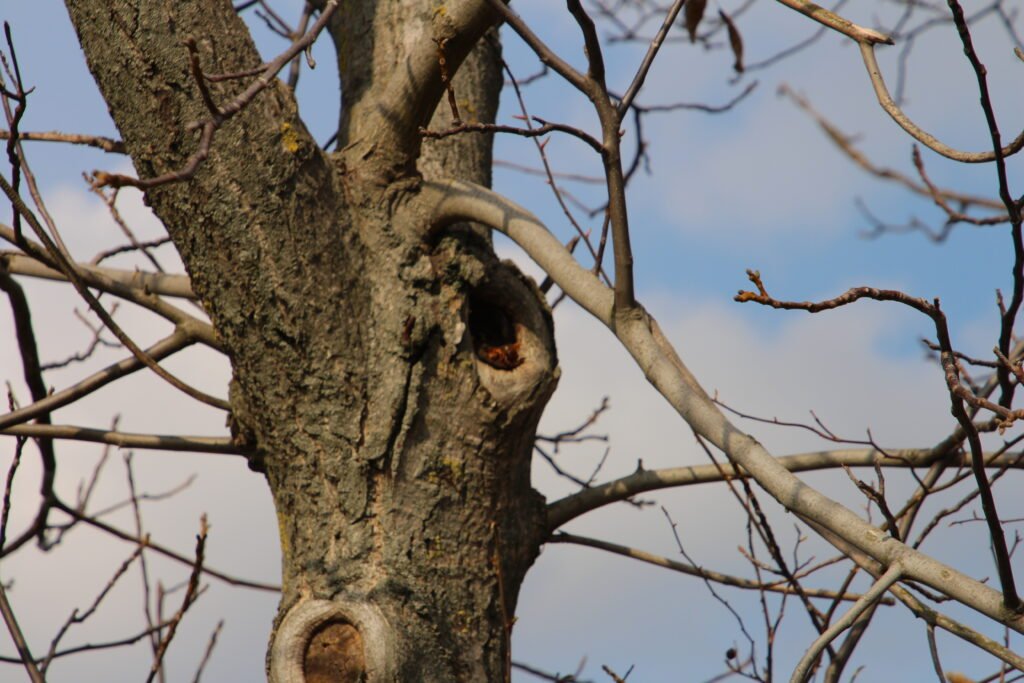
The safest approach is to speak with your neighbour, collect photos from your side of the fence, and contact a qualified arborist if there are clear signs of risk. A tree may look worrying because it is leaning, dropping branches, cracked, dead, storm damaged or growing over your property. Some issues are urgent. Others need a professional Tree Risk Assessment before anyone decides on pruning or removal.
In Melbourne, neighbour tree concerns are common because many homes share close boundaries, narrow driveways, established gardens and mature canopy trees.
Quick Summary
If a neighbour’s tree looks unsafe, you should:
- Take photos from your property
- Avoid standing under suspect branches
- Speak with your neighbour politely
- Check for cracks, deadwood, fungi or leaning
- Avoid cutting major branches yourself
- Arrange an arborist inspection if possible
- Keep records of messages and photos
- Contact council if the tree may be protected
- Seek urgent tree services if there is immediate danger
- Get written arborist advice if risk is disputed
Do not ignore a tree that appears unstable, especially if it overhangs your house, driveway, fence, garage or outdoor area.
Table of Contents
- Signs a Neighbour’s Tree May Be Dangerous
- What You Can Check From Your Property
- How to Speak With Your Neighbour
- Can You Cut Overhanging Branches?
- When an Arborist Report May Help
- What if the Tree Is Urgent or Storm Damaged?
- Common Mistakes to Avoid
- FAQs
- Summary
- Call Banyan Tree Care
1. Signs a Neighbour’s Tree May Be Dangerous
A tree is not dangerous simply because it is large, messy or close to the boundary. The concern is whether it has defects that may increase the chance of branch failure or whole tree failure.
Warning signs include:
- Sudden leaning
- Large dead branches
- Cracks in the trunk
- Splitting between major stems
- Fungal growth near the base
- Soil lifting around roots
- Large branches hanging over your roof
- Repeated branch drop
- Hollow sections
- Storm-damaged limbs
- Broken branches caught in the canopy
- Roots disturbed by recent excavation
If several of these signs are present, the tree should be inspected by a qualified arborist.
2. What You Can Check From Your Property
You do not need to enter your neighbour’s property to observe obvious warning signs. Stay on your side of the boundary and take clear photos.
Useful photos include:
- The whole tree
- The leaning direction
- Branches over your property
- Cracks or splits visible from your side
- Dead branches
- Damage after storms
- Fungal growth if visible
- Any branch failures
- Distance to your house, fence or driveway
Photos help if you need to speak with your neighbour, council, insurance provider or an arborist.
Do not climb the tree, pull branches, cut roots, enter the neighbouring property or attempt your own inspection from unsafe positions.
3. How to Speak With Your Neighbour
Most tree disputes are easier when handled early and respectfully. Your neighbour may not realise the tree looks dangerous from your side.
A simple approach is best:
- Explain what you have noticed
- Share photos if helpful
- Avoid blaming or threatening
- Ask if they would consider an arborist inspection
- Suggest sharing the arborist’s findings
- Keep written records of the discussion
For example, you might say that you have noticed large dead branches over your driveway and you are concerned about safety. This is more effective than saying the whole tree must be removed.
A professional tree assessment can turn the conversation from opinion into evidence.
4. Can You Cut Overhanging Branches?
In many cases, property owners may be able to manage branches that overhang their side of the boundary, but there are limits. Council rules, protected tree controls, species, pruning severity and neighbour rights can all matter.
Before cutting, consider:
- Is the tree protected?
- Will pruning harm the tree?
- Are the branches large or high risk?
- Is access safe?
- Could the pruning create imbalance?
- Is council approval needed?
- Would an arborist be safer?
Minor trimming may be simple, but large branch removal should not be treated as basic gardening. Incorrect pruning can damage the tree, increase future risk and create neighbour conflict.
If the branch is large, cracked, over a roof or connected to a protected tree, get arborist advice first.
5. When an Arborist Report May Help
An Arborist Report may be useful when there is disagreement, council involvement, insurance concern or a genuine safety issue.
A report may include:
- Tree species
- Health and structure
- Visible defects
- Photos
- Risk observations
- Target areas below the tree
- Recommended pruning or removal
- Urgency level
- Notes about council approval
- Further investigation if required
For neighbour tree disputes, written arborist advice helps separate personal concern from professional assessment.
The report may not force your neighbour to act immediately, but it gives clear evidence that can support further discussion, council contact or insurance records.
6. What if the Tree Is Urgent or Storm Damaged?
If a neighbour’s tree has dropped a large limb, split, started leaning suddenly or is threatening your home, treat it as urgent.
You should:
- Keep people away from the area
- Move cars only if safe
- Take photos from a safe distance
- Contact your neighbour immediately
- Contact council if public safety is involved
- Call emergency tree services if there is immediate danger
- Contact relevant authorities if powerlines are involved
Do not attempt to remove large hanging branches yourself. Storm-damaged trees can be under tension and may move suddenly when cut.
If the tree is already resting on your property, roof, fence or driveway, professional help is usually required.
7. Common Mistakes to Avoid
Neighbour tree issues can become stressful. Avoid actions that make the situation worse.
Do not:
- Enter your neighbour’s property without permission
- Cut major limbs without advice
- Ignore large dead branches over high-use areas
- Assume every large tree is dangerous
- Demand removal without evidence
- Remove roots near the boundary
- Use tree lopping as a quick fix
- Forget council tree protection rules
- Delay action after storm damage
- Rely only on verbal opinions for serious risks
A calm, documented and professional approach usually gives the best outcome.
FAQs
1. What should I do first if my neighbour’s tree looks dangerous?
Take photos, note issues like leaning, cracks or dead branches, and speak to your neighbour politely. Suggest an arborist if near structures. If there’s immediate danger, keep clear and call urgent tree services.
2. Can I make my neighbour remove a dangerous tree?
Not directly. You need evidence and usually an arborist report. If risk is serious and unresolved, council or legal advice may be required, especially for protected trees.
3. Can I cut branches hanging over my property?
Minor pruning may be allowed, but large limbs or protected trees need caution. Always check safety, legal rules and consider an arborist before cutting.
4. Who pays for pruning a neighbour’s tree?
It depends on agreement and location of work. You may pay for minor overhanging branches, while owners may handle larger safety issues. Arborist advice helps clarify responsibility.
5. Should I contact council about a neighbour’s dangerous tree?
Yes, if it’s protected, on council land, or poses public risk. Council may request evidence. Arborist input often helps determine next steps.
6. When is a neighbour’s tree an emergency?
If it has fallen, split, is leaning suddenly, or threatens people, property or powerlines. Stay clear and call emergency tree services immediately.
Summary
If a neighbour’s tree looks dangerous, document the issue, speak with your neighbour and seek professional arborist advice where there are clear warning signs. Large dead branches, cracks, leaning, fungi, root movement and storm damage should not be ignored.
The best approach is evidence-based. A qualified arborist can inspect the tree, assess risk, recommend pruning or removal where needed, and prepare an Arborist Report if the issue involves council, insurance, construction or neighbour disputes.
Call Banyan Tree Care for Neighbour Tree Advice in Melbourne
If you are concerned about a neighbour’s tree overhanging your property or looking unsafe, Banyan Tree Care can inspect the situation and provide practical guidance.
We provide tree inspections, Tree Risk Assessments, Arborist Reports, neighbour tree assessments, storm damage inspections, pruning, emergency tree services, stump grinding and safe Tree Removal across Melbourne where required. Call Banyan Tree Care on 0432 277 627 to arrange a professional arborist assessment.