
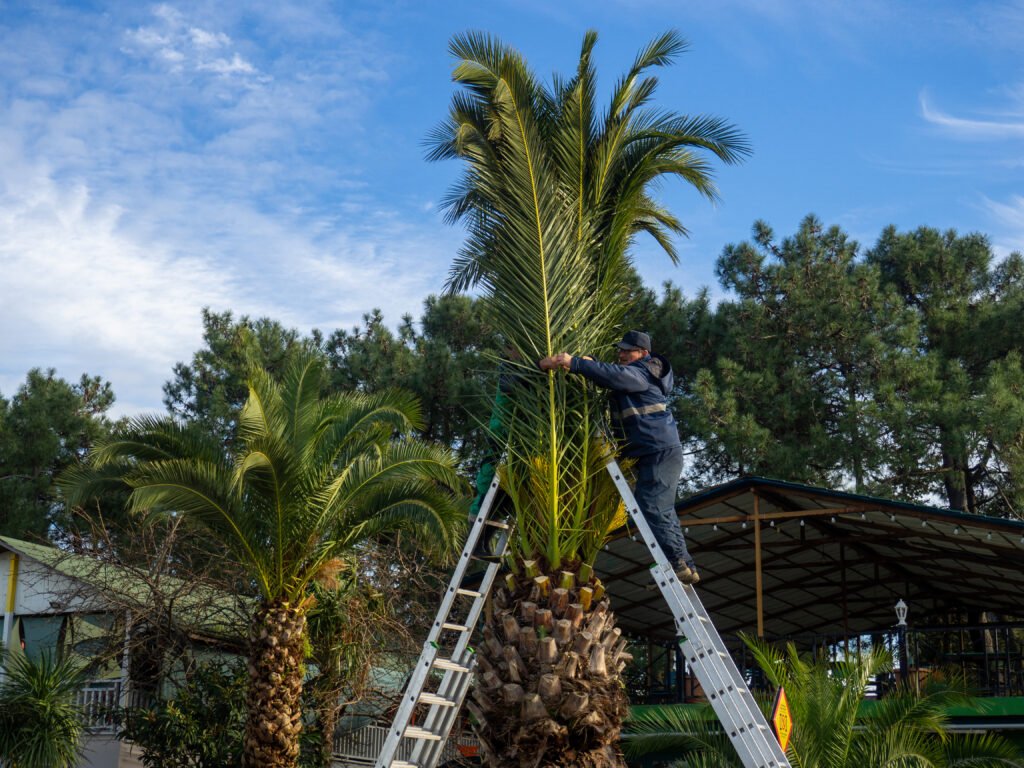
Arborists do not automatically prefer to cut down palm trees, and they do not automatically prefer to keep them either. A good arborist looks at the condition of the palm, its location, safety risks, long-term value, maintenance needs and whether the problem can be managed with proper palm tree care.
In many Melbourne properties, palms are kept because they provide height, screening, a tropical look and structure around pools, driveways and gardens. However, Palm Tree Removal may be recommended if the palm is dead, unstable, diseased, repeatedly dropping heavy fronds, damaging nearby structures or growing in the wrong place. The right decision depends on evidence, not personal preference.
Quick Summary
An arborist may recommend keeping a palm if:
- The crown is healthy
- The trunk is stable
- Fronds can be maintained safely
- Roots are not causing major issues
- The palm suits the space
- The risk level is low
- Palm tree pruning can manage the problem
An arborist may recommend palm tree removal if:
- The palm is dead or dying
- The trunk is soft, cracked or unstable
- The crown has failed
- Heavy fronds are falling
- The palm is too close to a pool, fence or building
- Roots or trunk growth are causing damage
- Ongoing maintenance is no longer practical
Table of Contents
- Do Arborists Try to Save Palms First?
- How Palms Are Different From Other Trees
- When Palm Tree Care Is Enough
- When Palm Tree Removal Is Recommended
- Why Over-Pruning Palms Can Be Harmful
- Cost, Safety and Access Considerations
- Common Mistakes to Avoid
- FAQs
- Summary
- Call Banyan Tree Care
1. Do Arborists Try to Save Palms First?
A responsible arborist will usually assess whether a palm can be retained safely before recommending removal. This may involve checking the crown, trunk, roots, frond condition, soil, location and surrounding targets.
Retention may be suitable when the palm is healthy, stable and only needs maintenance. For example, dead fronds, fruit stalks or hanging fronds may be removed without cutting the whole palm down.
However, arborists are also responsible for safety. If a palm is structurally unsafe, dead or located where failure could damage people or property, removal may be the best option.
Good advice should explain why the palm can stay or why it should go.
2. How Palms Are Different From Other Trees
Palms are not managed exactly like normal branching trees. Most palms grow from a central growing point at the top, often called the crown or spear area. If this growing point is badly damaged, the palm may not recover.
Palms also do not develop large spreading branches like gum trees or shade trees. Their main maintenance issues are usually:
- Dead fronds
- Hanging fronds
- Fruit and seed litter
- Crown health
- Trunk stability
- Root space
- Height and access
- Clearance around buildings
Because palms grow differently, pruning options are more limited. You cannot reduce a palm’s height through normal pruning and expect it to regrow from lower down. If height is the main problem, palm tree removal may be the only practical solution.
3. When Palm Tree Care Is Enough
Palm tree care may be enough when the palm is healthy but creating minor maintenance or appearance issues.
An arborist may recommend:
- Removing dead fronds
- Removing hanging fronds
- Removing fruit stalks
- Cleaning up storm-damaged fronds
- Improving watering
- Adding mulch correctly
- Checking drainage
- Monitoring crown health
- Inspecting for pests or disease
This is common around pools, courtyards, apartment blocks and commercial landscapes where palms drop fronds or fruit.
Regular palm maintenance can reduce mess, improve appearance and lower the chance of heavy dead fronds falling. It can also help identify early signs of decline before the palm becomes unsafe.
4. When Palm Tree Removal Is Recommended
Palm tree removal may be recommended when the palm cannot be made safe or practical to retain.
Removal may be needed if:
- The palm is dead
- The crown has collapsed
- The central spear has failed
- The trunk is soft or decayed
- The palm is leaning dangerously
- Roots have been severely damaged
- Fronds are repeatedly falling near people
- The palm is damaging structures
- It is growing too close to a pool or wall
- Access for safe maintenance is poor
- The palm is too tall for its location
A dead or unstable palm can become dangerous because tall trunks and heavy fronds may fail without much warning. If the palm is close to a house, driveway, fence, public area or neighbouring property, it should be inspected promptly.
5. Why Over-Pruning Palms Can Be Harmful
Some homeowners ask for palms to be heavily stripped so they look cleaner. This can harm the palm.
Over-pruning may cause:
- Reduced energy production
- More heat stress
- Sunburn on exposed tissue
- Weaker crown appearance
- Slower recovery
- Greater stress during dry periods
- Higher risk of decline
Green fronds are important because they help the palm produce energy. Removing too many can make the palm weaker, especially during hot Melbourne summers or dry conditions.
Professional palm tree pruning usually focuses on removing dead, dying, dangerous or clearly unwanted material. A healthy palm should not be stripped just for appearance.
6. Cost, Safety and Access Considerations
Sometimes the decision is not only about tree health. Safety, access and long-term cost also matter.
Palm work may become difficult when:
- The palm is very tall
- Access is narrow
- The palm is beside a pool
- The trunk is close to a fence
- Fronds hang over roofs or glass areas
- The palm is near powerlines
- There is no safe climbing access
- The trunk is too unstable to climb
In some cases, ongoing pruning every year may cost more over time than removing a poorly located palm and replacing it with a more suitable plant.
An arborist can explain whether maintenance is realistic or whether removal is the more practical long-term option.
7. Common Mistakes to Avoid
Avoid these mistakes when deciding what to do with a palm:
- Assuming all palms should be removed
- Assuming all palms can be saved
- Removing too many green fronds
- Cutting into the trunk
- Trying to reduce palm height by topping
- Ignoring a soft or leaning trunk
- Delaying removal of a dead palm
- Letting fruit stalks create slip hazards
- Cutting tall fronds without equipment
- Choosing removal without checking council rules if relevant
The safest decision comes from a proper inspection, especially for tall palms or palms near structures.
FAQs
1. Do arborists usually try to save palm trees?
Arborists assess whether a palm can be safely retained before recommending removal. Healthy palms may only need pruning or care. If the palm is dead, unstable or high-risk, removal is advised. They should clearly explain the reasoning for either option.
2. Can palm tree pruning solve most palm problems?
Pruning fixes issues like dead fronds, hanging fronds, fruit stalks and clearance problems. It cannot fix height, trunk decay, crown failure or root instability. If structural issues exist, pruning may not help. An inspection determines whether maintenance or removal is needed.
3. Is it bad to remove green palm fronds?
Yes, removing too many green fronds can weaken a palm. They are essential for energy and growth. Proper pruning removes only dead, damaged or hazardous fronds. Over-pruning can stress the palm and reduce long-term health.
4. When should a palm tree be removed?
Removal is needed if the palm is dead, unstable, leaning, or damaging structures. It may also be required if it has outgrown its space or is unsafe to maintain. A professional assessment confirms if removal is the safest option.
5. Can a palm tree grow back after being cut down?
No, most palms do not regrow once the growing point is removed. Cutting the trunk stops growth permanently. This is why topping is never recommended. If height is an issue, removal and replacement is usually required.
6. Should I call an arborist or a palm removal company?
Call a palm removal company for simple, dead palms. For safety concerns, storm damage, or uncertain health, an arborist is best. They can decide if pruning, care or removal is needed. Banyan Tree Care offers both assessment and removal services.
Summary
Arborists do not have a fixed preference for cutting down or keeping palm trees. Their job is to assess the palm’s health, structure, location, safety and long-term practicality. Many palms can be retained with good palm tree care and regular pruning. Others need removal when they are dead, unstable, badly located or unsafe.
The best decision should protect people, property and the garden’s long-term value. If you are unsure, arrange a professional palm inspection before cutting heavily or booking removal.
Call Banyan Tree Care for Palm Tree Advice in Melbourne
If you are unsure whether your palm should be pruned, cared for or removed, Banyan Tree Care can inspect it and recommend the right next step.
We provide palm tree care, palm Tree Pruning in Melbourne, frond removal, palm inspections, storm damage checks, stump grinding and safe palm tree removal across Melbourne. Call Banyan Tree Care on 0432 277 627 to arrange a professional palm assessment.