
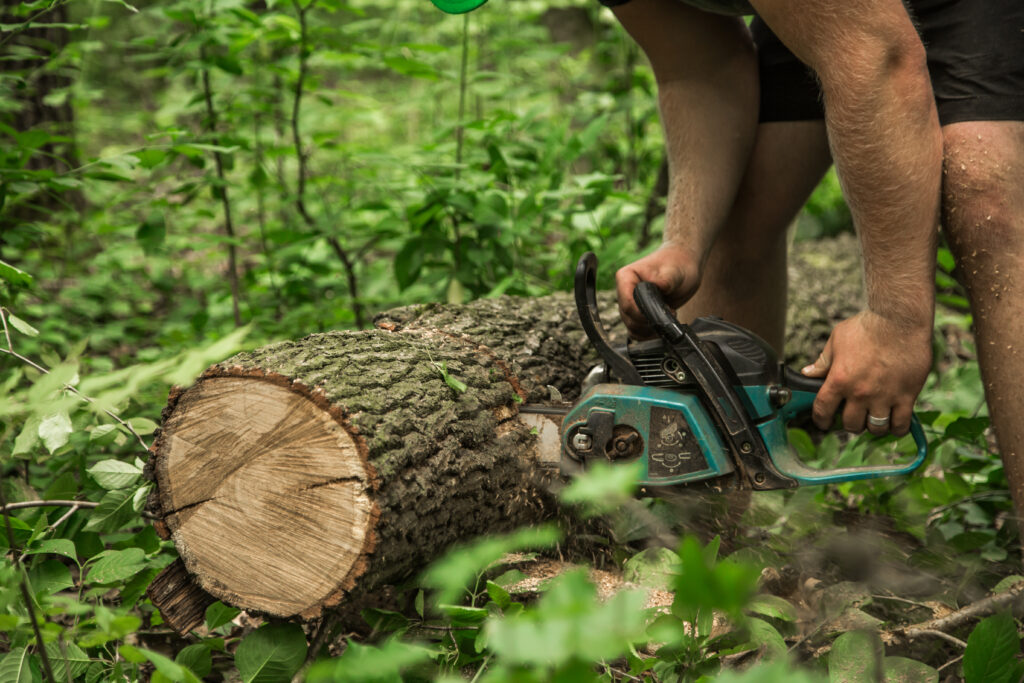
Arborists work with councils and developers by assessing trees before building work, preparing Arborist Reports, identifying which trees can be retained, advising on council permit requirements, protecting root zones during construction, and recommending safe tree removal where retention is not practical. Their role is to balance development needs with tree preservation, public safety, planning compliance, and long-term landscape value. In Melbourne, this is especially important because many residential, commercial and development sites contain mature trees, protected trees, native vegetation, gum trees, palms, neighbouring trees, and roots that may extend well beyond visible trunk lines.
A qualified arborist helps prevent costly mistakes before they happen. For developers, that can mean fewer planning delays and clearer construction conditions. For councils, it means better evidence for decision making. For property owners, it means the right trees are protected and unsafe trees are managed properly.
Quick Summary
Arborists help councils and developers by:
- Inspecting trees before planning or construction begins
- Preparing Arborist Reports for council applications
- Identifying protected trees and significant vegetation
- Assessing Tree Protection Zones
- Advising on root management
- Recommending tree retention, pruning or removal
- Supporting Development Applications
- Monitoring construction near retained trees
- Managing hazardous trees on building sites
- Helping reduce conflict between design plans and tree preservation
A professional arborist does not simply decide whether a tree should be cut down. They assess health, structure, safety, environmental value, planning constraints and construction impacts before giving recommendations.
Table of Contents
- Why Arborists Are Involved in Council and Development Work
- What Does an Arborist Do for Councils?
- What Does an Arborist Do for Developers?
- When Is an Arborist Report Needed?
- How Arborists Assess Trees on Development Sites
- Tree Protection Zones Explained
- Structural Root Zones and Root Management
- Tree Retention vs Tree Removal
- How Arborists Help With Council Tree Permits
- Arborists and Development Applications
- Protecting Trees During Construction
- Common Site Issues Arborists Identify
- Working With Builders, Architects and Engineers
- How Arborists Help Avoid Project Delays
- Australian Standards and Best Practice
- Common Mistakes Developers and Property Owners Make
- Real World Examples
- FAQs
- Summary
- Call Banyan Tree Care
1. Why Arborists Are Involved in Council and Development Work
Trees are often one of the biggest planning issues on a development site.
A site may appear simple at first, but once trees are assessed, several questions arise:
- Can the tree be removed?
- Is the tree protected by council?
- Will roots be affected by excavation?
- Can the design be adjusted to retain important trees?
- Is an Arborist Report required?
- Will pruning be enough?
- Does the tree pose a safety risk?
- Are neighbouring trees affected?
- Does the site contain native vegetation or habitat?
A qualified arborist provides the technical advice needed to answer these questions.
This matters because tree related problems can delay:
- Planning permits
- Building permits
- Demolition
- Excavation
- Driveway installation
- Unit developments
- Commercial construction
- Landscaping works
Early arborist advice helps councils, developers and property owners make informed decisions before plans are finalised.
2. What Does an Arborist Do for Councils?
Councils rely on arboricultural information to help assess tree related applications.
A council may need to know:
- Whether a tree is healthy
- Whether a tree is structurally safe
- Whether removal is justified
- Whether pruning is appropriate
- Whether a tree can survive proposed construction
- Whether replacement planting should be required
- Whether a Tree Protection Zone has been properly considered
A professional Arborist Report provides evidence that helps council officers make fair and consistent decisions.
For example, a homeowner may want to remove a large gum tree because it drops leaves and bark. A council may request an arborist report to confirm whether the tree is genuinely hazardous or whether maintenance is more appropriate.
In another case, a developer may want to build close to a mature tree. Council may require documentation showing how the tree will be protected during construction.
Arborists support council decision making by providing objective information, not emotional opinions.
3. What Does an Arborist Do for Developers?
For developers, arborists help manage risk, compliance and design constraints.
A consulting arborist may assist with:
- Pre-purchase site inspections
- Tree surveys
- Arborist Reports
- Tree retention recommendations
- Development impact assessments
- Tree Protection Plans
- Root mapping
- Supervision during excavation
- Advice on pruning or canopy clearance
- Recommendations for tree removal Melbourne where required
- Replacement planting advice
The earlier an arborist is involved, the better.
If the building design is completed before tree constraints are understood, the project may need costly redesigns later.
Developers often engage arborist services Melbourne during the early planning stage so architects, planners and engineers can design around important trees where practical.
4. When Is an Arborist Report Needed?
An Arborist Report may be required when a tree may be affected by removal, pruning, construction or development.
Common situations include:
- Applying to remove a protected tree
- Building near mature trees
- Subdividing land
- Developing townhouses or units
- Excavating near roots
- Installing a driveway
- Constructing retaining walls
- Managing storm damaged trees
- Assessing hazardous trees
- Responding to council requests
- Resolving neighbour tree disputes
- Supporting insurance or legal documentation
Not every tree requires a formal report, but where council, construction or risk is involved, proper documentation is often essential.
A verbal opinion is rarely enough for planning matters.
5. How Arborists Assess Trees on Development Sites
A development site tree assessment is more detailed than a basic tree quote.
The arborist usually records:
- Tree species
- Tree height
- Trunk diameter
- Canopy spread
- Age class
- Health
- Structural condition
- Useful life expectancy
- Retention value
- Root zone constraints
- Visible defects
- Site limitations
The arborist also considers whether the tree is suitable for retention in the future built environment.
A tree may be healthy today but unsuitable for retention if proposed works remove too much root area or place buildings too close to the trunk.
A good arborist does not only assess the tree as it stands today. They assess whether the tree can remain viable after the development is complete.
6. Tree Protection Zones Explained
A Tree Protection Zone, often called a TPZ, is the area around a tree that should be protected to help maintain tree health and stability during construction.
The TPZ is important because most damage to retained trees happens below ground.
Construction activity can damage trees through:
- Root cutting
- Soil compaction
- Excavation
- Trenching
- Stockpiling materials
- Changes to ground levels
- Machinery movement
- Chemical spills
- Altered drainage
A TPZ helps protect the roots, trunk and soil environment.
On development sites, arborists may recommend protective fencing around the TPZ before construction begins. They may also specify what activities are not permitted inside the zone.
This can include:
- No parking
- No material storage
- No excavation without approval
- No soil level changes
- No washout areas
- No trenching
- No heavy machinery access
Protecting the TPZ is one of the most important steps in retaining trees during development.
7. Structural Root Zones and Root Management
The Structural Root Zone, often called the SRZ, refers to the area close to the trunk that contains roots critical for tree stability.
This zone is especially important because damage close to the trunk can increase the risk of whole tree failure.
Arborists assess root impacts when proposed works include:
- Footings
- Basements
- Retaining walls
- Driveways
- Services
- Drainage lines
- Pools
- Decking
- Paving
- Excavation
Root management may involve:
- Non-destructive root investigation
- Minor design changes
- Pier and beam construction
- Hand excavation near roots
- Bridging over roots
- Root pruning under arborist supervision
- Changing service routes
- Increasing setbacks
Root damage is one of the most common reasons trees decline after construction.
The canopy may look healthy for years, while hidden root loss slowly affects stability and vitality.
8. Tree Retention vs Tree Removal
One of the biggest roles of an arborist is deciding whether a tree can be retained safely and practically.
A tree may be recommended for retention if:
- It is healthy
- It has good structure
- It has strong landscape value
- It provides shade and habitat
- It can tolerate proposed works
- Its root zone can be protected
- Risk can be managed through pruning or monitoring
A tree may be recommended for removal if:
- It is structurally unsafe
- It has severe decay
- It is dead or in irreversible decline
- It conflicts heavily with approved works
- Root loss would make it unstable
- It has low retention value
- It poses an unacceptable risk
Professional tree removal Melbourne should be recommended only when the reasoning is clear and supported by evidence.
A qualified arborist will usually consider alternatives before recommending removal.
Alternatives may include:
- Tree pruning Melbourne
- Canopy reduction
- Crown lifting
- Crown thinning
- Root sensitive design
- Structural support
- Construction exclusion zones
- Ongoing monitoring
9. How Arborists Help With Council Tree Permits
Many Melbourne councils have rules around tree removal and significant pruning.
Rules vary depending on the municipality and site conditions, so arborists should avoid making blanket claims.
Council approval may be relevant where:
- The tree is protected under local laws
- The tree is covered by a planning overlay
- Native vegetation controls apply
- The tree is on a heritage site
- The tree is considered significant
- Development works affect retained trees
An arborist can help by:
- Inspecting the tree
- Identifying defects
- Preparing an Arborist Report
- Explaining why removal or pruning is recommended
- Suggesting alternatives where suitable
- Providing photographs and technical information
- Responding to council queries where required
The arborist does not approve the permit. Council makes that decision.
The arborist provides professional evidence so council can assess the application properly.
10. Arborists and Development Applications
Development Applications often require tree information before approval can be granted.
An arborist may prepare documents such as:
- Preliminary Tree Assessment
- Arboricultural Impact Assessment
- Tree Protection Plan
- Tree Management Plan
- Tree Risk Assessment
- Construction supervision notes
- Arborist compliance reports
These documents help planners understand:
- Which trees are on site
- Which trees are proposed for retention
- Which trees may be removed
- How construction affects trees
- What protection measures are needed
- Whether the design is likely to damage important trees
For developers, this can reduce delays and strengthen the planning submission.
For councils, it improves clarity and makes assessment easier.
11. Protecting Trees During Construction
Tree protection does not end once the report is written.
On many sites, arborists may be required during construction.
They may supervise:
- Excavation near roots
- Installation of services
- Driveway preparation
- Footing works
- Root pruning
- TPZ fencing installation
- Removal of nearby trees
- Canopy pruning for clearance
- Works inside protected zones
Arborist supervision helps ensure the approved tree protection measures are actually followed on site.
This is important because many trees are damaged during small decisions made by workers who may not realise roots are being affected.
For example, storing bricks inside a Tree Protection Zone may seem harmless. In reality, the weight can compact soil and reduce oxygen available to roots.
12. Common Site Issues Arborists Identify
Qualified arborists often identify problems that are missed during early design.
Common site issues include:
- Trees too close to proposed building envelopes
- Roots extending beneath future driveways
- Neighbouring tree roots entering the site
- Large branches overhanging work zones
- Trees with hidden decay
- Protected trees not shown on plans
- Incorrect assumptions about palm tree removal
- Storm damaged trees requiring urgent assessment
- Soil compaction from previous site use
- Tree lopping damage from past maintenance
Identifying these issues early allows the project team to respond before they become expensive delays.
13. Working With Builders, Architects and Engineers
Arborists often work alongside other professionals.
This may include:
- Town planners
- Architects
- Building designers
- Engineers
- Landscape architects
- Surveyors
- Builders
- Demolition contractors
- Civil contractors
- Project managers
Each professional looks at the site from a different angle.
The arborist focuses on:
- Tree biology
- Root systems
- Structural condition
- Tree protection
- Risk management
- Long-term viability
Good collaboration often leads to better design outcomes.
For example, an engineer may modify footing design to reduce excavation within a Tree Protection Zone. A landscape architect may select replacement trees better suited to the site. A builder may adjust access routes to prevent soil compaction.
This is where a consulting arborist can save both trees and money.
14. How Arborists Help Avoid Project Delays
Tree issues can delay projects when they are discovered too late.
Delays may occur because:
- Council requests an Arborist Report
- A protected tree was not identified early
- Plans conflict with Tree Protection Zones
- Excavation damages roots
- Neighbours object to tree removal
- The tree removal permit is not approved
- Replacement planting conditions are unclear
Early arborist involvement helps avoid these problems.
A pre-planning arborist inspection can identify:
- Tree constraints
- Likely council requirements
- Removal risks
- Protection requirements
- Design conflicts
- Documentation needed
This gives developers and property owners a clearer path forward.
15. Australian Standards and Best Practice
Professional arborists use recognised Australian Standards where appropriate.
Two important standards are commonly relevant.
AS 4373 Pruning of Amenity Trees
This standard guides professional pruning practices.
It helps arborists recommend pruning that supports:
- Tree health
- Structural stability
- Long-term canopy management
- Correct pruning cuts
- Avoidance of harmful lopping practices
This matters when pruning is required for building clearance, risk reduction or canopy management.
AS 4970 Protection of Trees on Development Sites
This standard is especially important for councils and developers.
It provides guidance on:
- Tree Protection Zones
- Structural Root Zones
- Development impacts
- Tree retention
- Construction management near trees
Arborist Reports for development sites commonly refer to this standard where tree protection is required.
Using recognised standards helps keep recommendations consistent, professional and defensible.
16. Common Mistakes Developers and Property Owners Make
Many tree related problems are avoidable.
Common mistakes include:
- Calling an arborist after plans are already finalised
- Assuming all trees can be removed
- Ignoring neighbouring trees
- Forgetting roots extend beyond the canopy
- Using tree lopping instead of proper pruning
- Excavating near trees without supervision
- Storing materials inside Tree Protection Zones
- Removing trees without checking council requirements
- Assuming palms are always exempt
- Choosing a tree removal service without arborist advice
- Treating the Arborist Report as a formality rather than a design tool
The best outcomes usually happen when arborists are involved early.
17. Real World Examples
Example 1: Unit Development With Mature Boundary Trees
A developer was planning a multi-unit project on a Melbourne residential block. Several mature trees were growing along the boundary, including one tree on a neighbouring property with roots extending into the site.
The arborist inspected all relevant trees, documented their health and structure, and identified Tree Protection Zones. The original driveway design conflicted with the root zone of a retained tree. After consultation with the designer, the driveway alignment was adjusted slightly, reducing root impact and improving the likelihood of council support.
The result was a smoother planning process and retention of an important boundary tree.
Example 2: Tree Removal Request for a Declining Gum Tree
A homeowner wanted to remove a large gum tree before renovating. The tree was close to the proposed extension and had visible fungal growth near the base.
The arborist assessed the tree and documented trunk decay, reduced vitality and structural concerns. The Arborist Report explained why retention was unlikely to be safe or practical. The report supported the council tree permit application and helped the homeowner understand the reasoning behind the recommendation.
This was not removal for convenience. It was evidence-based tree management.
Example 3: Construction Damage Prevented Through Supervision
A builder needed to install drainage near a retained mature tree. The proposed trench passed through part of the root zone.
Instead of using machinery straight away, the arborist supervised careful excavation to identify roots. Several important roots were found and retained. The drainage route was adjusted, and the tree remained stable after construction.
Without arborist involvement, those roots may have been cut, potentially causing long-term decline.
FAQs
1. Why do councils ask for Arborist Reports?
Councils ask for Arborist Reports when they need professional evidence about a tree’s health, structure, safety, retention value or development impact. The report helps council officers understand whether removal, pruning or protection is justified. It may include photographs, measurements, Tree Protection Zones, defect observations and recommendations. The report does not guarantee approval, but it gives council a clear technical basis for assessing the application.
2. When should a developer involve an arborist?
A developer should involve an arborist before finalising design plans. Early advice helps identify protected trees, root zones, neighbouring tree impacts and likely council requirements. If an arborist is called after plans are completed, the project may need redesign if tree conflicts are discovered. Early involvement is usually cheaper, faster and more effective than trying to solve tree problems during council review or construction.
3. Can an arborist help get a tree removal permit?
Yes. An arborist can inspect the tree and prepare supporting documentation for a council application if removal is justified. This may include evidence of poor health, structural defects, root damage, storm damage or unacceptable risk. However, the arborist does not issue the permit. Council decides whether removal is approved based on local rules, planning controls and the evidence provided.
4. Do all development sites need an arborist?
Not all development sites need a formal arborist report, but many do. If the site contains mature trees, neighbouring trees, protected trees, native vegetation or excavation near root zones, arborist advice is strongly recommended. Councils may also request an arboricultural assessment during the planning process. A quick early inspection can often confirm whether formal documentation is needed.
5. What is a Tree Protection Zone?
A Tree Protection Zone is an area around a tree that should be protected during construction to help maintain tree health and stability. It usually includes important roots, soil and space around the trunk. Activities such as excavation, material storage, parking and machinery movement may be restricted inside this zone. Arborists calculate and recommend Tree Protection Zones using accepted arboricultural practice and relevant Australian Standards.
6. Can construction damage a tree even if the trunk is not touched?
Yes. Most construction damage happens below ground. Excavation, trenching, soil compaction, changes in drainage and root cutting can seriously affect tree health and stability. A tree may look fine immediately after construction but decline years later due to root damage. This is why arborist supervision is important when works occur near retained trees.
7. What is the difference between an Arborist Report and a Tree Protection Plan?
An Arborist Report assesses tree condition, health, structure, retention value and management recommendations. A Tree Protection Plan focuses on how retained trees will be protected during construction. On development sites, both may be included in the same document or prepared separately depending on council requirements and project complexity.
8. Can an arborist work with architects and builders?
Yes. Arborists often work with architects, engineers, builders, town planners and landscape designers. Their role is to identify tree constraints and recommend ways to reduce impacts. This may include adjusting building footprints, changing driveway locations, modifying service routes, protecting roots, or supervising excavation. Collaboration leads to better planning outcomes and fewer delays.
9. Do arborists assess neighbouring trees?
Yes, if neighbouring trees may be affected by proposed works or if their roots or canopy extend into the site. Development can damage neighbouring tree roots, even if the trunk is located outside the property boundary. Arborists can assess likely impacts and recommend measures to reduce risk. This is especially important for boundary trees and large mature trees close to excavation areas.
10. What happens if a protected tree is removed without approval?
Unauthorised removal of protected trees can lead to council enforcement action, fines, replacement planting requirements and project delays. Rules vary between councils, so property owners and developers should check requirements before removing or heavily pruning significant trees. A qualified arborist can help determine whether approval is likely to be required.
11. Can an arborist recommend design changes?
Yes. Arborists may recommend design changes where proposed works are likely to damage retained trees. Suggestions might include moving a driveway, changing footing types, bridging over roots, relocating services or increasing setbacks. These recommendations can help retain valuable trees while still allowing development to proceed.
12. Are palm trees treated the same as other trees in development reports?
Not always. Palms have different structure, root behaviour and pruning requirements compared with broadleaf trees or gum trees. Some councils may treat palms differently, but this varies. If palm tree removal Melbourne is being considered on a development site, an arborist can assess whether approval is needed and whether removal or retention is practical.
13. Can arborists help with storm damaged trees on building sites?
Yes. Storm damaged trees on building sites can create safety risks for workers, neighbouring properties and the public. Arborists can assess whether the tree can be retained through pruning or whether emergency tree removal Melbourne is required. They can also document the damage for council, insurance or site safety records.
14. What is arborist supervision during construction?
Arborist supervision means a qualified arborist attends the site during sensitive works near trees. This may include excavation, trenching, root pruning, driveway construction or service installation. The arborist helps identify important roots, advises contractors and ensures tree protection requirements are followed. This reduces the risk of accidental damage to retained trees.
15. How can Banyan Tree Care help developers and property owners?
Banyan Tree Care can inspect trees, prepare Arborist Reports, provide Tree Risk Assessments, advise on council permits, recommend tree pruning or tree removal, assist with Tree Protection Zones, and support construction planning around retained trees. The goal is to provide clear, practical arborist services Melbourne property owners, builders and developers can rely on.
Summary
Arborists play a key role in helping councils and developers make informed decisions about trees. They assess tree health, structure, risk, root zones and development impacts before recommending retention, pruning, protection or removal. Their work helps protect valuable trees, improve public safety, support council applications, reduce planning delays and prevent avoidable construction damage.
For developers, early arborist involvement can save time and money. For councils, professional reports provide evidence for decision making. For homeowners and commercial property owners, arborist advice helps avoid unnecessary removals while managing genuine hazards responsibly.
Call Banyan Tree Care for Arborist Support in Melbourne
If you are planning a development, applying for council approval, building near trees or unsure whether a tree can be removed or retained, Banyan Tree Care can help.
We provide professional Arborist Services Melbourne, Arborist Reports, Tree Risk Assessments, Tree Protection Zone advice, construction supervision, tree pruning Melbourne, stump grinding Melbourne and safe tree removal Melbourne for homeowners, builders, developers, body corporates, commercial sites and councils. Contact Banyan Tree Care on 0432 277 627 to arrange a professional arborist assessment for your site.