
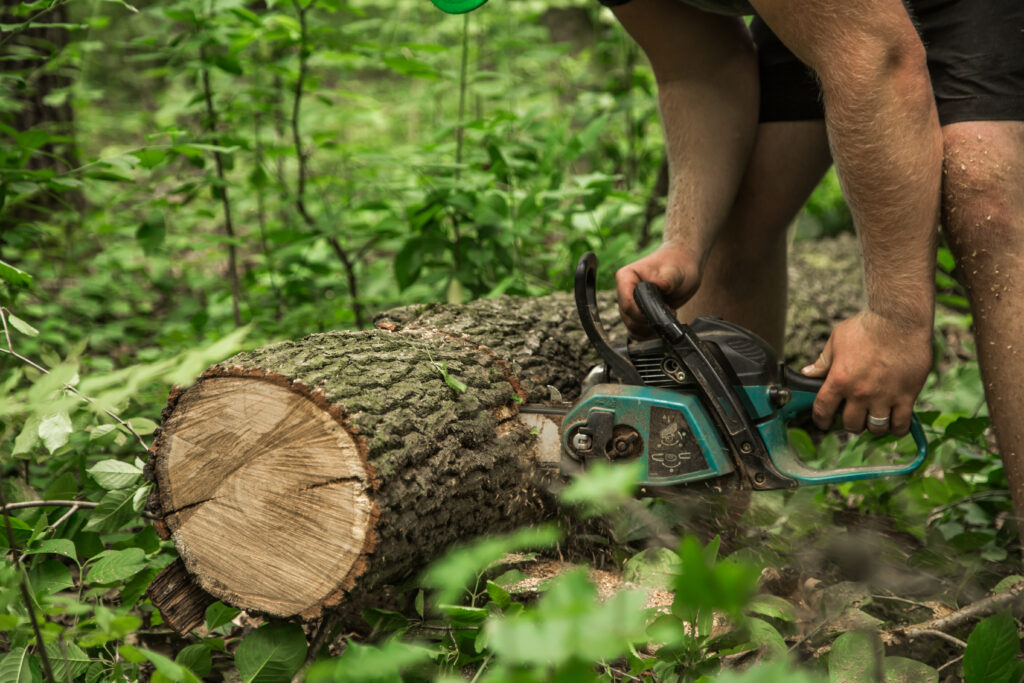
Yes. A qualified arborist can provide professional advice on whether a tree should be removed, retained, or managed through pruning or other treatments. In fact, this is one of the most valuable services an arborist offers. The decision is rarely based on a single factor. Instead, it involves assessing the tree’s health, structure, location, risk to people and property, expected lifespan, environmental value, and any applicable council regulations.
Many trees that appear unhealthy can often be retained with appropriate management, while some trees that look perfectly healthy may have hidden structural defects that make removal the safest option. This guide explains how professional arborists make these decisions, what inspections are carried out, and what property owners should know before removing a tree.
Can Arborists Provide Professional Advice on Whether a Tree Should Be Removed or Retained?
Quick Summary
If you’re unsure whether a tree on your property should stay or go, a qualified arborist is the best person to ask. Arborists don’t simply recommend tree removal. Their role is to assess the tree objectively, identify risks, consider its health and environmental value, and recommend the most appropriate solution. That may be retaining the tree with regular maintenance, carrying out structural pruning, installing support systems, or recommending removal if the tree presents an unacceptable risk.
Table of Contents
- What Does an Arborist Actually Do?
- Why Tree Removal Isn’t Always the Best Solution
- How Arborists Assess Whether a Tree Can Be Retained
- Signs a Tree May Need Removal
- Situations Where a Tree Can Often Be Saved
- How Tree Risk Assessments Are Performed
- The Importance of Australian Standards
- Council Approval and Protected Trees
- Common Reasons Trees Are Removed
- Common Mistakes Property Owners Make
- Why Professional Advice Saves Money
- Frequently Asked Questions
- Final Thoughts
What Does an Arborist Actually Do?
A qualified arborist is a tree specialist trained to understand tree biology, structural integrity, risk management and long-term tree health. Their role extends far beyond cutting branches or removing trees.
Professional arborists regularly assist with:
- Tree inspections
- Tree Risk Assessments
- Tree Pruning
- Arborist Reports
- Council permit applications
- Development planning
- Tree Preservation
- Root Management
- Storm damage assessments
- Emergency tree response
Their responsibility is to recommend the safest and most appropriate solution, whether that involves retaining the tree or removing it.
Why Tree Removal Isn’t Always the Best Solution
Many property owners assume that removing a problematic tree is the easiest answer. In reality, mature trees provide significant benefits that should not be overlooked.
Healthy trees contribute to:
- Shade and cooling during Melbourne’s hot summers
- Reduced energy costs
- Improved property value
- Better biodiversity
- Wildlife habitat for birds and possums
- Improved air quality
- Stormwater management
- Soil stability
Removing a mature tree should generally be considered only when there is a justified reason.
An experienced consulting arborist will always consider whether the tree can be safely retained before recommending removal.
How Arborists Assess Whether a Tree Can Be Retained
No two trees are assessed in exactly the same way.
A qualified arborist considers multiple factors before making recommendations.
Tree Health
The first step is determining whether the tree is healthy.
This includes inspecting for:
- Leaf density
- Crown condition
- New growth
- Deadwood
- Fungal fruiting bodies
- Pest activity
- Signs of disease
Some diseases are treatable while others significantly reduce structural integrity.
Structural Integrity
Tree stability is one of the most important considerations.
Arborists inspect for:
- Cracks
- Cavities
- Included bark
- Weak branch unions
- Trunk decay
- Stem movement
- Previous pruning defects
Trees may look healthy externally while containing significant internal decay.
Root System
Roots are often overlooked because most of them remain underground.
An arborist looks for:
- Root plate movement
- Soil heaving
- Root decay
- Excavation damage
- Construction impacts
- Foundation conflicts
Root failure is one of the leading causes of whole-tree collapse.
Location
The surrounding environment significantly affects risk.
Questions include:
- Is the tree close to a house?
- Does it overhang neighbouring properties?
- Are there powerlines nearby?
- Could failure affect pedestrians?
- Is the tree located in a school or public space?
A tree in an open paddock may be retained despite defects that would justify removal in a residential backyard.
Species Characteristics
Different species behave differently.
For example:
- Some Eucalyptus species naturally shed limbs.
- Some ornamental trees have relatively short life expectancies.
- Palm trees have different structural characteristics than broadleaf trees.
Understanding species behaviour is essential when making recommendations.
Signs a Tree May Need Removal
Although every tree should be assessed individually, common indicators include:
- Extensive trunk decay
- Severe root damage
- Large structural cracks
- Significant lean caused by root failure
- Dead tree with extensive decay
- Repeated branch failures
- Advanced fungal decay
- Irreparable storm damage
One symptom alone does not always justify removal.
Multiple risk factors usually influence the recommendation.
Situations Where a Tree Can Often Be Saved
Many trees can be retained through professional management.
Possible treatments include:
Structural Pruning
Removing defective branches while maintaining the tree’s natural form.
Crown Reduction
Reducing canopy weight to lower the risk of branch failure.
Crown Thinning
Improving airflow and reducing wind resistance.
Cabling and Bracing
Supporting weak branch unions in valuable mature trees.
Soil Improvement
Improving drainage and nutrient availability.
Pest and Disease Management
Treating fungal infections or insect infestations before they become severe.
How Tree Risk Assessments Are Performed
Professional Tree Risk Assessments involve much more than a visual inspection.
The arborist considers:
- Likelihood of failure
- Size of the defective part
- Potential targets
- Consequences of failure
- Overall tree condition
- Site usage
- Environmental conditions
The recommendation balances risk with the value the tree provides.
The Importance of Australian Standards
Professional arborists follow recognised industry standards wherever applicable.
These include:
- AS 4373 Pruning of Amenity Trees for pruning practices.
- AS 4970 Protection of Trees on Development Sites where construction occurs near existing trees.
Following Australian Standards helps ensure tree work supports long-term health and safety.
Council Approval and Protected Trees
Not every tree can be removed simply because the owner wants it gone.
Many Melbourne councils regulate:
- Significant trees
- Native vegetation
- Heritage-listed trees
- Trees within Vegetation Protection Overlays
- Trees on development sites
An arborist can determine whether:
- Council approval is required.
- An Arborist Report is necessary.
- Alternative management options should be considered.
Common Reasons Trees Are Removed
Professional arborists commonly recommend removal because of:
- Structural instability
- Irreversible disease
- Extensive decay
- Root failure
- Severe storm damage
- Construction requirements
- Safety risks that cannot be mitigated through pruning
Removal should generally be the final option after other management strategies have been considered.
Common Mistakes Property Owners Make
Many expensive problems begin with incorrect assumptions.
Common mistakes include:
- Removing healthy trees unnecessarily.
- Ignoring early warning signs.
- Hiring unqualified contractors.
- Over-pruning trees.
- Assuming all leaning trees are dangerous.
- Delaying inspections after storms.
- Cutting roots during landscaping.
Professional advice early often prevents costly repairs later.
Why Professional Advice Saves Money
An arborist’s assessment may seem like an additional expense, but it often saves significant money over time.
Professional advice can help you:
- Avoid unnecessary tree removal.
- Prevent property damage.
- Reduce emergency call-out costs.
- Extend the life of valuable trees.
- Comply with council regulations.
- Protect neighbouring properties.
- Improve long-term property value.
The right recommendation today can prevent thousands of dollars in future costs.
Frequently Asked Questions
1. Can an arborist tell if my tree is dangerous?
Yes. Arborists assess structural integrity, health, defects, targets, and environmental conditions to determine the level of risk.
2. Can a healthy-looking tree still be unsafe?
Yes. Internal decay, root failure, and structural defects are not always visible from the outside.
3. Can pruning save a dangerous tree?
Sometimes. If the defects can be managed by reducing canopy weight or removing hazardous branches, pruning may be sufficient.
4. When is tree removal the only option?
Removal is generally recommended when the risk cannot be reduced to an acceptable level through pruning or other management techniques.
5. Will council require an Arborist Report?
Many councils request an Arborist Report when applications involve protected or significant trees.
6. Should I remove a tree because it’s close to my house?
Not necessarily. Many trees safely coexist near homes for decades. An inspection is needed before making that decision.
7. Can termites kill a tree?
Termites generally feed on dead timber rather than causing the initial decline. However, their presence may indicate existing decay.
8. What happens during a tree inspection?
The arborist assesses the canopy, trunk, root zone, surrounding site conditions, defects, pests, diseases, and overall risk.
9. How long does a tree assessment take?
Most residential assessments take between 30 minutes and an hour, depending on the number and complexity of the trees.
10. Can a tree become dangerous after a storm?
Yes. Storms can create hidden defects that aren’t immediately visible. Trees should be inspected after significant weather events.
Final Thoughts
Deciding whether a tree should be removed or retained is rarely straightforward. It requires professional judgement, technical knowledge, and an understanding of tree biology, structural integrity, site conditions, and risk management. A qualified arborist doesn’t start with a chainsaw. They start with an assessment.
At Banyan Tree Care, our experienced arborists provide honest, evidence-based recommendations that prioritise safety, compliance, and the long-term value of your property. Whether your tree needs ongoing maintenance, structural pruning, a Tree Risk Assessment, or safe removal, we’ll explain your options clearly so you can make an informed decision.
If you’re concerned about a tree on your property anywhere in Melbourne, contact Banyan Tree Care on 0432 277 627 to arrange a professional assessment.