
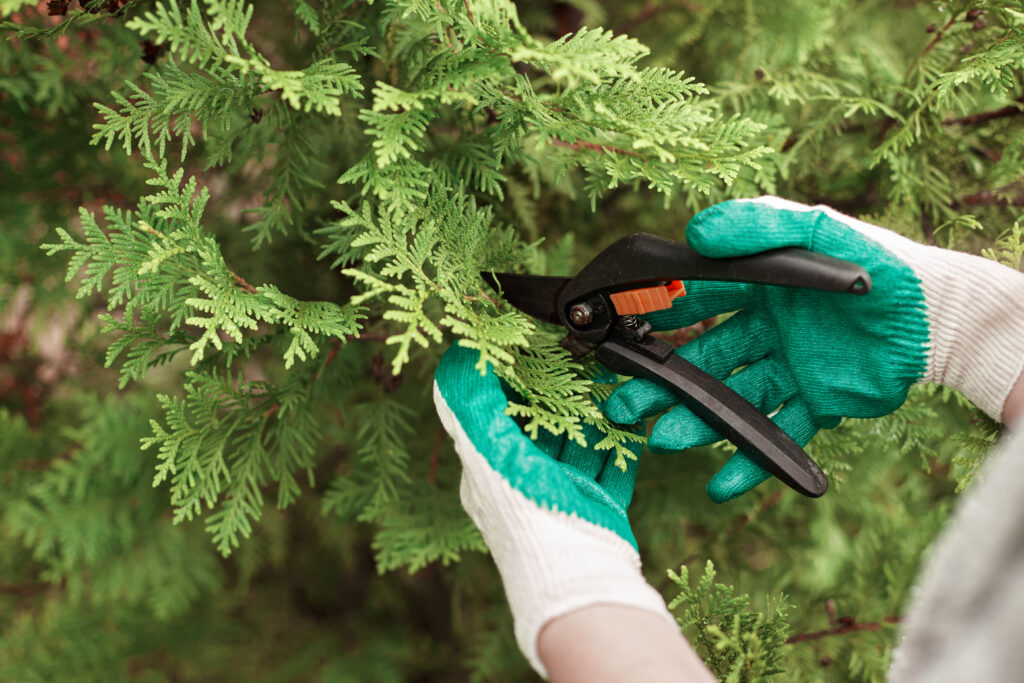
Arborists decide between crown reduction and crown thinning by looking at the reason for pruning, the tree’s structure, the species, the level of risk, the surrounding property, and how much foliage can be safely removed without harming the tree. Crown reduction is usually used when selected branches need to be shortened to reduce weight, size, clearance issues or risk. Crown thinning is used when the canopy is too dense and selected smaller branches need to be removed to improve light, airflow or branch spacing. Both methods require careful judgement because poor pruning can weaken mature trees, encourage decay, and increase the chance of future branch failure.
For homeowners, the difference matters. Asking for a tree to be “cut back” can lead to poor results if the wrong pruning method is used. A qualified arborist Melbourne will inspect the tree first, explain whether crown reduction, crown thinning, structural pruning, deadwood removal or another form of Tree Pruning Melbourne is more suitable, and make sure the work supports long-term tree health and safety.
Quick Summary
Arborists choose between crown reduction and crown thinning based on the pruning objective.
| Pruning Method | Main Purpose | Best Used For |
| Crown reduction | Reduces branch length, canopy spread or selected height | Heavy limbs, clearance, risk reduction, size management |
| Crown thinning | Removes selected smaller branches within the canopy | Dense canopies, airflow, light penetration, minor weight reduction |
| Structural pruning | Improves tree form and branch attachment | Young trees, defective branch unions, long-term stability |
| Deadwood removal | Removes dead or hazardous branches | Safety around homes, paths, driveways and public areas |
Crown reduction changes the outer size or shape of the canopy more noticeably. Crown thinning works inside the canopy while preserving the tree’s natural outline.
Table of Contents
- What Is Crown Reduction?
- What Is Crown Thinning?
- The Main Difference Between Crown Reduction and Crown Thinning
- Why Arborists Inspect the Tree First
- When Crown Reduction Is the Better Option
- When Crown Thinning Is the Better Option
- How Tree Species Influences the Decision
- How Tree Age and Condition Matter
- How Risk and Safety Affect the Pruning Choice
- How Buildings, Roads and Powerlines Influence Pruning
- How Much Foliage Can Be Removed Safely?
- Why Crown Reduction and Crown Thinning Are Sometimes Combined
- Why Tree Lopping Is Not a Proper Alternative
- Australian Standards and Best Practice
- Common Mistakes Homeowners Make
- Real World Examples
- FAQs
- Summary
- Call Banyan Tree Care
1. What Is Crown Reduction?
Crown reduction is the selective shortening of branches to reduce the overall size, spread or height of part of a tree.
It is commonly used to:
- Reduce weight on long branches
- Provide clearance from roofs or structures
- Reduce risk from overextended limbs
- Manage storm-damaged branches
- Reduce canopy spread over driveways or buildings
- Keep a tree more suitable for its location
- Reduce leverage on defective branches
Crown reduction should not be confused with topping or tree lopping.
A proper crown reduction uses selective cuts back to suitable lateral branches. The aim is to reduce size while maintaining the tree’s natural form and ability to recover.
Professional crown reduction requires experience because too much reduction can stress the tree and create weak regrowth.
2. What Is Crown Thinning?
Crown thinning is the selective removal of smaller branches from within the canopy.
It is used to reduce canopy density while keeping the overall size and natural shape of the tree mostly unchanged.
Crown thinning may help:
- Improve light penetration
- Improve air movement through the canopy
- Reduce minor wind resistance
- Remove crossing or rubbing branches
- Improve branch spacing
- Reduce some weight within the canopy
- Manage dense internal growth
The outer outline of the tree should still look natural after thinning.
A well-thinned tree should not look stripped, hollow or exposed. Over-thinning can damage tree health and increase stress.
3. The Main Difference Between Crown Reduction and Crown Thinning
The main difference is where the pruning happens and what it is trying to achieve.
Crown reduction shortens selected outer branches.
Crown thinning removes selected internal branches.
Crown reduction is used when the issue is size, branch length, clearance or heavy limb weight.
Crown thinning is used when the issue is canopy density, internal congestion, airflow or light.
A simple way to understand it:
- Crown reduction manages the outside shape and branch extension.
- Crown thinning manages the inside density of the canopy.
Both methods require correct pruning cuts and a clear reason for the work.
4. Why Arborists Inspect the Tree First
A qualified arborist Melbourne will not choose a pruning method based only on what the homeowner requests.
They inspect the tree first.
The inspection may include:
- Tree species
- Tree health
- Canopy density
- Branch structure
- Deadwood
- Cracks
- Weak branch unions
- Previous pruning wounds
- Fungal growth
- Root condition
- Nearby buildings or targets
- Council requirements
This inspection helps the arborist decide whether crown reduction, crown thinning, structural pruning, deadwood removal, crown lifting or tree removal Melbourne is the most appropriate recommendation.
Good pruning is based on tree condition, not guesswork.
5. When Crown Reduction Is the Better Option
Crown reduction is usually the better option when the tree has branches that are too long, heavy or close to structures.
Arborists may recommend crown reduction for:
- Long limbs over roofs
- Heavy branches over driveways
- Branches growing too close to buildings
- Storm-damaged limbs
- Branches with excessive end weight
- Canopies growing beyond available space
- Trees with minor structural defects that can be managed
- Trees where full removal is unnecessary
For example, a mature gum tree may have one long lateral branch extending over a garage. Crown thinning would remove internal branches, but it may not reduce the leverage on that long limb enough. Selective crown reduction can shorten the branch and reduce load more effectively.
Crown reduction is often used for risk reduction while retaining the tree.
6. When Crown Thinning Is the Better Option
Crown thinning is usually the better option when the canopy is too dense but the overall size of the tree is acceptable.
Arborists may recommend crown thinning when:
- The canopy is congested
- Smaller branches are crossing or rubbing
- Light penetration is poor
- Airflow is limited
- Internal branch structure needs improvement
- The tree needs minor weight reduction
- The natural canopy outline should be preserved
Crown thinning can be useful for some mature ornamental trees, dense evergreen trees and trees that have developed crowded internal growth.
However, thinning should be moderate.
Heavy thinning can expose branches to sunburn, increase wind movement through remaining limbs, and reduce the tree’s ability to produce energy.
7. How Tree Species Influences the Decision
Tree species plays a major role in pruning decisions.
Different trees respond differently to reduction and thinning.
For example:
- Some eucalyptus species may not respond well to heavy reduction.
- Some ornamental trees tolerate selective reduction when done correctly.
- Palms are not pruned like broadleaf trees.
- Some dense trees benefit from minor thinning.
- Trees with brittle wood may need targeted weight reduction.
- Species prone to decay need very careful pruning cuts.
A qualified arborist understands the growth habits of common Melbourne trees, including gum trees, eucalyptus, plane trees, elms, oaks, ornamental pears, palms and native species.
The same pruning method should not be applied to every tree.
8. How Tree Age and Condition Matter
A young healthy tree may tolerate structural pruning better than an old declining tree.
A mature tree with reduced vitality needs more conservative pruning.
Before choosing crown reduction or crown thinning, arborists consider:
- Can the tree tolerate foliage loss?
- Are there existing wounds?
- Is decay present?
- Is the tree under drought stress?
- Has it been heavily pruned before?
- Is the canopy already sparse?
- Does the tree have enough healthy foliage?
If a tree is already stressed or declining, thinning may remove too much live foliage. Crown reduction may also be unsuitable if it requires large cuts.
In some cases, the best recommendation is light deadwood removal and monitoring rather than major canopy work.
9. How Risk and Safety Affect the Pruning Choice
Risk is a major factor in pruning decisions.
Arborists consider:
- What part of the tree may fail?
- How likely is failure?
- What could be damaged?
- How often do people use the area below?
- Can pruning reduce the risk?
- Would pruning create more problems?
- Is removal more appropriate?
Crown reduction is often used when reducing the load on a specific limb can lower risk.
Crown thinning may be used when the tree has a dense canopy but no major overextended branches.
If the tree has severe decay, root failure, major cracks or advanced structural instability, pruning may not reduce risk enough. In those situations, a Tree Risk Assessment may lead to a recommendation for hazardous tree removal Melbourne.
10. How Buildings, Roads and Powerlines Influence Pruning
The surrounding site strongly affects pruning choices.
Arborists look at nearby:
- Houses
- Rooflines
- Gutters
- Driveways
- Footpaths
- Roads
- Fences
- Schools
- Commercial buildings
- Powerlines
- Neighbouring properties
If branches are physically too close to a structure, crown reduction or clearance pruning may be needed.
If the tree is simply casting heavy shade or has a very dense canopy, crown thinning may be more suitable.
Where powerlines are involved, specialist clearance requirements apply. Homeowners should never attempt pruning near live electrical lines. The relevant authority or properly trained professionals should manage that work.
11. How Much Foliage Can Be Removed Safely?
There is no single percentage that suits every tree.
The safe amount depends on:
- Species
- Age
- Health
- Season
- Stress level
- Previous pruning history
- Site conditions
- Pruning objective
For mature trees, arborists generally aim to remove as little live foliage as necessary.
Excessive canopy removal can:
- Reduce energy production
- Increase stress
- Encourage weak regrowth
- Expose limbs to sunburn
- Increase decay risk
- Reduce long-term stability
This is why professional tree pruning Melbourne is selective.
The best pruning often looks modest but achieves a clear purpose.
12. Why Crown Reduction and Crown Thinning Are Sometimes Combined
Some trees need a combination of pruning methods.
For example, an arborist may:
- Reduce one long limb over a roof
- Thin a dense section of internal canopy
- Remove deadwood
- Lift lower branches for clearance
- Remove crossing branches
This does not mean the whole tree is heavily pruned.
It means different parts of the canopy require different treatments.
A mature tree is rarely uniform. One limb may need reduction, another section may need thinning, and another part may need no work at all.
Professional arborist services Melbourne tailor the pruning method to the actual structure of the tree.
13. Why Tree Lopping Is Not a Proper Alternative
Tree lopping is often requested when homeowners want a tree made smaller quickly.
However, lopping can cause serious long-term damage.
It can lead to:
- Large wounds
- Decay
- Weak regrowth
- Poor branch attachment
- Sunburn
- Canopy stress
- Higher future maintenance costs
- Increased risk of branch failure
Crown reduction is the professional alternative when size or weight needs to be managed.
Crown thinning is the professional option when density needs to be reduced.
Tree lopping Melbourne may seem cheaper at first, but it often creates more expensive problems later.
14. Australian Standards and Best Practice
Professional pruning should follow recognised arboricultural standards.
AS 4373 Pruning of Amenity Trees provides guidance on:
- Crown reduction
- Crown thinning
- Crown lifting
- Structural pruning
- Branch removal
- Correct pruning cuts
- Avoiding harmful pruning practices
- Maintaining tree health and structure
A qualified arborist uses this guidance alongside practical experience, site conditions and species knowledge.
For mature trees on development sites, AS 4970 Protection of Trees on Development Sites may also be relevant, especially where pruning is linked to construction clearance or Tree Protection Zones.
15. Common Mistakes Homeowners Make
Many pruning problems come from choosing the wrong method.
Common mistakes include:
- Asking for crown thinning when branch reduction is needed
- Asking for crown reduction when minor thinning would be enough
- Removing too much live canopy
- Cutting branches back to stubs
- Topping the tree
- Ignoring branch collar protection
- Pruning without checking tree health
- Using unqualified tree cutters
- Assuming all trees respond the same way
- Pruning for appearance without considering structure
- Ignoring council requirements for protected trees
The safest approach is to ask an arborist what the tree needs, rather than deciding on the pruning method first.
16. Real World Examples
Example 1: Long Limb Over a Garage
A homeowner contacted Banyan Tree Care about a mature gum tree with one large limb extending over a garage.
The canopy was not especially dense, so crown thinning would not have addressed the main concern.
Our arborist recommended selective crown reduction on the overextended limb. This reduced end weight and lowered the risk of branch failure while retaining the tree’s natural form.
The tree did not need heavy pruning or removal.
Example 2: Dense Ornamental Tree Blocking Light
A property owner had a mature ornamental tree that was healthy but very dense. The issue was poor light into the garden and limited airflow through the canopy.
There were no major heavy limbs or structural defects.
In this case, crown thinning was the better option. The arborist selectively removed smaller internal branches, improved light penetration and preserved the tree’s outline.
A crown reduction would have changed the tree’s shape unnecessarily.
Example 3: Tree With Both Density and Overextended Branches
A commercial site had a mature tree with dense internal growth and several long limbs over a car park.
The arborist recommended a combination of light crown thinning, deadwood removal and selective crown reduction on the heaviest limbs.
This created a balanced result. The canopy remained healthy, the risk over the car park was reduced, and the tree retained its landscape value.
FAQs
1. What is the difference between crown reduction and crown thinning?
Crown reduction shortens selected outer branches to reduce canopy size, spread, height or branch weight. Crown thinning removes selected smaller branches from inside the canopy to reduce density while keeping the overall shape mostly unchanged. Crown reduction is commonly used for clearance and risk reduction. Crown thinning is commonly used for airflow, light and internal canopy management.
2. Which is better, crown reduction or crown thinning?
Neither method is automatically better. The right choice depends on the tree and the reason for pruning. If branches are too long, heavy or close to structures, crown reduction may be better. If the canopy is overly dense but the size is acceptable, crown thinning may be more suitable. A qualified arborist can inspect the tree and recommend the correct method.
3. Does crown thinning reduce tree height?
No, crown thinning does not usually reduce the height or outer spread of the tree. It removes selected internal branches to reduce density. If height or canopy spread needs to be reduced, crown reduction is usually the more appropriate method. Homeowners often confuse these two pruning types, which is why arborist advice is important.
4. Does crown reduction damage trees?
Crown reduction can damage trees if done poorly or too heavily. When done correctly, it can reduce risk and manage branch weight while preserving tree health. Correct crown reduction uses suitable lateral branches and avoids topping, stubs and excessive canopy loss. Mature trees should always be reduced conservatively by qualified professionals.
5. Can crown thinning make a tree safer in storms?
Crown thinning may help reduce some canopy density, but it does not make a tree storm-proof. Over-thinning can sometimes create stress or leave branches exposed. If storm safety is the main concern, an arborist will inspect for deadwood, cracks, weak unions, root problems and heavy limbs before deciding whether thinning, reduction, deadwood removal or another treatment is needed.
6. Is crown reduction the same as tree lopping?
No. Crown reduction is a professional pruning method using selective cuts back to suitable growth points. Tree lopping usually involves cutting branches back harshly without proper regard for tree health or structure. Lopping can create decay, weak regrowth and future safety problems. Crown reduction is planned and controlled when done by a qualified arborist.
7. How much of the canopy should be removed?
Only the minimum amount required to meet the pruning objective should be removed. The safe amount depends on species, health, age, stress level and previous pruning history. Removing too much canopy can reduce energy production, weaken the tree and increase future maintenance issues. Mature trees need especially careful pruning.
8. Can crown reduction help with branches over a roof?
Yes. Crown reduction is often used to shorten selected branches over roofs, garages, driveways and outdoor areas. The aim is to reduce branch weight and improve clearance while keeping the tree balanced. An arborist will avoid cutting too far back or creating large wounds that could harm the tree.
9. Can crown thinning help more sunlight reach the garden?
Yes, crown thinning can allow more filtered light through the canopy. It can be useful where a healthy tree is creating very heavy shade. However, thinning must be moderate. Removing too many internal branches can stress the tree, expose limbs and reduce natural structure. A professional arborist can thin the canopy without stripping it.
10. Do all mature trees need crown thinning?
No. Many mature trees do not need crown thinning. Some trees have naturally open canopies, while others may be stressed and should not lose extra foliage. Thinning is only appropriate when there is a clear reason, such as excessive density, crossing branches or limited airflow. A tree inspection should come first.
11. Can crown reduction stop a tree growing?
No. Crown reduction does not stop growth permanently. Trees continue to grow after pruning. The purpose is to manage size, branch weight or clearance for a period of time. Depending on the species and growth rate, future maintenance may be needed. Good pruning reduces problems without trying to force the tree into an unnatural shape.
12. Should I thin or reduce a gum tree?
It depends on the gum tree’s species, structure, health and location. Some gum trees respond poorly to heavy pruning, so any work should be carefully planned. Long heavy limbs may need selective reduction, while dense sections may need very light thinning. A qualified arborist should inspect mature eucalyptus trees before pruning.
13. Do I need council approval for crown reduction or thinning?
You may need approval if the tree is protected by council controls, planning overlays, heritage rules or native vegetation requirements. Council rules vary across Melbourne. Significant pruning can sometimes require approval even if the tree is not being removed. A qualified arborist can advise whether council requirements may apply.
14. What happens if the wrong pruning method is used?
Using the wrong pruning method can leave the tree stressed, unbalanced or structurally weaker. For example, thinning a limb that really needs reduction may not reduce risk enough. Reducing a tree that only needed light thinning may remove unnecessary foliage. Poor pruning can also create decay and weak regrowth. This is why professional assessment matters.
15. Who should decide between crown reduction and crown thinning?
A qualified arborist should make the recommendation after inspecting the tree. They will consider species, structure, health, risk, location, council requirements and the reason for pruning. Banyan Tree Care provides professional arborist services Melbourne and can recommend the most suitable pruning method for your tree and property.
Summary
Arborists choose between crown reduction and crown thinning by first understanding the purpose of the pruning. Crown reduction is used when selected branches need to be shortened to reduce weight, size, spread, clearance issues or risk. Crown thinning is used when the canopy is too dense and selected smaller internal branches need to be removed to improve light, airflow or branch spacing.
The right method depends on tree species, age, health, structure, surrounding targets and long-term management goals. Poor pruning can cause lasting damage, especially to mature trees. A qualified arborist will inspect the tree, choose the most suitable pruning method, and carry out the work in line with accepted arboricultural standards.
Call Banyan Tree Care for Professional Tree Pruning in Melbourne
If you are unsure whether your tree needs crown reduction, crown thinning, deadwood removal or another type of pruning, Banyan Tree Care can help.
We provide expert tree pruning Melbourne, arborist services Melbourne, Tree Risk Assessments, Arborist Reports, crown reduction, crown thinning, stump grinding Melbourne and safe tree removal Melbourne where removal is genuinely required. Contact Banyan Tree Care on 0432 277 627 arrange a professional arborist inspection and pruning quote.