
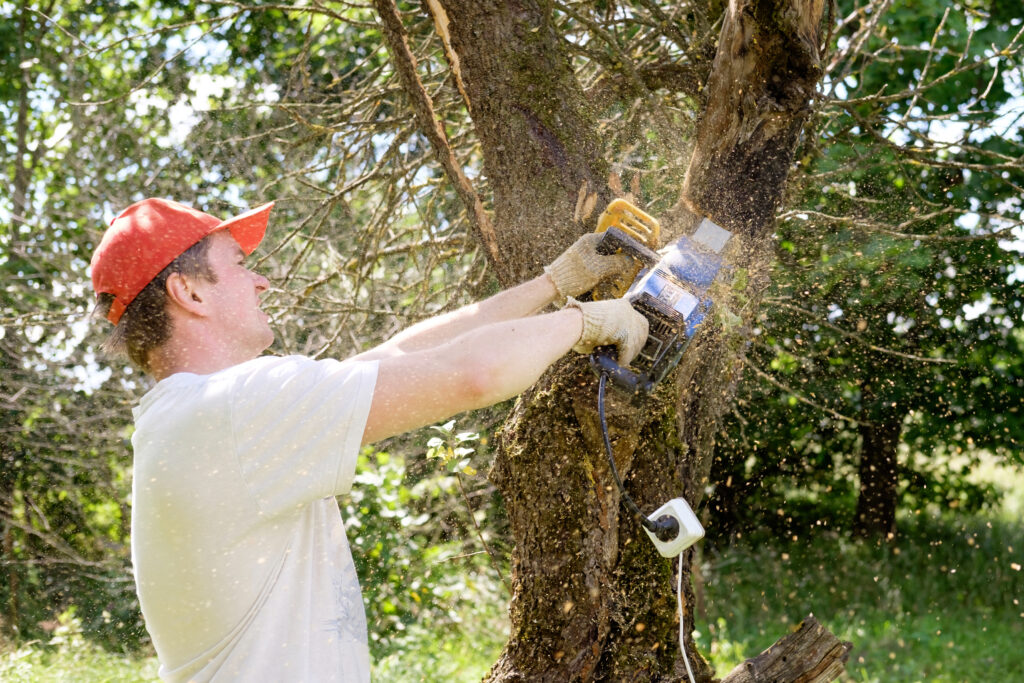
As a general guide, healthy mature trees should be inspected by a qualified arborist every 2 to 3 years, while trees near homes, schools, driveways, powerlines, or public spaces should be checked more frequently. Trees showing signs of decline, storm damage, or structural defects should be inspected immediately. There isn’t a single inspection schedule that suits every tree. Some mature trees can remain healthy for years with only periodic inspections, while others should be assessed annually because of their location, condition, or level of risk. This guide explains how arborists determine inspection intervals, what they look for during an assessment, and how regular inspections can prevent expensive property damage and unnecessary tree removal.
Quick Summary
The frequency of tree inspections depends on several factors, including:
- The age and species of the tree
- Its overall health
- The level of risk it presents
- Its proximity to buildings and people
- Recent storms or construction work
- Previous defects or disease
For most Melbourne properties, the following schedule is a useful guide:
| Tree Condition | Recommended Inspection |
| Young, healthy trees | Every 3 to 5 years |
| Mature healthy trees | Every 2 to 3 years |
| Large trees near homes | Every 12 to 24 months |
| Trees with known defects | Every 6 to 12 months |
| After severe storms | As soon as possible |
| Trees on commercial or public sites | Annual inspection or as part of a risk management program |
A qualified arborist Melbourne can recommend an inspection schedule based on your specific property rather than applying a one-size-fits-all approach.
Table of Contents
- Why Regular Tree Inspections Matter
- What Happens During an Arborist Inspection?
- How Tree Age Affects Inspection Frequency
- Why Tree Location Changes Everything
- How Melbourne’s Climate Affects Mature Trees
- Warning Signs You Shouldn’t Ignore
- Trees That Need More Frequent Inspections
- Storm Damage and Emergency Assessments
- Construction and Root Damage
- Can Regular Inspections Prevent Tree Removal?
- Australian Standards and Professional Arboriculture
- Common Mistakes Property Owners Make
- Frequently Asked Questions
- Final Thoughts
Why Regular Tree Inspections Matter
Trees change slowly, which is why many problems go unnoticed until they become serious.
A professional inspection can identify:
- Structural defects
- Hidden decay
- Root instability
- Pest infestations
- Tree diseases
- Soil problems
- Storm damage
- Branches likely to fail
Finding these issues early often allows the tree to be managed with Tree Pruning, canopy reduction, or soil improvement rather than complete tree removal Melbourne.
Regular inspections also help protect:
- Homes
- Vehicles
- Neighbouring properties
- Children playing outdoors
- Public footpaths
- Outdoor entertaining areas
What Happens During an Arborist Inspection?
A professional inspection is much more than looking at the tree from a distance.
A qualified arborist services Melbourne provider will assess:
Tree Health
Looking for:
- Canopy density
- Leaf colour
- New growth
- Deadwood
- Pest damage
- Disease symptoms
Tree Structure
Checking for:
- Cracks
- Cavities
- Included bark
- Weak branch unions
- Previous pruning wounds
- Leaning
Root Zone
Inspecting:
- Root flare
- Soil condition
- Root damage
- Compaction
- Drainage
- Evidence of fungal decay
Site Conditions
Considering:
- Nearby buildings
- Foot traffic
- Vehicle access
- Powerlines
- Construction activity
- Potential targets if failure occurs
Every recommendation is based on the combination of these observations rather than a single defect.
How Tree Age Affects Inspection Frequency
Young trees generally require less frequent inspections because they have fewer structural issues.
As trees mature:
- Branches become heavier
- Cavities may develop
- Root systems expand
- Previous pruning wounds age
- Storm damage accumulates
Large mature trees provide enormous value to a property, but they also require more proactive management.
Why Tree Location Changes Everything
The same tree may require different inspection intervals depending on where it grows.
Low-Risk Locations
Trees located:
- In paddocks
- Away from buildings
- Away from public access
…may require less frequent inspections.
High-Risk Locations
Trees located near:
- Houses
- Schools
- Childcare centres
- Driveways
- Swimming pools
- Public roads
- Commercial buildings
…should generally be inspected more regularly because the consequences of failure are much greater.
How Melbourne’s Climate Affects Mature Trees
Melbourne’s weather creates unique challenges for mature trees.
Professional arborists consider:
Strong Winds
Heavy winds increase loading on branches and trunks, particularly in eucalyptus species.
Heavy Rain
Saturated soils reduce root stability and may increase the likelihood of whole-tree failure.
Heatwaves
Extended hot weather can stress trees, particularly those already affected by disease or drought.
Sudden Weather Changes
Melbourne is well known for rapid changes in weather conditions, which place additional stress on trees.
These environmental factors influence how often inspections should occur.
Warning Signs You Shouldn’t Ignore
Don’t wait for a scheduled inspection if you notice:
- Large dead branches
- Cracks in the trunk
- Leaning
- Mushrooms around the base
- Soil lifting near roots
- Hollow sounds
- Falling branches
- Sparse canopy
- Sudden leaf drop
- Storm damage
These signs justify an immediate assessment by a qualified arborist Melbourne.
Trees That Need More Frequent Inspections
Some trees naturally require closer monitoring.
These include:
- Large eucalyptus trees
- Mature gum trees
- Trees with previous storm damage
- Trees with known structural defects
- Trees growing beside homes
- Trees near powerlines
- Trees affected by construction
- Trees showing signs of disease
Your arborist may recommend annual inspections depending on the level of risk.
Storm Damage and Emergency Assessments
One of the most important times to arrange an inspection is after severe weather.
Even if a tree remains standing, hidden damage may include:
- Cracked limbs
- Root movement
- Internal fractures
- Split branch unions
- Increased lean
Professional assessment helps determine whether:
- The tree remains safe.
- Structural pruning is required.
- Emergency Tree Removal Melbourne is necessary.
Construction and Root Damage
Many mature trees decline after nearby construction.
Common causes include:
- Excavation
- Trenching
- Driveway installation
- Soil compaction
- Changes to drainage
- Root cutting
Damage may not become visible for several years.
If construction has occurred within the tree’s root zone, arrange an inspection even if the canopy still appears healthy.
Can Regular Inspections Prevent Tree Removal?
In many cases, yes.
Early identification allows arborists to recommend:
- Structural pruning
- Crown thinning
- Crown reduction
- Deadwood removal
- Soil improvement
- Pest treatment
- Root management
These treatments often extend the life of mature trees and reduce the likelihood of emergency failures.
Regular inspections are generally far less expensive than emergency tree work or repairing storm damage.
Australian Standards and Professional Arboriculture
Professional arborist services Melbourne are guided by recognised Australian Standards where relevant.
These include:
AS 4373 – Pruning of Amenity Trees
Provides guidance on:
- Correct pruning techniques
- Tree preservation
- Canopy management
- Long-term tree health
AS 4970 – Protection of Trees on Development Sites
Used where construction occurs near mature trees.
It helps protect:
- Tree Protection Zones
- Root systems
- Soil structure
- Long-term tree stability
Following these standards supports healthier trees and safer properties.
Common Mistakes Property Owners Make
Over many years of inspecting mature trees across Melbourne, we’ve seen several recurring mistakes.
These include:
- Waiting until branches begin falling.
- Assuming green leaves mean the tree is safe.
- Ignoring fungal growth around the base.
- Never inspecting mature trees.
- Delaying inspections after storms.
- Cutting roots during landscaping.
- Choosing tree lopping instead of professional arboricultural advice.
Routine inspections prevent many of these issues from becoming expensive emergencies.
Frequently Asked Questions
1. How often should mature trees be inspected?
Healthy mature trees should generally be inspected every two to three years. Trees in high-risk locations or with known defects may require annual inspections.
2. Should I have trees inspected after a storm?
Yes. Storms can create hidden structural damage that isn’t immediately obvious.
3. Can an arborist tell if a tree is becoming dangerous?
Yes. Arborists assess tree health, structure, roots, surrounding conditions, and the likelihood of failure before making recommendations.
4. Do healthy-looking trees still need inspections?
Absolutely. Many dangerous trees retain healthy foliage while hiding internal decay or root defects.
5. What happens during an inspection?
The arborist evaluates the canopy, trunk, roots, soil, structural condition, pests, diseases, and surrounding environment before providing recommendations.
6. Can inspections reduce tree maintenance costs?
Yes. Identifying problems early often allows for relatively minor maintenance instead of expensive emergency tree removal.
7. How long does a tree inspection take?
Most residential inspections take between 30 minutes and one hour, depending on the number and size of the trees.
8. Are inspections worthwhile if my trees seem healthy?
Yes. Regular inspections are preventative maintenance and help identify hidden issues before they become serious.
9. Do commercial properties need more frequent inspections?
Generally, yes. Trees near public access areas carry greater liability and often form part of ongoing risk management programs.
10. Can inspections help with council applications?
Yes. Qualified arborists can prepare Arborist Reports and Tree Risk Assessments to support council permit applications or development approvals where required.
Final Thoughts
Mature trees are valuable assets that contribute shade, habitat, character, and property value. Like any valuable asset, they benefit from regular professional inspections. A qualified arborist doesn’t simply look for dead branches. They assess the tree’s overall health, structural integrity, root system, site conditions, and potential risks before recommending the most appropriate management strategy. Regular inspections allow problems to be identified early, reducing the likelihood of emergency failures and helping preserve healthy trees for many years.
At Banyan Tree Care, we provide professional arborist services Melbourne, Tree Risk Assessments, Arborist Reports, tree pruning Melbourne, and safe tree removal Melbourne solutions tailored to residential, commercial, and development properties. Whether you’re managing a single mature gum tree or multiple trees across a larger site, we’ll recommend an inspection schedule that suits your property and provides peace of mind. If it’s been several years since your trees were professionally assessed, or you’ve recently experienced storm damage, contact Banyan Tree Care on 0432 277 627 to arrange a comprehensive arborist inspection. Your trees, your property, and your family’s safety are worth the investment.