
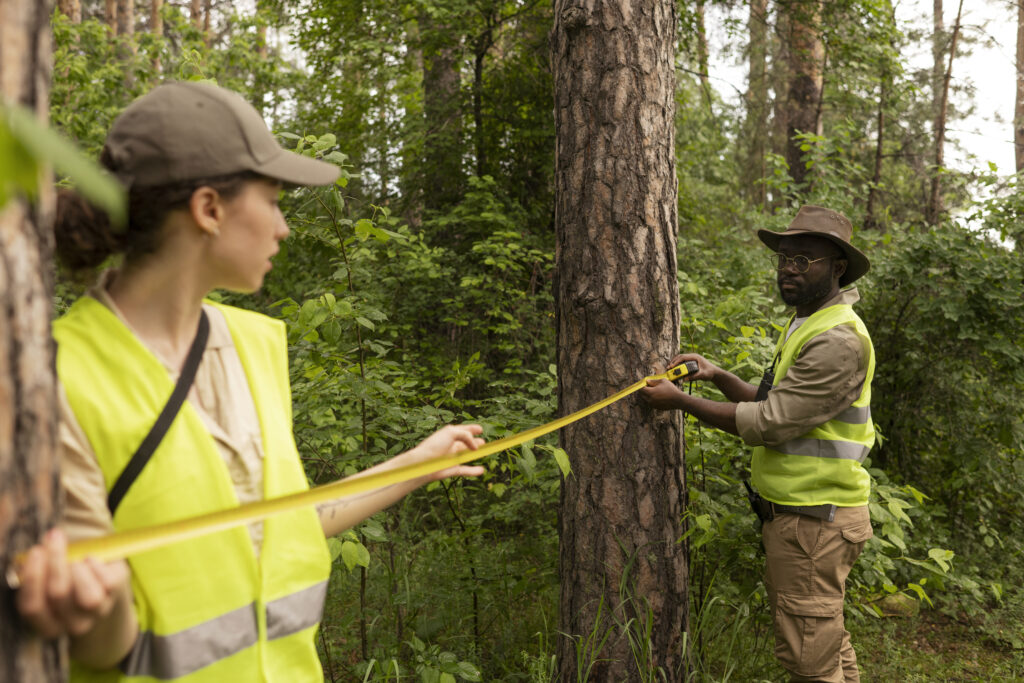
A professional arborist consultation is your opportunity to understand the condition of your trees before making important decisions. During the consultation, a qualified arborist Melbourne inspects the tree, identifies any health or structural issues, assesses potential risks, and explains the most appropriate management options. Rather than recommending tree removal Melbourne as the default solution, an experienced arborist considers whether the tree can be retained through Tree Pruning Melbourne, structural support, soil improvement, or ongoing monitoring. This guide explains exactly what happens during a professional consultation, what arborists look for, the questions you should ask, and how the visit helps protect both your property and your trees.
Quick Summary
During a professional arborist consultation, you can expect:
- A discussion about your concerns
- A visual inspection of the tree
- An assessment of tree health
- An evaluation of structural defects
- A root zone inspection
- A review of surrounding site conditions
- Advice on tree preservation or removal
- Information about council approvals if required
- Recommendations for future maintenance
- A written quote or Arborist Report where requested
The consultation provides expert advice tailored to your tree, your property, and your long-term goals.
Table of Contents
- Why Book an Arborist Consultation?
- Understanding Your Concerns
- Inspecting the Tree
- Assessing Tree Health
- Evaluating Structural Safety
- Inspecting the Root System
- Considering the Surrounding Environment
- Discussing the Best Management Options
- Explaining Council Requirements
- Receiving Professional Recommendations
- Common Questions to Ask Your Arborist
- Frequently Asked Questions
- Final Thoughts
Why Book an Arborist Consultation?
Many property owners contact an arborist because they have noticed something unusual.
Common concerns include:
- A tree leaning towards the house
- Dead branches
- Storm damage
- Cracks in the trunk
- Roots affecting landscaping
- Trees growing close to buildings
- Concerns about council approval
- General uncertainty about the tree’s condition
A consultation provides professional advice before small issues become expensive or dangerous problems.
Understanding Your Concerns
Every consultation begins with a conversation.
Your arborist will ask questions such as:
- What concerns you about the tree?
- Have you noticed any recent changes?
- Has the tree been pruned before?
- Has there been recent construction nearby?
- Has the tree experienced storm damage?
- Are you planning to renovate or build?
Understanding the property’s history often helps explain why certain problems have developed.
Inspecting the Tree
The inspection begins with an assessment of the whole tree.
Rather than focusing on a single branch or visible defect, the arborist evaluates the complete structure.
This includes:
- Tree species
- Approximate age
- Overall size
- Growth habit
- Canopy condition
- Structural form
The inspection is methodical and follows accepted arboricultural principles.
Assessing Tree Health
A healthy tree is generally more resilient than a stressed tree.
The arborist examines:
The Canopy
Looking for:
- Leaf colour
- Leaf size
- Canopy density
- New growth
- Deadwood
- Seasonal development
Signs of Disease
Checking for:
- Fungal growth
- Insect activity
- Leaf abnormalities
- Dieback
- Bleeding wounds
These observations help determine whether the tree is thriving, declining, or under environmental stress.
Evaluating Structural Safety
A tree can appear healthy while hiding serious structural defects.
Professional arborist services Melbourne assess:
- Cracks
- Cavities
- Hollow trunks
- Included bark
- Weak branch unions
- Previous pruning wounds
- Storm damage
- Leaning
- Dead limbs
The arborist considers whether these defects affect the likelihood of failure.
Inspecting the Root System
Healthy roots are essential for tree stability.
The consultation includes an assessment of:
- Root flare
- Soil condition
- Drainage
- Root damage
- Soil movement
- Evidence of decay
- Construction impacts
Many structural problems begin below ground long before symptoms appear in the canopy.
Considering the Surrounding Environment
Trees are always assessed in the context of their surroundings.
Your arborist considers nearby:
- Houses
- Garages
- Driveways
- Swimming pools
- Neighbouring properties
- Roads
- Schools
- Powerlines
- Public access areas
The level of risk depends not only on the tree but also on what could be affected if part of the tree were to fail.
Discussing the Best Management Options
One of the most valuable parts of the consultation is understanding your options.
Depending on the condition of the tree, recommendations may include:
Tree Pruning
Professional tree pruning Melbourne may remove hazardous branches, improve canopy balance, and encourage healthy growth.
Tree Preservation
Where appropriate, the arborist may recommend:
- Crown thinning
- Crown reduction
- Structural pruning
- Cabling
- Bracing
- Soil improvement
- Ongoing monitoring
Tree Removal
If the tree presents an unacceptable risk that cannot be managed safely, Tree Removal Melbourne may be recommended.
The reasons are explained clearly so you understand why removal is considered necessary.
Explaining Council Requirements
Many Melbourne councils regulate the removal of significant trees.
During the consultation, your arborist can advise whether:
- A permit may be required
- An Arborist Report is needed
- Planning overlays apply
- Tree protection regulations are relevant
This advice helps prevent unnecessary delays or compliance issues.
Receiving Professional Recommendations
At the end of the consultation, you’ll receive practical advice based on the inspection.
Depending on your requirements, this may include:
- Verbal recommendations
- A written quote
- A maintenance plan
- A Tree Risk Assessment
- An Arborist Report
- Recommendations for ongoing inspections
The objective is to provide clear information so you can make informed decisions.
Questions You Should Ask During the Consultation
A good consultation is a two-way conversation.
Helpful questions include:
- Is the tree healthy?
- Does it present any immediate risk?
- Can it be saved?
- Is pruning sufficient?
- How often should it be inspected?
- Does council approval apply?
- What maintenance will it need in the future?
- What happens if nothing is done?
An experienced arborist will explain the reasoning behind every recommendation.
What Makes a Professional Consultation Different?
A professional consultation is about advice, not sales.
Qualified arborists don’t arrive with the assumption that every tree should be removed.
Instead, they consider:
- The tree’s biological health.
- Structural integrity.
- Site conditions.
- Public safety.
- Long-term management.
- Your future plans for the property.
The recommendation is based on evidence gathered during the inspection, not on the size of the tree or the complexity of the job.
Australian Standards and Professional Best Practice
Professional arborists carry out consultations using recognised arboricultural principles and Australian Standards where appropriate.
AS 4373 – Pruning of Amenity Trees
Supports recommendations relating to:
- Structural pruning
- Crown reduction
- Tree preservation
AS 4970 – Protection of Trees on Development Sites
Provides guidance for:
- Tree Protection Zones
- Root management
- Construction impacts
- Tree retention during development
These standards help ensure recommendations are consistent, practical, and based on accepted industry practices.
Real-World Example
A homeowner contacted Banyan Tree Care because they were concerned about a large gum tree growing close to their house. After heavy rain, they noticed the tree leaning slightly and feared it needed immediate removal.
During the consultation, our arborist carried out a detailed inspection of the canopy, trunk, root zone, and surrounding soil. The assessment found the lean had been present for many years and the root system remained stable. The main issue was several heavy branches extending over the roof.
Instead of recommending tree removal Melbourne, we suggested tree pruning Melbourne to reduce canopy weight and improve branch structure, followed by routine inspections every two years. The homeowner was able to retain a healthy mature tree while significantly reducing the level of risk.
On another property, a declining eucalyptus displayed extensive fungal decay at the base and fresh soil movement after recent storms. In that case, the consultation concluded that the tree posed an unacceptable risk to the nearby home, and removal was recommended.
These examples highlight why every consultation is tailored to the individual tree rather than relying on assumptions.
Frequently Asked Questions
1. How long does an arborist consultation usually take?
Most residential consultations take between 30 minutes and one hour, depending on the number and complexity of the trees being assessed.
2. Will the arborist tell me if the tree can be saved?
Yes. One of the main purposes of the consultation is to determine whether the tree can be safely retained or whether removal is the most appropriate option.
3. Do arborists always recommend tree removal?
No. In many cases, arborists recommend pruning, structural support, or ongoing monitoring instead of removal.
4. Can the arborist identify tree diseases?
Yes. Arborists assess signs of disease, pest activity, environmental stress, and structural decline before making recommendations.
5. Will I receive a written report?
If required, your arborist can prepare a Tree Risk Assessment or Arborist Report, particularly for council applications, development projects, or insurance purposes.
6. Should I mention planned renovations?
Absolutely. Future construction or landscaping can influence recommendations, particularly where tree roots or Tree Protection Zones may be affected.
7. Can the consultation help with council permits?
Yes. An arborist can advise whether council approval is likely to be required and whether supporting documentation should be prepared.
8. What if more than one tree needs inspecting?
Multiple trees can usually be assessed during the same consultation, with recommendations provided for each one.
9. Should I arrange a consultation after a storm?
Yes. Storms can create hidden defects that aren’t immediately visible, making a professional inspection worthwhile.
10. Why use a qualified arborist instead of a general tree contractor?
Qualified arborists have specialised training in tree biology, structural assessment, risk management, Australian Standards, and long-term tree care, allowing them to provide balanced recommendations that prioritise both safety and tree preservation.
Final Thoughts
A professional arborist consultation is about understanding your trees, not simply deciding whether they should be removed. By inspecting the tree’s health, structure, root system, and surrounding environment, a qualified arborist can identify potential risks, explain your options, and recommend practical solutions that protect both your property and the long-term health of your trees. In many cases, early advice helps prevent unnecessary removals, costly repairs, and emergency situations.
At Banyan Tree Care, we provide professional arborist services Melbourne, Tree Risk Assessments, Arborist Reports, tree pruning Melbourne, and tree removal Melbourne for homeowners, commercial properties, body corporates, schools, councils, builders, and developers across Melbourne. Every consultation is carried out with a focus on clear advice, evidence-based recommendations, and practical solutions tailored to your property. If you’re concerned about a tree or simply want expert advice before making a decision, contact Banyan Tree Care on 0432 277 627 to book a professional arborist consultation. We’ll help you understand your options and recommend the safest, most effective approach for your trees.