
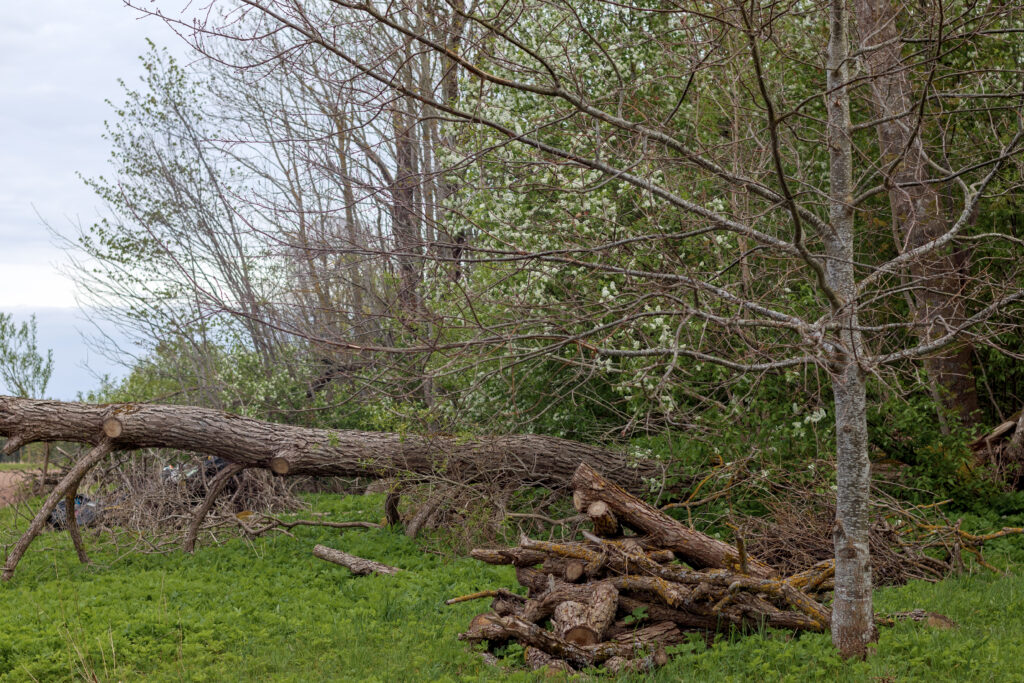
Most trees don’t fail during a storm simply because of strong winds. Storms expose existing weaknesses that may have developed over many years. Hidden decay, poor branch structure, root damage, disease, soil instability, and previous storm damage are some of the most common reasons trees or large branches fail during severe weather. A healthy, well-maintained tree is far more likely to withstand Melbourne’s changing climate than one with unmanaged defects. In this guide, we’ll explain why trees fail during storms, the warning signs to watch for, how qualified Arborists Melbourne assess storm risk, and what you can do to reduce the chance of needing emergency tree removal Melbourne.
Quick Summary
Trees commonly fail during storms because of:
- Hidden trunk decay
- Root failure
- Heavy or unbalanced canopies
- Weak branch attachments
- Dead or diseased branches
- Saturated soil
- Strong wind loading
- Previous poor pruning
- Construction damage to roots
Many storm-related tree failures can be prevented through regular inspections, professional tree pruning Melbourne, and proactive tree maintenance.
Table of Contents
- Do Storms Actually Cause Trees to Fail?
- The Most Common Reasons Trees Fail During Storms
- How Wind Affects Trees
- Why Root Failure Is So Dangerous
- Weak Branch Attachments
- Hidden Decay Inside the Tree
- The Impact of Poor Tree Pruning
- Soil Conditions and Heavy Rain
- Tree Species and Storm Resistance
- Can Storm Damage Be Prevented?
- What to Do After a Storm
- Frequently Asked Questions
- Final Thoughts
Do Storms Actually Cause Trees to Fail?
Storms are often blamed when a tree falls, but the weather is usually only the trigger.
In many cases, the tree already had one or more structural weaknesses.
Examples include:
- Internal decay
- Root damage
- Weak branch unions
- Large dead limbs
- Poor previous pruning
- Pest or disease problems
Strong winds simply expose defects that have been developing over months or even years.
This is why a healthy tree beside a damaged tree may survive the same storm without any issues.
The Most Common Reasons Trees Fail During Storms
Professional arborists Melbourne commonly identify the following causes after storm damage.
1. Root Failure
Roots are responsible for anchoring the tree.
When they fail, the entire tree may topple.
Root problems often develop because of:
- Construction damage
- Excavation
- Soil compaction
- Root rot
- Poor drainage
- Prolonged drought
Heavy rain can soften the surrounding soil, making it easier for compromised roots to pull free during strong winds.
A tree with healthy roots is far more likely to remain stable.
2. Hidden Trunk Decay
Not all decay is visible from the outside.
A tree may have:
- A healthy canopy
- Green leaves
- Strong seasonal growth
…while large sections inside the trunk have already deteriorated.
Common indicators include:
- Cavities
- Fungal growth
- Hollow sounds
- Soft timber
- Loose bark
As the trunk loses structural strength, it becomes less able to withstand storm forces.
3. Weak Branch Attachments
Large branches don’t always fail because they’re dead.
Many failures occur where branches join the trunk.
Arborists inspect for:
- Included bark
- Narrow branch unions
- Multiple stems competing for space
- Previous storm damage
These weak attachment points become highly stressed during strong winds.
Professional tree pruning Melbourne can often reduce this risk by removing weight from vulnerable limbs.
4. Dead or Diseased Branches
Deadwood becomes brittle over time.
During storms, these branches are often the first to fail.
Dead branches can:
- Damage roofs
- Break windows
- Crush vehicles
- Block driveways
- Injure people
Routine pruning removes hazardous branches before storms arrive.
5. Heavy, Unbalanced Canopies
Trees with dense or uneven canopies catch more wind.
The greater the surface area, the greater the wind loading placed on the trunk and roots.
Professional arborists may recommend:
- Crown thinning
- Crown reduction
- Structural pruning
These techniques reduce wind resistance while maintaining tree health.
6. Saturated Soil
Melbourne storms often bring heavy rainfall before strong winds.
Waterlogged soil reduces the grip roots have on the surrounding ground.
Combined with wind pressure, this increases the likelihood of:
- Leaning
- Root plate movement
- Complete tree failure
Trees growing in poorly drained soils are particularly vulnerable.
7. Previous Poor Pruning
Improper tree work often creates long-term structural problems.
Examples include:
- Tree topping
- Excessive tree lopping
- Large pruning wounds
- Poor pruning cuts
These practices may encourage:
- Weak regrowth
- Decay
- Poor branch attachment
Trees that have been heavily lopped are often more vulnerable during storms than those that have been professionally maintained.
8. Construction Damage
Root systems are frequently damaged during:
- House extensions
- Driveway installation
- Pool construction
- Landscaping
- Trenching
The canopy may remain healthy for several years after construction.
However, once a storm arrives, the weakened root system may no longer provide enough support.
This delayed effect is one reason qualified arborist services Melbourne are often involved before and during development projects.
How Wind Affects Trees
Wind doesn’t simply push against a tree.
It creates complex forces throughout the structure.
These forces affect:
- Branches
- The trunk
- Major limbs
- Root systems
- Soil around the tree
Trees with balanced canopies generally distribute these forces more effectively than trees with uneven growth or structural defects.
Why Some Tree Species Fail More Often
Every tree species responds differently to storms.
For example:
Eucalyptus
Many eucalyptus species naturally shed branches during periods of heat or high winds.
This natural process helps reduce canopy weight but can create hazards in residential areas.
Fast-Growing Trees
Some fast-growing species develop weaker timber or branch attachments.
They may require more frequent inspections.
Mature Trees
Older trees often provide excellent stability, but they may also develop:
- Cavities
- Decay
- Large dead limbs
Age alone doesn’t make a tree dangerous, but it does increase the importance of regular inspections.
Can Storm Damage Be Prevented?
No tree can be made storm-proof.
However, many storm failures can be prevented through professional maintenance.
A qualified arborist may recommend:
Regular Tree Inspections
Routine assessments identify defects before they become dangerous.
Structural Pruning
Removing weak or overloaded branches reduces stress during storms.
Deadwood Removal
Removing dead limbs reduces the likelihood of falling branches.
Tree Risk Assessments
Professional assessments identify trees that require monitoring, pruning, cabling, or Tree Removal Melbourne.
Soil and Root Management
Healthy roots are the foundation of a stable tree.
Protecting root zones during landscaping and construction greatly improves long-term stability.
What Should You Do After a Storm?
After severe weather, inspect trees from a safe distance.
Look for:
- Leaning
- Hanging branches
- Cracks
- Fresh cavities
- Soil lifting around the base
- Broken limbs
Avoid standing beneath damaged trees.
If you suspect structural damage, arrange an inspection by a qualified arborist Melbourne as soon as possible.
Trees may continue to fail hours or even days after the storm has passed.
Australian Standards and Professional Best Practice
Professional arborists work in accordance with recognised Australian Standards where appropriate.
AS 4373 – Pruning of Amenity Trees
Provides guidance on:
- Structural pruning
- Crown reduction
- Tree preservation
- Correct pruning methods
AS 4970 – Protection of Trees on Development Sites
Helps minimise construction-related root damage by protecting:
- Tree Protection Zones
- Root systems
- Soil conditions
Following these standards supports healthier, more storm-resistant trees.
Common Mistakes Property Owners Make
Many storm failures could have been prevented.
Common mistakes include:
- Ignoring dead branches.
- Never inspecting mature trees.
- Assuming green leaves mean the tree is healthy.
- Allowing heavy limbs to overhang roofs for years.
- Damaging roots during renovations.
- Hiring inexperienced contractors to perform aggressive tree lopping.
- Delaying inspections after previous storms.
Preventative maintenance is usually far less expensive than emergency tree removal or repairing storm damage.
Frequently Asked Questions
1. Why do healthy-looking trees fall during storms?
Many apparently healthy trees have hidden defects such as internal decay, root damage, or weak branch attachments that aren’t visible without a professional inspection.
2. Are large trees more likely to fall?
Not necessarily. Large, healthy trees can remain stable for decades. Structural condition is much more important than size alone.
3. Can pruning reduce storm damage?
Yes. Professional tree pruning Melbourne reduces deadwood, improves canopy balance, and lowers wind loading on vulnerable branches.
4. How do arborists know if a tree is likely to fail?
They assess tree health, structural integrity, root stability, site conditions, species characteristics, and the likelihood of failure through a Tree Risk Assessment.
5. Does heavy rain make trees less stable?
Yes. Saturated soil can reduce root stability, especially if roots have already been weakened by disease or construction damage.
6. Should trees be inspected after every major storm?
Trees near homes, driveways, schools, or public areas should be professionally assessed if they show any signs of damage following severe weather.
7. Can root damage cause a tree to fall years later?
Absolutely. Trees often survive initial root damage but gradually lose stability over time, particularly during storms.
8. Is tree lopping recommended to make trees safer?
Aggressive tree lopping often creates weaker regrowth and increases future risk. Professional structural pruning is usually the preferred approach.
9. When is emergency tree removal necessary?
Emergency tree removal Melbourne may be required if a tree has fallen, is leaning significantly, has major structural damage, or poses an immediate risk to people or property.
10. Can regular arborist inspections prevent storm damage?
While no tree is completely storm-proof, regular inspections and proactive maintenance significantly reduce the likelihood of tree failure during severe weather.
Final Thoughts
Storms don’t usually create tree defects. They expose the defects that already exist. Hidden decay, damaged roots, poor branch structure, and years of neglected maintenance often determine whether a tree survives or fails during severe weather. The good news is that many of these risks can be identified and managed well before the next storm arrives through professional inspections and preventative tree care.
At Banyan Tree Care, we help homeowners, businesses, schools, body corporates, and developers protect their properties through expert arborist services Melbourne, Tree Risk Assessments, Tree Pruning Melbourne, storm damage inspections, and safe tree removal Melbourne where necessary. Every recommendation is based on the tree’s condition, location, and long-term safety, ensuring practical solutions that balance risk with the value mature trees provide. If you have a mature tree near your home or your property has recently experienced severe weather, contact Banyan Tree Care on 0432 277 627 to arrange a professional assessment. Identifying potential hazards today can help prevent costly damage and emergency tree work in the future.