
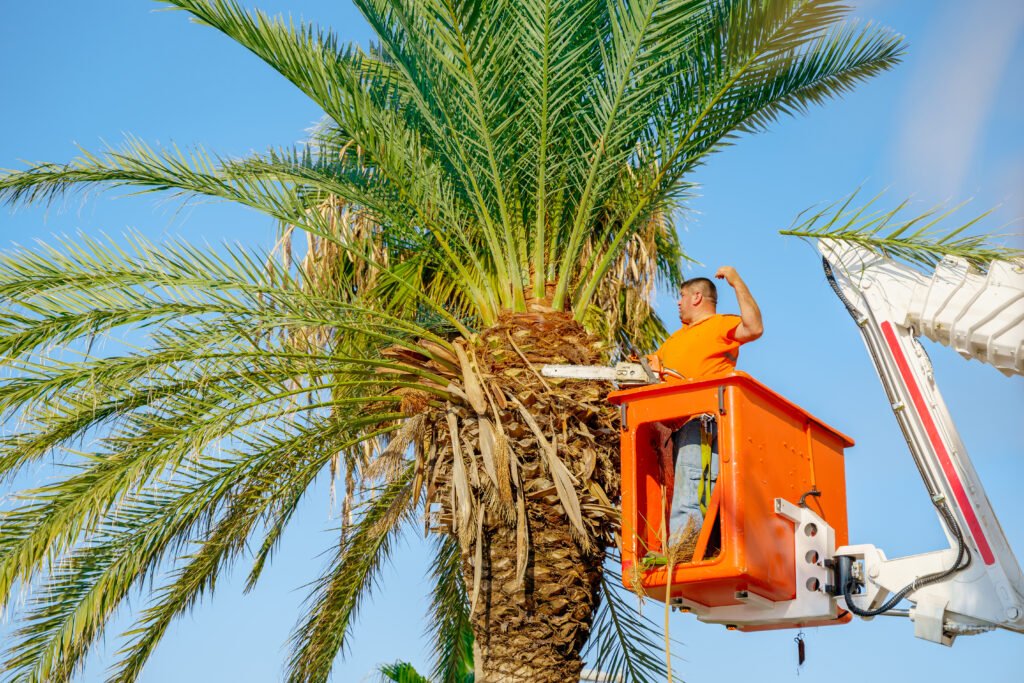
A palm tree suffering from heat stress may show browning fronds, dry leaf tips, drooping growth, yellowing, slow recovery after hot days, or a thinning crown. In Melbourne, palms can struggle during long dry spells, reflected heat from paving, poor watering, compacted soil, root disturbance or sudden hot winds. Some symptoms are minor and can be improved with better palm tree care, while others may point to deeper root, soil or trunk problems.
Heat stress does not always mean Palm Tree Removal is needed. Many palms recover if the cause is identified early. The key is to check the fronds, crown, trunk, soil moisture and growing conditions before cutting anything heavily.
Quick Summary
A heat-stressed palm may show:
- Brown or crispy frond tips
- Yellowing fronds
- Drooping or folded leaves
- Dry, brittle foliage
- Slow new growth
- Thin or weak crown
- Sunburn on exposed trunk or fronds
- Soil drying out too quickly
- Fronds dying faster than usual
- Poor recovery after hot weather
Professional palm tree pruning and correct watering can help, but removing too many green fronds can make heat stress worse.
Table of Contents
- Why Palm Trees Get Heat Stressed
- Common Signs of Palm Heat Stress
- Heat Stress vs Disease or Poor Nutrition
- What to Check Around the Soil and Roots
- Can Palm Tree Pruning Help?
- When Palm Tree Removal May Be Needed
- Common Mistakes to Avoid
- FAQs
- Summary
- Call Banyan Tree Care
1. Why Palm Trees Get Heat Stressed
Palms can tolerate warm conditions, but they still need suitable soil moisture, root health and growing space. Heat stress often happens when high temperatures combine with dry soil, reflected heat, restricted roots or poor irrigation.
Common causes include:
- Long hot days
- Dry winds
- Lack of deep watering
- Paving around the root zone
- Heat reflected from walls or concrete
- Poor soil moisture retention
- Root damage from landscaping
- Compacted soil
- Recent transplanting
- Over-pruning
- Sudden exposure after nearby trees are removed
Palms planted near pools, driveways, courtyards, brick walls or paved entertaining areas may experience more heat because hard surfaces absorb and reflect warmth.
2. Common Signs of Palm Heat Stress
The most common signs appear in the fronds.
Look for:
- Brown leaf tips
- Crispy edges
- Yellowing older fronds
- Drooping fronds
- Folded or curled leaflets
- Dry-looking crown
- Slower spear growth
- Fronds dying back too quickly
- Patchy sunburn marks
- Reduced overall vigour
Some browning on older lower fronds is normal. The concern increases when many fronds decline at once, new growth looks weak, or the crown becomes thin.
If the central spear or newest growth is affected, the palm should be inspected quickly. Damage to the growing point can be more serious than older frond browning.
3. Heat Stress vs Disease or Poor Nutrition
Not every brown palm is heat stressed. Similar symptoms can be caused by nutrient deficiency, poor drainage, pests, root damage, fungal issues or incorrect pruning.
Heat stress often follows hot, dry weather and may affect exposed fronds first.
Nutrient problems may show as:
- General yellowing
- Weak new growth
- Patchy colour changes
- Pale fronds despite watering
- Slow long-term decline
Drainage problems may show as:
- Wet soil
- Root rot symptoms
- Soft or unstable base
- Fungal activity
- Yellowing despite regular watering
Pest or disease issues may include spots, holes, sticky residue, scale insects, unusual marks or crown decline.
A professional palm tree care inspection can identify whether the palm needs watering changes, soil improvement, pruning, pest advice or removal.
4. What to Check Around the Soil and Roots
Palm roots need oxygen and steady moisture. Both dry soil and waterlogged soil can cause problems.
Check:
- Is the soil very dry below the surface?
- Is water running off instead of soaking in?
- Is mulch missing from the root zone?
- Is the palm surrounded by concrete or paving?
- Has recent digging damaged roots?
- Is soil compacted from foot traffic?
- Is irrigation reaching the palm?
- Is water pooling around the base?
A stressed palm often needs deep, slow watering rather than frequent light watering. Light surface watering may wet the top layer but leave deeper roots dry.
Mulch can help protect soil moisture, but it should not be piled against the trunk.
5. Can Palm Tree Pruning Help?
Palm Tree Pruning can help when dead, hanging or damaged fronds need removal. It can also improve safety around paths, pools, driveways and outdoor areas.
However, pruning will not fix heat stress by itself.
Correct palm pruning may include:
- Removing dead fronds
- Removing broken fronds
- Removing hanging fronds
- Removing fruit stalks
- Clearing fronds from roofs or paths
Avoid removing too many green fronds. Green fronds help the palm produce energy and recover from stress. Over-pruning can make the palm weaker and more exposed to heat.
A good rule is to remove what is dead, dangerous or clearly necessary, not strip the palm for appearance alone.
6. When Palm Tree Removal May Be Needed
Palm tree removal may be needed if the palm is dead, structurally unsafe, badly decayed, severely leaning, damaging structures, or unable to recover.
Removal may be considered when:
- The crown is dead
- The central spear has failed
- The trunk is soft or unstable
- The palm is severely leaning
- Roots have been badly damaged
- The palm is too close to a pool or building
- Fronds are repeatedly falling
- The palm has become unsafe during storms
- Recovery is unlikely
Many stressed palms can be retained with better care, but a dead or unstable palm should not be ignored. Tall palms can drop heavy fronds and may be dangerous to climb without proper equipment.
7. Common Mistakes to Avoid
Avoid these mistakes when a palm looks heat stressed:
- Cutting off too many green fronds
- Watering lightly every day without deep soaking
- Piling mulch against the trunk
- Ignoring compacted soil
- Assuming all browning means disease
- Ignoring poor drainage
- Fertilising heavily during severe stress
- Cutting into the trunk
- Damaging roots during landscaping
- Delaying inspection when the crown is declining
The wrong response can make the palm worse. Start by identifying the cause before pruning heavily or deciding on removal.
FAQs
1. What are the first signs of heat stress in a palm tree?
Brown leaf tips, crispy edges, drooping fronds, yellowing older leaves and a dry crown are early signs. Growth may slow after hot weather. Some lower frond browning is normal, but widespread decline or damage to new growth is serious. If the central spear is affected, seek palm tree care advice quickly.
2. Can a palm tree recover from heat stress?
Yes, many palms recover if the crown and roots are healthy. Recovery includes deep watering, mulch, soil improvement and removing only dead fronds. Avoid over-pruning or heavy fertilising. Recovery can be slow. If the crown is dead or the trunk is unstable, recovery is unlikely.
3. Should I prune brown fronds from a heat-stressed palm?
Remove only fully dead or hanging fronds. Keep green fronds, as they support recovery. Over-pruning increases stress and sun exposure. Use professional palm tree pruning for tall, heavy or unsafe fronds near structures.
4. How often should I water a heat-stressed palm?
Water deeply and slowly so moisture reaches the roots. Frequency depends on soil, weather and palm type. Avoid light daily watering and waterlogging. Ensure drainage is good. Mulch helps retain moisture but keep it away from the trunk.
5. How do I know if my palm tree is dying?
Signs include a collapsing crown, pulled-out spear, soft trunk, major canopy loss or severe leaning. Lower frond browning alone is not fatal. If new growth stops or the crown is damaged, get a palm tree care specialist to inspect it.
6. When is palm tree removal necessary?
Removal is needed if the palm is dead, unstable, severely leaning, structurally unsafe or damaging property. It may also be required if recovery is unlikely. A professional assessment will confirm whether care, pruning or removal is safest.
Summary
Palm tree heat stress can show as browning, yellowing, drooping, crispy fronds, slow new growth and a thinning crown. In Melbourne, heat stress is often linked to dry soil, reflected heat, poor watering, compacted ground, root damage or over-pruning.
Many palms can recover with better care, deep watering, mulch and careful pruning. However, palms with dead crowns, unstable trunks or major root damage may need removal. The safest approach is to assess the cause before cutting heavily.
Call Banyan Tree Care for Palm Tree Care in Melbourne
If your palm tree looks heat stressed, Banyan Tree Care can inspect it and recommend the right next step.
We provide palm tree care, palm tree pruning, palm inspections, frond removal, storm damage checks, stump grinding and safe palm tree removal for Melbourne properties. Call Banyan Tree Care on 0432 277 627 to arrange a professional palm assessment.