
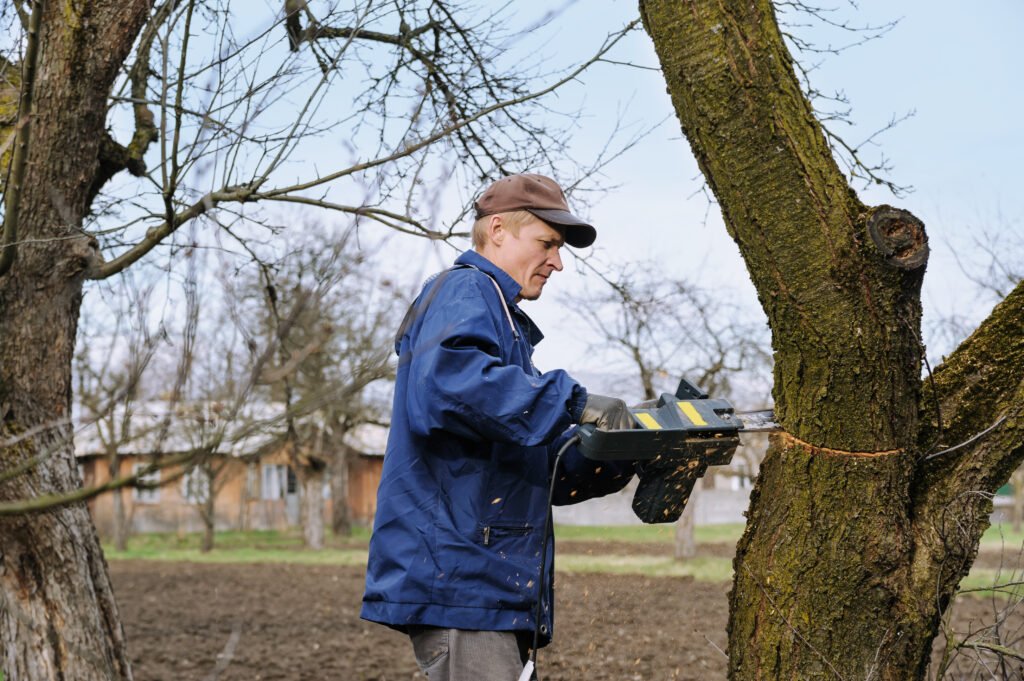
Different arborists may recommend different solutions because tree assessment involves professional judgement. One arborist may focus on pruning and retention, while another may believe removal is safer. Both may be looking at the same tree, but weighing risk, defects, targets, council requirements, tree value and site conditions differently.
This does not always mean one arborist is wrong. It means tree decisions are rarely based on one simple factor. An AQF Level 5 arborist, consulting arborist, climbing arborist, or tree removal crew may each view the tree through a slightly different lens. For complex trees, especially near homes, driveways, schools or public areas, written Arborist Reports and recognised risk methods such as QTRA can help explain the reasoning clearly.
Quick Summary
Arborists may differ because they consider:
- Tree health
- Structural defects
- Risk tolerance
- Target areas below the tree
- Council permit requirements
- Possible pruning options
- Long-term retention value
- Cost and access difficulty
- Construction impacts
- Experience and qualification level
- Whether a formal risk assessment method is used
The best recommendation should be evidence-based, practical and clearly explained.
Table of Contents
- Why Tree Advice Can Differ
- Different Qualifications and Experience
- Risk Assessment and QTRA
- Retention vs Removal Thinking
- How Arborist Reports Help
- Questions to Ask When Advice Differs
- Common Mistakes to Avoid
- FAQs
- Summary
- Call Banyan Tree Care
1. Why Tree Advice Can Differ
Trees are living structures, not manufactured objects. Two trees of the same species can behave differently depending on age, soil, defects, pruning history, weather exposure and location.
Different Arborists Melbourne may interpret the same signs differently, such as:
- Fungal growth
- Cracks in the trunk
- Deadwood volume
- Root disturbance
- Lean direction
- Hollow sections
- Branch union strength
- Canopy imbalance
- Previous lopping damage
One arborist may see a defect that can be managed with pruning and monitoring. Another may see the same defect as a future failure risk, especially if the tree is close to a bedroom, driveway or neighbouring property.
The recommendation should always come back to evidence and risk.
2. Different Qualifications and Experience
Not every tree worker has the same qualification, training or role.
You may come across:
- Ground crews
- Climbing arborists
- Tree removal contractors
- Consulting arborists
- AQF Level 3 arborists
- AQF Level 5 arborists
- Tree risk assessors
- Arborists who prepare council reports
An AQF Level 5 arborist is usually more suited to complex assessments, council documentation, development sites, Tree Risk Assessments and formal Arborist Reports. A skilled climbing arborist may be excellent at pruning or removal, but may not always provide the same level of written assessment.
For simple jobs, practical tree experience may be enough. For protected trees, structural defects, neighbour disputes, construction impacts or council permits, higher-level arboricultural assessment is often more appropriate.
3. Risk Assessment and QTRA
Tree risk is not just about whether a tree has a defect. It also depends on what the tree or branch could hit if it failed.
QTRA, or Quantified Tree Risk Assessment, is one method used by trained assessors to consider the likelihood of failure, size of the part, and potential target impact. It helps move the discussion from opinion toward structured risk evaluation.
Risk may change depending on:
- Tree size
- Defect severity
- Occupancy below the tree
- Distance to buildings
- Frequency of use
- Branch size
- Weather exposure
- Consequences of failure
For example, a defective limb over a rarely used garden bed may be managed differently from a similar limb over a driveway, school yard or outdoor seating area.
When arborists use different risk methods, their recommendations may also differ.
4. Retention vs Removal Thinking
Some arborists are more preservation-focused. Others are more risk-averse. Both approaches can be valid, but the recommendation should suit the tree and site.
A retention-focused arborist may recommend:
- Deadwood removal
- Canopy reduction
- Crown thinning
- Weight reduction
- Cable or brace options
- Soil improvement
- Root zone protection
- Ongoing monitoring
A removal-focused recommendation may be suitable when:
- The tree has severe decay
- Root anchorage is poor
- The trunk is splitting
- Major limbs have failed repeatedly
- The tree is dead or declining
- Risk cannot be reduced enough
- The tree conflicts with approved works
- Council supports removal based on evidence
Good arborists do not recommend removal simply because it is easier. They also do not recommend retention when the risk is clearly unacceptable.
5. How Arborist Reports Help
An Arborist Report helps turn a verbal opinion into a documented professional assessment.
A report may include:
- Tree species
- Tree dimensions
- Health and structure
- Site conditions
- Photographs
- Defects observed
- Risk factors
- Pruning options
- Removal justification
- Council considerations
- QTRA findings where used
- Recommended next steps
This is especially helpful when homeowners receive conflicting advice.
Written reports allow you to compare the reasoning, not just the final recommendation. If one arborist says “remove it” and another says “prune it”, the report should explain why.
For council matters, insurance, construction, neighbour issues or protected trees, Arborist Reports are often much stronger than verbal advice.
6. Questions to Ask When Advice Differs
If two arborists recommend different solutions, ask practical questions.
Ask:
- What defect concerns you most?
- Can the tree be retained safely?
- What happens if we only prune it?
- What risk remains after pruning?
- Is removal required or just preferred?
- Is council approval needed?
- Would an Arborist Report help?
- Are you qualified to prepare formal reports?
- Have you used QTRA or another risk method?
- What is the urgency?
- What are the risks of doing nothing?
- What are the long-term maintenance costs?
A professional arborist should be able to explain the recommendation calmly and clearly.
If the answer is vague or based only on fear, get another opinion.
7. Common Mistakes to Avoid
When advice differs, homeowners often feel confused and choose based on price or convenience.
Avoid these mistakes:
- Choosing removal without understanding why
- Ignoring serious defects because one quote was cheaper
- Assuming every arborist has the same qualification
- Accepting tree lopping as a proper solution
- Relying only on verbal advice for protected trees
- Forgetting council approval requirements
- Comparing quotes with different scopes
- Delaying urgent risk work
- Removing a mature tree without considering alternatives
- Keeping an unsafe tree because it still looks green
The right decision should balance tree health, safety, cost, council rules and long-term site use.
FAQs
1. Why do two arborists give different advice?
Two arborists may give different advice because they assess risk, structure, tree health and site conditions differently. One may believe pruning can reduce the risk, while another may believe removal is safer. Their qualifications, experience, risk tolerance and reporting methods can also influence the recommendation. The most useful advice is the one that explains the defects, options, consequences and reasoning clearly.
2. Is an AQF Level 5 arborist better for reports?
An AQF Level 5 arborist is generally more suitable for formal assessments, council applications, development sites, Tree Risk Assessments and Arborist Reports. This level of qualification is often important when written evidence is needed. For physical pruning or removal, an experienced climbing crew may still be required. Complex cases often benefit from both: consulting arborist advice and skilled tree work.
3. What is QTRA in tree assessment?
QTRA stands for Quantified Tree Risk Assessment. It is a structured method used by trained assessors to consider tree failure risk, target exposure and possible consequences. It helps provide a clearer risk-based explanation rather than relying only on personal opinion. QTRA may be useful for mature trees, disputed trees, public areas, schools, commercial sites and trees close to homes or high-use areas.
4. Should I get an Arborist Report if advice conflicts?
Yes, an Arborist Report can help when advice conflicts. A written report documents the tree’s condition, defects, risk factors, photos and recommendations. It allows you to compare the reasoning behind each opinion. Reports are also useful for council permits, insurance matters, neighbour concerns and construction projects. Verbal advice may be enough for simple pruning, but complex decisions usually need written evidence.
5. How do I know which arborist to trust?
Trust the arborist who inspects the tree properly, explains the reasoning, discusses alternatives, understands council requirements and can provide written documentation if needed. Be cautious of anyone who recommends immediate removal without explaining defects, or anyone who says every tree can be saved despite obvious risk. Good arborists Melbourne should balance safety, tree health, practical site use and long-term consequences.
6. Can pruning and removal both be valid options?
Yes. In some cases, pruning may reduce risk enough for the tree to remain. In other cases, removal may be safer or more practical. Sometimes both options are possible, but with different levels of ongoing risk, maintenance and cost. A good arborist should explain what each option means, how much risk remains, and whether council approval or an Arborist Report is required.
Summary
Different arborists may recommend different solutions because tree assessment involves judgement, experience, qualifications and risk evaluation. One arborist may focus on retention, another may focus on safety, and another may consider council evidence or long-term maintenance.
The best advice should be clear, evidence-based and suitable for the site. For complex trees, protected trees, construction impacts or safety concerns, an AQF Level 5 arborist, QTRA-style risk thinking and professional Arborist Reports can help homeowners make a confident decision.
Call Banyan Tree Care for Clear Arborist Advice in Melbourne
If you have received conflicting tree advice, Banyan Tree Care can inspect the tree and explain your options clearly.
We provide arborist inspections, AQF Level 5 Arborist Reports, Tree Risk Assessments, QTRA-informed assessments where suitable, pruning advice, council support, stump grinding and safe tree removal across Melbourne. Call Banyan Tree Care on 0432 277 627 to arrange a professional arborist assessment.