
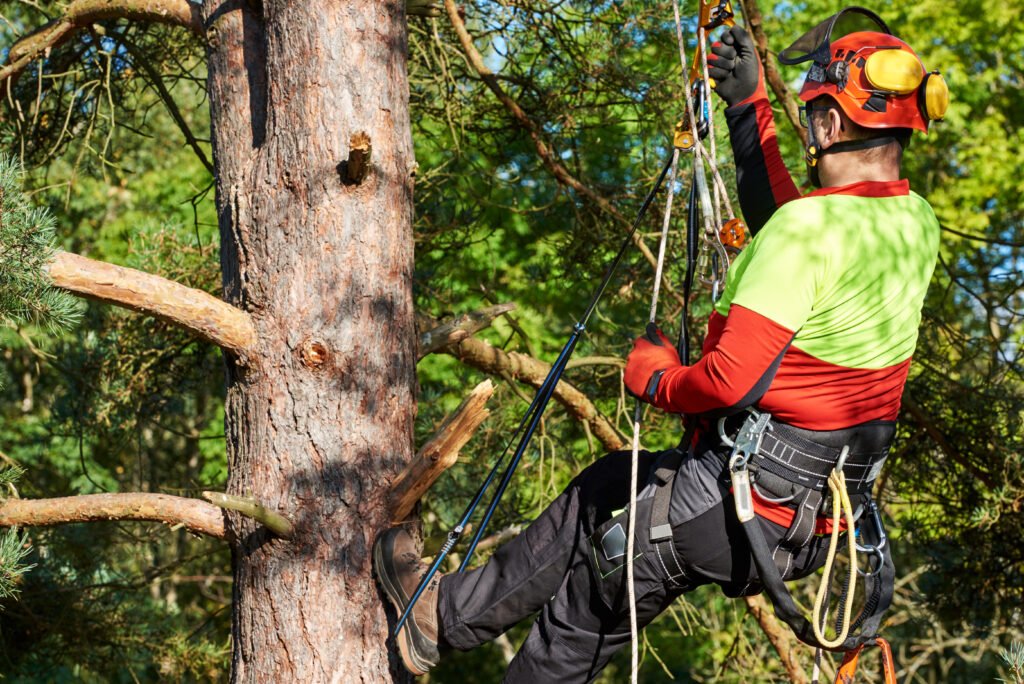
Yes, an arborist can help you obtain council approval by inspecting the tree, preparing an Arborist Report, documenting tree health and structural issues, and explaining why pruning or tree removal may be justified. The arborist does not approve the application. Council makes the final decision. However, a clear professional report can give council the evidence needed to assess your request properly. In Melbourne, tree removal and major pruning rules vary between councils, and some situations may require a planning permit, especially where overlays, significant trees or protected vegetation are involved.
Quick Summary
An arborist can help with council approval by:
-
- Inspecting the tree professionally
-
- Identifying health or structural defects
-
- Taking photographs and measurements
-
- Preparing an Arborist Report
-
- Explaining pruning or removal recommendations
-
- Assessing risk to people and property
-
- Helping support a permit application
-
- Advising whether tree pruning may be enough
-
- Recommending Tree Removal Melbourne service where justified
-
- Helping avoid illegal removal or unnecessary delays
The stronger the evidence, the easier it is for council to understand the reason for your application.
Table of Contents
-
- Why Council Approval May Be Needed
-
- What an Arborist Does Before an Application
-
- What Is Included in an Arborist Report?
-
- Can an Arborist Guarantee Approval?
-
- When Tree Removal May Be Supported
-
- When Council May Prefer Tree Retention
-
- Common Mistakes to Avoid
-
- FAQs
-
- Summary
-
- Call Banyan Tree Care
1. Why Council Approval May Be Needed
Many homeowners assume they can remove any tree on their property. That is not always correct. Council approval may be required depending on the tree’s size, species, location, planning overlays, heritage controls, native vegetation rules or local laws. Some councils also consider the tree’s contribution to neighbourhood canopy, health, size and whether replacement planting is needed.
Approval may be needed for:
-
- Tree removal
-
- Major pruning
-
- Tree lopping
-
- Works near protected trees
-
- Development affecting tree roots
-
- Removal of significant vegetation
-
- Trees listed under local controls
Because rules vary between councils, a qualified arborist Melbourne can help you understand whether a formal report or application may be required.
2. What an Arborist Does Before an Application
Before supporting a council application, an arborist inspects the tree and site.
They usually assess:
-
- Tree species
-
- Height and canopy spread
-
- Trunk diameter
-
- Tree health
-
- Structural condition
-
- Deadwood
-
- Cracks or cavities
-
- Fungal growth
-
- Root condition
-
- Site risks
-
- Distance from buildings
-
- Possible pruning options
-
- Whether removal is justified
This inspection helps determine whether the tree can be retained, pruned, monitored or removed.
A good arborist will not recommend removal simply because the tree is inconvenient. They look for evidence that supports the recommendation.
3. What Is Included in an Arborist Report?
An Arborist Report is often the most important document in a council tree application.
It may include:
-
- Property details
-
- Tree location
-
- Tree species
-
- Measurements
-
- Photographs
-
- Health assessment
-
- Structural assessment
-
- Risk observations
-
- Root zone comments
-
- Site conditions
-
- Recommended action
-
- Reasoning behind the recommendation
For some planning permit pathways, a qualified arborist report may be required when applying to remove, destroy or lop a tree.
The purpose of the report is to give council clear, professional information rather than relying on personal opinion.
4. Can an Arborist Guarantee Approval?
No. An arborist cannot guarantee council approval.
Council makes the final decision based on:
-
- Local laws
-
- Planning controls
-
- Tree condition
-
- Environmental value
-
- Neighbourhood canopy
-
- Safety concerns
-
- Development impact
-
- Replacement planting requirements
-
- Evidence provided in the application
An arborist can improve the quality of the application by providing technical evidence, photographs and professional reasoning.
If the tree is healthy, structurally sound and protected, council may refuse removal even if the owner prefers it gone.
The arborist’s role is to provide honest advice; not promise an outcome they do not control.
5. When Tree Removal May Be Supported
Council may be more likely to consider removal where there is clear evidence that the tree presents a genuine problem.
This may include:
-
- Severe decay
-
- Major structural defects
-
- Dead or dying condition
-
- Serious storm damage
-
- Root instability
-
- Repeated branch failure
-
- Unacceptable risk to people or property
-
- Major conflict with approved construction
-
- Damage that cannot be managed through pruning
Professional tree removal Melbourne may also be recommended when pruning would not reduce the risk enough.
Where safety is the concern, a Tree Risk Assessment can help explain the likelihood of failure, possible consequences and why removal may be appropriate.
6. When Council May Prefer Tree Retention
Council may prefer a tree to be retained if it is healthy, structurally sound and contributes to the local canopy.
Instead of removal, an arborist may recommend:
-
- Deadwood removal
-
- Crown reduction
-
- Crown thinning
-
- Clearance pruning
-
- Root management
-
- Ongoing monitoring
-
- Tree protection during construction
This is where professional Tree Pruning Melbourne can be useful. Sometimes the issue can be managed without removing the whole tree.
For example, if branches are too close to a roof, pruning may solve the problem. If roots are affecting paving, root-sensitive design may be better than removal. Council will usually want to know whether reasonable alternatives have been considered.
7. Common Mistakes to Avoid
Homeowners often make council approval harder by rushing the process.
Avoid these mistakes:
-
- Removing a tree before checking council rules
-
- Assuming private property means automatic approval
-
- Submitting poor-quality photos
-
- Providing no arborist evidence
-
- Claiming a tree is dangerous without proof
-
- Asking for removal when pruning would solve the issue
-
- Ignoring planning overlays
-
- Cutting roots or branches before approval
-
- Using unqualified tree lopping advice
-
- Waiting until construction is already delayed
Illegal tree removal can result in enforcement action, fines or replacement planting requirements. Some councils specifically warn landowners to get professional advice before removing trees.
FAQs
1. Can an arborist get council approval for tree removal?
An arborist cannot approve tree removal. They support your council application by inspecting the tree, preparing an Arborist Report, and explaining health, safety, or structural issues. Council reviews this evidence and makes the final decision. A strong report helps clarify risks such as decay, instability, or property damage and improves the chance of approval where removal is justified.
2. Do I always need an Arborist Report for council approval?
No. It depends on the council, tree type, and proposed work. Minor pruning may not need a report, but tree removal, major pruning, protected trees, or development impacts often do. If council requests evidence, an Arborist Report is usually required. An arborist can assess the tree and confirm if a report is needed.
3. What does council look for in an Arborist Report?
Council looks for clear details on species, size, health, structure, risk, and reasons for the work. Photos, measurements, and professional recommendations are important. They also check if alternatives like pruning were considered. A good report explains the arborist’s reasoning clearly, not just a request for removal.
4. Can council refuse removal even with an Arborist Report?
Yes. Council can still refuse if the tree is healthy, protected, or manageable through pruning. The report supports your case but does not guarantee approval. Decisions depend on local laws, planning rules, and environmental value. A professional arborist will advise if removal is realistically justified.
5. Can an arborist help with urgent or dangerous trees?
Yes. Arborists can assess dangerous or storm-damaged trees quickly and recommend actions like emergency removal, pruning, or risk reduction. They can also provide documentation for council if needed. If there is immediate danger, keep clear of the area and contact a qualified arborist urgently.
6. Should I contact council or an arborist first?
If unsure about tree protection rules, contact council first. However, for safety issues, damage, disease, or removal concerns, an arborist is often the best first step. They can assess the tree, explain options, and advise if a report is needed, helping you avoid delays or incomplete applications.
Summary
An arborist can be very helpful when applying for council approval to remove or prune a tree. They inspect the tree, document its condition, assess risk, consider alternatives and prepare a professional report where needed. While council makes the final decision, a well-prepared Arborist Report gives your application stronger evidence and helps avoid confusion.
If the tree is unsafe, declining, storm damaged or causing serious issues, professional documentation can explain why removal may be justified. If the tree can be retained, an arborist may recommend pruning, monitoring or root management instead.
Call Banyan Tree Care for Council Tree Approval Support
If you need help with council approval for tree removal or major pruning, Banyan Tree Care can inspect your tree and advise the best next step.
We provide professional Arborist Services Melbourne, Arborist Reports, Tree Risk Assessments, tree pruning, emergency tree removal in Melbourne, stump grinding Melbourne and safe tree removal where removal is genuinely required. Contact Banyan Tree Care on 0432 277 627 to arrange a professional arborist inspection.