
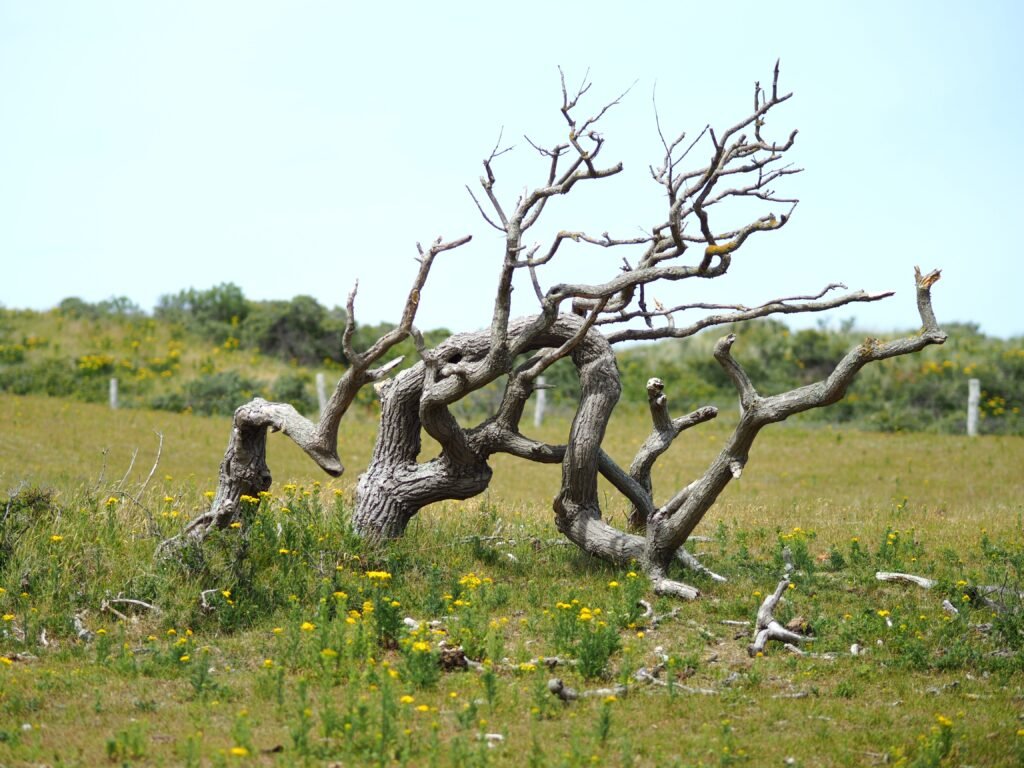
You may be able to leave a dead tree standing if it is in a low-risk area, but you should not make that decision based only on appearance. A dead tree that seems harmless today can become unstable as timber decays, roots weaken and branches become brittle. The risk depends on the tree’s size, location, condition and what it could hit if it failed.
In Melbourne backyards, dead trees are often close to homes, fences, sheds, garages, driveways, pools, powerlines or neighbouring properties. In those situations, leaving the tree standing can become a safety and liability issue. A professional tree inspection can confirm whether the tree can remain as habitat, needs partial reduction, or requires Tree Removal Melbourne services.
Quick Summary
A dead tree may be left standing only if:
- It is far from people and property
- Falling branches will not cause damage
- The trunk is still structurally stable
- It is not leaning toward buildings
- It provides wildlife habitat
- Council rules allow it
- It can be monitored safely
A dead tree should usually be removed if it is near homes, fences, driveways, outdoor areas, neighbouring land or public access points.
Table of Contents
- Why Dead Trees Become Risky
- When a Dead Tree May Be Left Standing
- When Dead Tree Removal Is Safer
- Habitat Value vs Safety Risk
- What About the Stump?
- Council and Insurance Considerations
- Common Mistakes to Avoid
- FAQs
- Summary
- Call Banyan Tree Care
1. Why Dead Trees Become Risky
A living tree can respond to wounds and defend itself against decay. A dead tree cannot. Once it dies, fungi, insects, weather and moisture begin breaking down the wood.
Over time, this affects:
- Branch strength
- Trunk stability
- Root anchorage
- Bark attachment
- Major limb unions
- Internal timber condition
Dead branches may fall during wind, rain or calm weather. The trunk may split or fail as decay progresses. Roots may also lose strength below ground, making the whole tree less stable.
The problem is that deterioration is not always visible from a distance. A dead tree may stand for years, or it may fail suddenly after heavy rain or strong wind.
2. When a Dead Tree May Be Left Standing
A dead tree may sometimes be retained if the risk is low and the site allows it.
This may be suitable when:
- The tree is in a quiet back corner
- It is away from homes and fences
- It is not near driveways or paths
- The trunk is stable
- Large dead limbs have been removed
- Wildlife habitat is valuable
- The tree can be monitored
- Council rules do not require removal
In some cases, an arborist may recommend reducing the tree to a habitat pole. This means removing the dangerous upper canopy or unstable limbs while leaving part of the trunk standing for wildlife.
This option can work well where safety can be managed and the tree has habitat value.
3. When Dead Tree Removal Is Safer
Dead Tree Removal is usually safer when the tree is close to people, buildings or property.
Removal may be recommended if the tree is near:
- Houses
- Bedrooms
- Carports
- Garages
- Driveways
- Fences
- Sheds
- Pools
- Outdoor entertaining areas
- Children’s play areas
- Neighbouring properties
- Public footpaths
Removal may also be needed if the tree has:
- Large dead limbs
- Trunk cracks
- Fungal growth
- A sudden lean
- Hollow sections
- Termite activity
- Loose bark
- Root movement
- Previous branch failures
A planned tree removal Melbourne job is usually safer and more controlled than emergency removal after the tree has fallen.
4. Habitat Value vs Safety Risk
Dead trees can have environmental value. They may provide nesting hollows, food sources, shelter and insect habitat for birds, possums, bats and other wildlife.
This is why removal is not always the only option.
An arborist may consider:
- Is the tree used by wildlife?
- Is the trunk stable?
- Are large limbs likely to fall?
- What is beneath the tree?
- Can the tree be reduced safely?
- Can habitat be retained without creating risk?
- Is replacement planting appropriate?
The goal is to balance habitat with safety. A dead tree in a bushland-style corner may be useful. A dead tree over a roof or driveway is different.
Good Tree Services in Melbourne should help you understand both sides, not simply recommend cutting everything down.
5. What About the Stump?
If the dead tree is removed, the stump can be left, ground down or fully removed depending on how you want to use the area.
You may consider tree and stump removal if:
- You want to replant
- The stump is a trip hazard
- You are landscaping
- Paving or turf is planned
- The stump attracts pests
- Regrowth is possible
- The stump is in the way of fencing or access
Stump grinding is often enough for normal garden use. Full stump removal may be needed where excavation, construction or new planting in the same spot is planned.
Leaving a stump can be acceptable in garden beds, but it should not create a hazard or pest issue near the home.
6. Council and Insurance Considerations
Council rules vary across Melbourne. Some dead trees can be removed without much difficulty, while others may still require evidence, especially if they are protected, native, significant or located on a property with planning controls.
Before removing a large dead tree, consider:
- Is the tree protected?
- Is it covered by an overlay?
- Does council need photos or an Arborist Report?
- Is the tree near a boundary?
- Is wildlife habitat involved?
- Is the tree part of a development site?
Insurance can also become relevant. If a clearly dead and unsafe tree is left standing and later damages property, the question may arise whether reasonable action was taken. Written arborist advice can help show that the tree was assessed properly.
7. Common Mistakes to Avoid
Avoid these mistakes with dead trees:
- Assuming it is safe because it has stood for years
- Waiting until branches start falling
- Letting children play near it
- Parking cars underneath
- Climbing the tree yourself
- Cutting large dead limbs without training
- Ignoring termites, fungi or cracks
- Removing protected trees without checking council rules
- Grinding the stump before evidence is documented
- Choosing the cheapest removal quote without checking safety
Dead timber can behave unpredictably. A dead tree that is unsafe to climb may need special equipment, careful dismantling or additional crew.
FAQs
1. Can I leave a dead tree standing in my backyard?
You may leave a dead tree if it is far from buildings, fences and people. However, it should be assessed because decay weakens timber over time. If there are cracks, lean, fungi or large limbs, removal or reduction is usually safer. An arborist can confirm the best option.
2. Is a dead tree dangerous if it is not dropping branches?
Yes. A dead tree can still be dangerous even without visible branch drop. Internal decay, root failure or hidden cracks can cause sudden collapse. Wind or rain may trigger failure. If it is near people or property, an inspection is recommended to assess risk properly.
3. How long can a dead tree stand?
There is no set timeframe. Some stand for years, others fail quickly due to decay, termites, storms or root damage. Conditions like soil, species and structure all affect stability. Because failure is unpredictable, dead trees near homes or access areas should be assessed early.
4. Can a dead tree be kept for wildlife?
Yes, if it is safe. Dead trees can support birds, insects and possums. In residential areas, arborists may reduce them to habitat poles to lower risk while keeping ecological value. This balances wildlife benefits with safety around people and property.
5. Should I remove the stump as well?
Remove or grind the stump if it causes hazards, attracts pests, blocks landscaping or affects construction. If it is not in the way, it can be left to decay. Stump removal is usually preferred when you want full site use or replanting.
6. Do I need approval to remove a dead tree?
Possibly. Some councils require approval for protected, native or significant trees, even if dead. Evidence like photos or arborist reports may be needed. Always check local rules before arranging tree removal Melbourne services for large or regulated trees.
Summary
A dead tree can sometimes be left standing if it is in a low-risk area and has habitat value. However, dead trees become weaker over time and may eventually drop branches, split, decay or fail at the roots. If the tree is near people, buildings, fences, driveways or neighbouring property, removal is usually the safer option.
The best decision comes from a professional inspection. An arborist can assess the tree, explain the risk, consider habitat value, and recommend whether to retain, reduce or remove it.
Call Banyan Tree Care for Dead Tree Advice in Melbourne
If you have a dead tree standing on your property, Banyan Tree Care can inspect it and recommend the safest next step.
We provide dead tree inspections, hazardous tree removal, tree and stump removal, stump grinding, Tree Risk Assessments, Arborist Reports, emergency tree work and professional tree services in Melbourne. Call Banyan Tree Care on 0432 277 627 to arrange a professional tree assessment.