
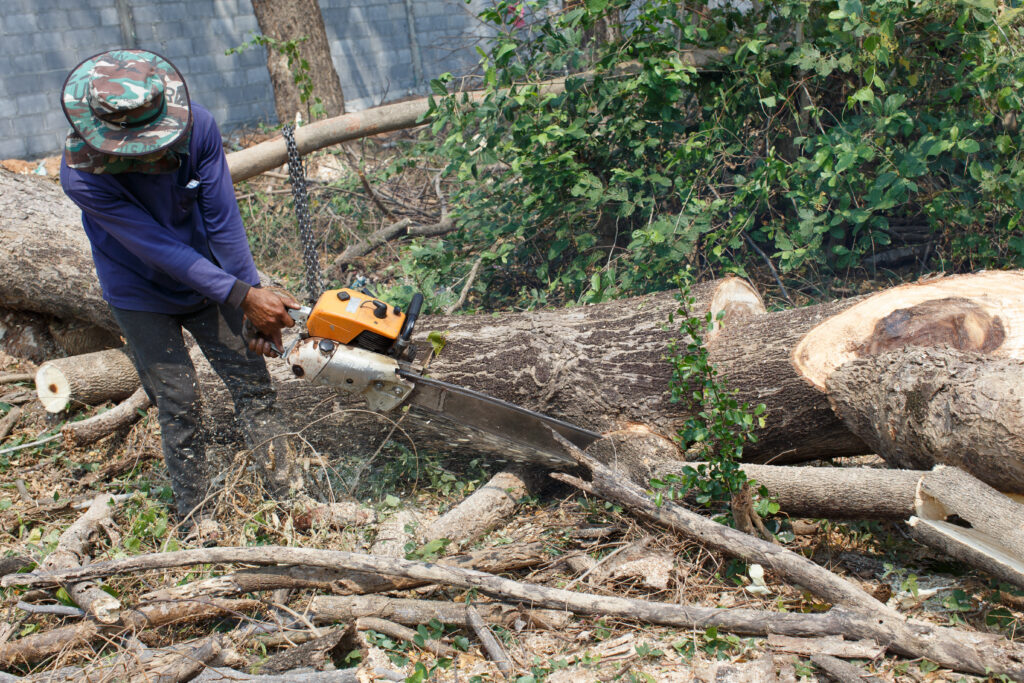
A qualified arborist uses a systematic inspection process to assess the tree’s health, structure, surrounding environment, and level of risk before deciding whether it can be safely retained or whether Tree Removal in Melbourne is the safest option. In this guide, you’ll learn how professional arborists assess dangerous trees, what warning signs they look for, and why every recommendation is based on evidence rather than guesswork. A tree doesn’t have to be dead to be dangerous. Many of the most hazardous trees in Melbourne still have green leaves and appear healthy from a distance. Hidden decay, root failure, structural defects, storm damage, or poor growing conditions can all increase the likelihood of tree failure.
Quick Summary
A qualified arborist doesn’t recommend tree removal simply because a tree is large or old.
Instead, they assess:
- The tree’s structural integrity
- Overall tree health
- Root stability
- Species characteristics
- Site conditions
- Targets such as homes, roads and pedestrians
- The likelihood of failure
- The consequences if the tree fails
Only after considering all these factors will an arborist determine whether pruning, ongoing monitoring, structural support, or tree removal Melbourne is the most appropriate solution.
Table of Contents
- What Makes a Tree Dangerous?
- Why Healthy Trees Can Still Fail
- How Arborists Assess Dangerous Trees
- Signs a Tree May Need Removal
- How Tree Risk Assessments Are Performed
- Tree Health vs Tree Stability
- Environmental Factors That Increase Risk
- When a Tree Can Be Retained
- When Tree Removal Is the Safest Option
- Australian Standards and Industry Best Practice
- Common Mistakes Homeowners Make
- Frequently Asked Questions
- Final Thoughts
What Makes a Tree Dangerous?
A dangerous tree is one that has a realistic likelihood of failing and causing harm to people, property, vehicles, or infrastructure.
A tree becomes hazardous when one or more of the following are present:
- Significant structural defects
- Advanced decay
- Root instability
- Storm damage
- Large dead branches
- Severe pest or disease infestation
- Poor attachment of major limbs
- Leaning caused by root failure
It’s important to remember that size alone does not make a tree dangerous. Many large, mature trees remain safe for decades when properly maintained.
Why Healthy Trees Can Still Fail
One of the biggest misconceptions is that green leaves mean a tree is safe.
In reality, arborists regularly inspect trees that have:
- Healthy canopies
- Strong seasonal growth
- Green foliage
…but are internally compromised by decay or structural weakness.
Examples include:
- Hollow trunks
- Hidden fungal decay
- Cracked stems
- Root plate movement
- Internal cavities
This is why visual appearance alone should never determine whether a tree is safe.
How Arborists Assess Dangerous Trees
Professional arborists Melbourne follow a structured inspection process rather than relying on instinct.
Every assessment considers multiple factors.
1. Tree Species
Different tree species have different characteristics.
For example:
- Some eucalyptus species naturally shed limbs during hot weather.
- Some ornamental trees have relatively short life spans.
- Palm trees have different structural characteristics to broadleaf trees.
Understanding species behaviour helps arborists predict likely defects and future performance.
2. Tree Health
The arborist evaluates whether the tree is actively growing and functioning normally.
This includes inspecting:
- Leaf size and colour
- Canopy density
- New growth
- Deadwood
- Disease symptoms
- Pest activity
A healthy tree generally responds better to pruning and management than a declining tree.
3. Structural Integrity
One of the most important parts of any inspection is evaluating the tree’s structure.
Arborists look for:
- Cracks in the trunk
- Splits between major limbs
- Included bark
- Cavities
- Weak branch unions
- Excessive lean
- Previous poor pruning
These defects may increase the likelihood of branch or whole-tree failure.
4. Root System Assessment
Healthy roots provide the stability every tree depends on.
Professional inspections include checking for:
- Exposed roots
- Root decay
- Soil movement
- Root damage from construction
- Root plate lifting
- Compacted soil
- Poor drainage
Root failure is one of the most common causes of complete tree collapse.
5. Signs of Decay
Decay isn’t always visible from the outside.
Experienced arborists look for:
- Fungal fruiting bodies
- Cavities
- Hollow sounds when tapped
- Loose bark
- Soft timber
- Decay around pruning wounds
Some defects may require further investigation before recommendations are made.
6. Tree Lean
A leaning tree isn’t automatically dangerous.
The arborist determines:
- Whether the lean is natural
- Whether it has recently changed
- If roots have failed
- Whether soil movement has occurred
Sudden changes in lean usually require urgent investigation.
7. Deadwood
Dead branches increase risk, particularly over:
- Homes
- Driveways
- Schools
- Parks
- Footpaths
- Outdoor entertaining areas
Professional Tree Pruning Melbourne can often remove hazardous deadwood without removing the entire tree.
How Tree Risk Assessments Are Performed
A Tree Risk Assessment is a structured evaluation rather than a simple visual inspection.
The arborist considers four key questions:
What could fail?
Examples include:
- Branches
- Main stem
- Entire tree
- Root system
How likely is failure?
Some defects present little immediate concern.
Others have a high likelihood of failure during storms or strong winds.
What could the tree hit?
Risk depends on nearby targets such as:
- Houses
- Cars
- Pedestrians
- Playgrounds
- Roads
- Commercial buildings
What would the consequences be?
A small branch over a garden bed carries a different level of risk than a large limb hanging above a family home.
Professional recommendations balance both the likelihood and consequences of failure.
Tree Health Doesn’t Always Mean Tree Safety
One of the most important concepts in arboriculture is that tree health and tree safety are not the same thing.
A tree may be:
- Healthy but structurally unstable
- Structurally sound but suffering nutrient deficiencies
- Declining yet still stable
This distinction explains why two trees with similar appearances may receive completely different recommendations.
Environmental Factors That Increase Risk
Trees don’t exist in isolation.
Professional arborists also assess external factors including:
Melbourne’s Weather
High winds, prolonged rainfall and summer heat can all affect tree stability.
Storm-damaged trees should always be inspected promptly.
Soil Conditions
Poor drainage, erosion and compacted soil reduce root health and stability.
Construction Activity
Excavation, trenching and changes to ground levels can damage roots without obvious above-ground symptoms.
Powerlines
Trees growing near overhead powerlines require specialised management and may involve additional safety requirements.
When a Tree Can Be Retained
Removal isn’t always necessary.
Many trees can be safely retained through:
- Structural pruning
- Crown reduction
- Crown thinning
- Deadwood removal
- Root management
- Pest treatment
- Soil improvement
- Regular monitoring
Retaining mature trees often provides greater environmental and property value than immediate removal.
When Tree Removal Is the Safest Option
A qualified arborist may recommend tree removal Melbourne services when:
- Structural defects cannot be corrected
- Root failure is advanced
- Extensive decay affects stability
- The tree is dead and deteriorating
- Storm damage is beyond repair
- The level of risk is unacceptable
- Council approval has been obtained where required
Removal should generally be the final management option after reasonable alternatives have been considered.
Australian Standards and Industry Best Practice
Professional arborist services Melbourne are guided by recognised Australian Standards.
These include:
AS 4373 – Pruning of Amenity Trees
Provides guidance on:
- Structural pruning
- Crown reduction
- Tree preservation
- Correct pruning techniques
AS 4970 – Protection of Trees on Development Sites
Supports tree protection during construction by managing:
- Tree Protection Zones
- Root disturbance
- Soil compaction
- Construction impacts
These standards help arborists make consistent, evidence-based recommendations.
Common Mistakes Homeowners Make
Over many years of inspecting trees across Melbourne, we’ve seen the same mistakes repeated.
Common examples include:
- Assuming a green tree is safe.
- Ignoring fungal growth at the base.
- Removing healthy trees unnecessarily.
- Delaying inspections after storms.
- Cutting major roots during renovations.
- Hiring contractors who don’t assess the tree before recommending removal.
- Confusing tree lopping with professional arboriculture.
Professional inspections help avoid costly errors and unnecessary removals.
Frequently Asked Questions
1. Can a healthy-looking tree still be dangerous?
Yes. Internal decay, structural defects and root failure may not be visible without a professional inspection.
2. How does an arborist know if a tree might fall?
Arborists assess structural defects, root stability, decay, species characteristics, site conditions, and potential targets to estimate the likelihood of failure.
3. Does a leaning tree always need removal?
No. Some trees naturally lean throughout their lives. Sudden or increasing lean, particularly with root movement, is much more concerning.
4. What is the biggest warning sign of a dangerous tree?
There isn’t one single sign. Arborists look at the overall combination of structural defects, decay, root health, site conditions, and likelihood of failure.
5. Can tree pruning make a dangerous tree safe?
In many cases, yes. Removing deadwood, reducing canopy weight, or carrying out structural pruning can significantly reduce risk.
6. What role does fungus play in tree assessments?
Certain fungi indicate internal decay affecting the strength of the trunk or roots. Their presence often warrants further investigation.
7. How often should mature trees be inspected?
Trees near homes, schools, commercial buildings, or high-use areas should be inspected periodically, especially after severe weather.
8. Do arborists use special equipment to inspect trees?
Yes. Depending on the situation, inspections may involve mallets, sounding tools, probing equipment, binoculars, drones, elevated work platforms, or advanced diagnostic technology where appropriate.
9. Will council require an Arborist Report before removing a tree?
Many Melbourne councils require an Arborist Report for protected or significant trees, particularly where removal applications are involved.
10. Is removal always the first recommendation?
No. Professional arborists aim to retain trees wherever it is safe and practical to do so. Removal is generally recommended only when the risks cannot be managed through pruning, monitoring, or other treatments.
Final Thoughts
Determining whether a tree is dangerous involves far more than looking at dead branches or a leaning trunk. A qualified arborist considers tree biology, structural integrity, root health, environmental conditions, nearby targets, and accepted arboricultural practices before making a recommendation. This evidence-based approach ensures that healthy trees are preserved whenever possible while genuinely hazardous trees are identified before they cause damage.
At Banyan Tree Care, our experienced team provides professional Arborist Services Melbourne, detailed Tree Risk Assessments, Arborist Reports, expert tree pruning Melbourne, and safe tree removal Melbourne solutions across residential, commercial, and development sites. Every recommendation is based on careful inspection, Australian industry best practice, and a commitment to protecting both people and the long-term health of Melbourne’s urban forest. If you’re concerned about a tree on your property, don’t wait until it becomes an emergency. Contact Banyan Tree Care on 0432 277 627 to arrange a professional assessment and receive clear, expert advice you can trust.