
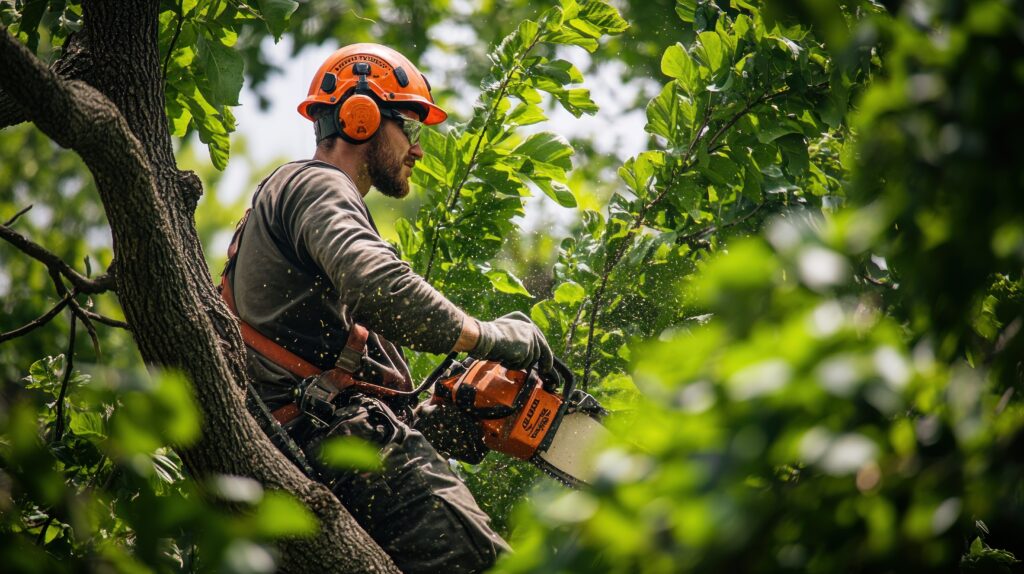
A general tree lopper is usually focused on cutting or removing trees, whereas a qualified arborist is trained to assess tree health, structural integrity, safety risks, council requirements, and the most appropriate long-term solution for both the tree and your property. If you’re looking for tree removal in Melbourne, you’ll often come across businesses advertising Tree Lopping, Tree Cutting, or arborist services. At first glance, they may seem like the same thing. They’re not. Understanding this difference can help you avoid unnecessary tree removal, protect valuable trees, and ensure work is carried out safely and in accordance with industry best practice.
Quick Summary
A qualified arborist doesn’t simply ask, “How do we remove this tree?”
They first ask:
- Does the tree actually need to be removed?
- Can it be safely retained?
- Is pruning a better option?
- Is the tree structurally sound?
- Does council approval apply?
- What is the long-term impact on the property?
A tree lopper may complete the physical work, but an arborist provides the knowledge and professional judgement that determines the right solution.
Table of Contents
- What Is a General Tree Lopper?
- What Is a Qualified Arborist?
- The Biggest Difference Between the Two
- Qualifications and Professional Training
- How Arborists Assess Trees
- Tree Lopping vs Professional Tree Pruning
- When You Can Use a Tree Lopper
- When You Should Always Hire an Arborist
- Australian Standards Arborists Follow
- Council Tree Permits and Arborist Reports
- Common Mistakes Homeowners Make
- Choosing the Right Tree Professional
- Frequently Asked Questions
- Final Thoughts
What Is a General Tree Lopper?
A tree lopper is someone who performs physical tree work such as cutting branches or removing trees.
Typical services include:
- Tree cutting
- Branch removal
- Tree trimming
- Basic tree removal
- Green waste removal
Some tree loppers have years of practical experience and complete excellent work. Others may have little formal training. The important thing to understand is that “tree lopper” is not a recognised professional qualification.
That means the level of knowledge, experience, and workmanship can vary significantly between contractors.
What Is a Qualified Arborist?
A qualified arborist is a tree specialist who has studied the science of trees as well as the practical skills needed to manage them safely.
Professional arborists understand:
- Tree biology
- Tree health
- Tree biomechanics
- Root systems
- Soil health
- Pest and disease management
- Structural defects
- Tree Risk Assessment
- Australian Standards
- Council regulations
- Tree preservation
Their role extends well beyond tree cutting.
An experienced arborist in Melbourne provides advice that protects people, property, and valuable trees while helping clients make informed decisions.
The Biggest Difference Is Professional Judgement
The biggest difference between a tree lopper and an arborist isn’t the equipment they use. It’s the decisions they make.
A general tree lopper may arrive expecting to remove or cut back a tree.
A qualified arborist first asks:
- Why is the tree causing concern?
- Is it healthy?
- Is it structurally stable?
- Can the problem be solved through pruning?
- Does the tree provide environmental or landscape value?
- Is removal actually necessary?
This approach often saves homeowners thousands of dollars by avoiding unnecessary work.
Qualifications and Professional Training
Qualified arborists complete formal education and ongoing professional development.
Training commonly includes:
- Tree identification
- Hazard assessment
- Climbing and rigging techniques
- Safe pruning methods
- Root management
- Tree preservation during construction
- Pest and disease diagnosis
- Arborist report writing
Many arborists also hold internationally recognised credentials such as ISA Certified Arborist, demonstrating a commitment to global arboricultural standards.
How Arborists Assess Trees
Every professional assessment begins with a thorough inspection.
Tree Health
The arborist examines:
- Leaf colour
- Canopy density
- New growth
- Deadwood
- Signs of disease
- Pest activity
A healthy tree may simply require routine maintenance rather than removal.
Structural Condition
The tree’s structure is inspected for:
- Cracks
- Cavities
- Included bark
- Weak branch unions
- Trunk decay
- Previous poor pruning
Some defects are obvious. Others require an experienced eye to identify.
Root System
Healthy roots are essential for tree stability.
An arborist checks for:
- Root damage
- Soil movement
- Root decay
- Construction impacts
- Compacted soil
- Drainage issues
Many dangerous tree failures begin below ground.
Site Conditions
A tree cannot be assessed in isolation.
The arborist also considers:
- Nearby homes
- Fences
- Roads
- Schools
- Parks
- Powerlines
- Neighbouring properties
The same tree may require different management depending on its location.
Tree Lopping vs Professional Tree Pruning
Many homeowners use the terms interchangeably, but they are very different.
Tree Lopping
Traditional tree lopping often involves:
- Removing large limbs indiscriminately
- Topping trees
- Excessive canopy removal
- Poor quality cuts
These practices can:
- Increase decay
- Encourage weak regrowth
- Reduce structural integrity
- Shorten the tree’s lifespan
Professional Tree Pruning
Qualified arborists use recognised pruning techniques including:
- Crown thinning
- Crown reduction
- Crown lifting
- Structural pruning
- Deadwood removal
These methods improve safety while maintaining tree health and appearance.
Professional Tree Pruning Melbourne services are designed to support the long-term health of the tree rather than simply reducing its size.
When a Tree Lopper May Be Suitable
There are situations where straightforward tree cutting is all that’s required.
Examples include:
- Removing a small ornamental tree
- Clearing shrubs
- Removing approved trees
- Basic vegetation clearance
Even then, always check that the contractor is insured and experienced.
When You Should Always Hire an Arborist
Professional arborist services Melbourne are recommended when:
- A large tree is close to your home
- The tree is leaning
- Storm damage has occurred
- You suspect disease or decay
- Construction is planned
- Tree roots are affecting foundations
- Council approval may be required
- You’re unsure whether the tree should stay or go
These situations require expert assessment before any cutting begins.
Australian Standards Arborists Follow
Qualified arborists work in accordance with recognised Australian Standards where applicable.
AS 4373 – Pruning of Amenity Trees
This standard provides guidance on:
- Correct pruning methods
- Tree preservation
- Canopy management
- Minimising tree stress
AS 4970 – Protection of Trees on Development Sites
This standard helps protect trees during construction by managing:
- Tree Protection Zones
- Root disturbance
- Soil compaction
- Construction impacts
These standards support better outcomes for both trees and property owners.
Council Tree Permits and Arborist Reports
Many Melbourne councils regulate the removal or significant pruning of trees.
A qualified arborist can assist with:
- Arborist Reports
- Tree Risk Assessments
- Development Applications
- Tree Protection Plans
- Council permit applications
Most general tree loppers cannot provide these professional documents.
Common Mistakes Property Owners Make
As consulting arborists, we regularly see avoidable mistakes that lead to unnecessary costs or long-term tree problems.
Common examples include:
- Choosing the cheapest quote without checking qualifications
- Removing healthy trees unnecessarily
- Assuming every leaning tree is dangerous
- Over-pruning trees to reduce maintenance
- Ignoring early signs of decay
- Hiring uninsured contractors
- Failing to check council requirements before work begins
Professional advice at the start of the process usually prevents these issues.
Choosing the Right Tree Professional
Before hiring anyone, ask these questions:
- Are you a qualified arborist?
- What formal qualifications do you hold?
- Are you fully insured?
- Do you follow Australian Standards?
- Can you explain why you’re recommending removal?
- Can you prepare an Arborist Report if required?
- Have you worked with Melbourne council permit applications?
An experienced professional will welcome these questions and provide clear answers.
Real-World Example
A homeowner contacted Banyan Tree Care believing a large eucalyptus tree needed to be removed because it was dropping bark and branches.
After carrying out a Tree Risk Assessment, we found the tree was healthy. The bark shedding was normal for the species, while the dead branches were confined to the outer canopy. A structural prune and deadwood removal reduced the risk without removing the tree.
The homeowner avoided the cost of a large tree removal Melbourne project while retaining the shade, habitat value, and character the mature tree provided.
In another case, a healthy-looking tree near a driveway showed extensive decay at the base during inspection. Although the canopy appeared vigorous, internal structural damage meant the likelihood of failure was high. Removal was recommended because the risk to people and vehicles could not be reduced through pruning alone.
These examples highlight why professional assessment is far more valuable than judging a tree by appearance alone.
Frequently Asked Questions
1. Is a tree lopper the same as an arborist?
No. A tree lopper primarily carries out tree cutting, while a qualified arborist assesses tree health, structural integrity, risk, and recommends the most appropriate management strategy.
2. Can an arborist remove trees?
Yes. Qualified arborists perform tree removal Melbourne services, but they first determine whether removal is actually necessary.
3. Is tree lopping bad for trees?
Traditional lopping can weaken trees, encourage decay, and create poor regrowth. Modern arboriculture favours selective pruning techniques that maintain tree health.
4. When should I call an arborist instead of a tree cutter?
If you’re unsure whether a tree is safe, need an Arborist Report, require council approval, or have concerns about tree health or stability, contact a qualified arborist first.
5. Can a healthy tree still be dangerous?
Yes. Internal decay, root failure, or structural defects may not be visible from the outside. This is why professional inspections are so important.
6. Do arborists prepare reports for councils?
Yes. Qualified consulting arborists can prepare Arborist Reports, Tree Risk Assessments, and documentation to support council permit applications or development approvals.
7. Why do arborists sometimes recommend pruning instead of removal?
Many trees can be managed safely through structural pruning, crown reduction, or ongoing monitoring. Removal is generally recommended only when the risk cannot be reduced to an acceptable level.
8. Is hiring an arborist worth the extra cost?
In many cases, yes. Professional advice can prevent unnecessary removals, identify hidden defects, protect property, and help you comply with council requirements, saving significant money over time.
9. Can poor tree work reduce property value?
Absolutely. Poor pruning or unnecessary tree removal can affect street appeal, reduce shade, increase energy costs, and impact the overall landscape value of your property.
10. How often should mature trees be inspected?
As a general guide, mature trees should be inspected every few years, while trees near homes, schools, commercial buildings, or those showing signs of decline should be assessed more frequently, particularly after severe storms.
Final Thoughts
The difference between a general tree lopper and a qualified arborist is far greater than the tools they use. A tree lopper focuses on the physical task of cutting trees. A qualified arborist combines practical skills with scientific knowledge, risk assessment, and professional judgement to determine the best outcome for both the tree and the property owner.
At Banyan Tree Care, we believe every tree deserves an informed assessment before major work is carried out. Our experienced team provides professional Arborist Services Melbourne, tree pruning Melbourne, Tree Risk Assessments, Arborist Reports, and safe tree removal Melbourne solutions tailored to your property. Whether you’re concerned about a mature eucalyptus, a hazardous tree after a storm, or simply want expert advice before making a decision, we’ll provide clear recommendations based on industry best practice. If you’re unsure whether a tree should be pruned, retained, or removed, contact Banyan Tree Care on 0432 277 627 to arrange a professional assessment.