
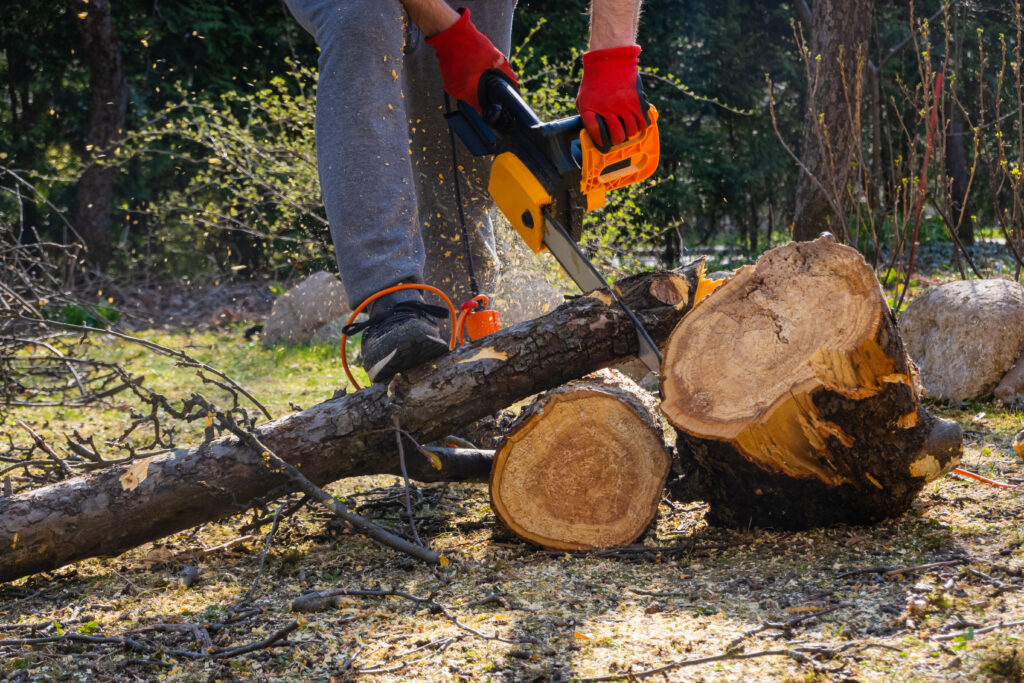
After a tree is removed, the roots do not disappear straight away. In most cases, the remaining root system stays underground and slowly breaks down over time. Some roots naturally decay, some may continue producing shoots depending on the species, and some may remain in the soil for years. Whether those roots need to be treated, ground, excavated, or left alone depends on the tree species, stump condition, future landscaping plans, nearby structures, and whether stump grinding or complete stump removal is required. This guide explains what happens below ground after tree removal, when roots become a problem, and how a qualified arborist can help you choose the right solution for your Melbourne property.
Quick Summary
After professional tree removal Melbourne, the roots usually remain in the soil unless complete stump removal is carried out.
In most situations:
- Roots stop growing once the tree and stump are removed.
- Roots slowly decay underground.
- Some species may send up new shoots if the stump remains alive.
- Stump grinding removes the stump but not the full root system.
- Complete stump removal removes the stump and major roots.
- Roots near pipes, paving, foundations, or landscaping may need further assessment.
- A qualified arborist Melbourne can advise whether roots can be left safely or require removal.
For most residential properties, Stump Grinding Melbourne is enough. Complete root removal is usually only needed for construction, replanting, paving, or serious root-related issues.
Table of Contents
- Do Tree Roots Keep Growing After Tree Removal?
- What Happens to Roots When the Stump Is Left Behind?
- What Happens After Stump Grinding?
- What Happens After Complete Stump Removal?
- How Long Do Tree Roots Take to Decay?
- Can Old Roots Damage Pipes, Paving or Foundations?
- Why Some Trees Regrow After Being Cut Down
- Should You Remove Tree Roots After Tree Removal?
- Stump Grinding vs Root Removal
- Can You Replant Where a Tree Was Removed?
- Do Dead Roots Attract Termites or Fungi?
- What Happens to Soil After Tree Roots Decay?
- Tree Roots and Future Construction
- Common Mistakes Homeowners Make
- Professional Recommendations
- FAQs
- Summary
- Call Banyan Tree Care
1. Do Tree Roots Keep Growing After Tree Removal?
In most cases, tree roots stop growing after the tree has been removed.
Roots rely on energy produced by the leaves through photosynthesis. Once the canopy, trunk and living crown are removed, the root system no longer receives the sugars it needs to continue growing strongly.
However, the answer depends on how much of the tree remains.
If the stump is left intact, some tree species may still have enough stored energy to produce shoots. These shoots are called suckers or epicormic regrowth. If allowed to grow, they can keep parts of the root system alive for longer.
This is more common in species that naturally regenerate from roots or stumps.
Examples may include:
- Poplars
- Willows
- Elms
- Some ficus species
- Some wattles
- Some ornamental trees
- Some eucalyptus species depending on condition and species
A dead stump will not support active root growth forever. But a living stump can continue trying to regenerate until its stored energy is exhausted or it is properly treated.
2. What Happens to Roots When the Stump Is Left Behind?
If a tree is cut down but the stump is not ground or removed, the underground root system remains connected to the stump.
Over time, one of three things usually happens:
The stump and roots slowly decay
This is the most common outcome when the tree is fully dead or unable to regenerate.
The stump and roots break down gradually through natural decay, fungi, soil organisms and moisture.
The stump produces shoots
Some trees respond to cutting by producing new shoots from the stump or roots.
This does not mean the original tree has survived in a healthy form. It means the remaining stump or roots are trying to regenerate.
The stump becomes a pest or decay issue
Old stumps can provide habitat for fungi, beetles, ants and sometimes termites. This does not always mean your house is at risk, but decaying timber near structures should not be ignored.
For this reason, many homeowners choose stump grinding Melbourne after tree removal.
3. What Happens After Stump Grinding?
Stump grinding removes the visible stump and grinds it below ground level using a specialised machine.
A stump grinder usually removes:
- The visible stump
- The root flare near the base
- Part of the upper root plate
- Timber generally 150 mm to 300 mm below ground level, depending on the job
The deeper structural roots usually remain underground.
This is normal.
Stump grinding is designed to remove the stump as a surface obstruction, not excavate the entire root system.
After grinding:
- The remaining roots gradually decay.
- The area can usually be backfilled with soil.
- Grass or garden beds can often be established.
- The site becomes safer and easier to use.
- The risk of stump regrowth is reduced.
For most residential tree services Melbourne, stump grinding is the most practical and affordable option.
4. What Happens After Complete Stump Removal?
Complete stump removal is more invasive than stump grinding.
It involves physically digging out the stump and major root ball. Depending on the size of the tree, this may require excavation equipment.
Complete stump removal may be recommended when:
- A new building footing is planned.
- A driveway or paving will be installed.
- A pool or retaining wall is being built.
- Large roots are interfering with underground services.
- The client wants to replant in the exact same location.
- Major landscaping works require clean soil.
This method removes much more of the root system, but it also causes greater disturbance to the site.
It can leave:
- A large hole
- Disturbed soil
- Damaged lawn
- Disrupted garden beds
- Additional disposal requirements
For this reason, complete stump removal is usually reserved for situations where grinding is not enough.
5. How Long Do Tree Roots Take to Decay?
Tree roots can take several years to decay underground.
The exact timeframe depends on:
- Tree species
- Root size
- Soil moisture
- Soil temperature
- Drainage
- Microbial activity
- Whether the stump was ground or left intact
Small feeder roots may break down within months.
Large structural roots can remain in the soil for many years.
Dense hardwood roots, such as those from mature gum trees or other large trees, may take longer to decompose than softer wooded species.
In Melbourne conditions, decay rates vary widely because soil types, rainfall, drainage and temperature differ across suburbs.
A clay soil in one area may hold moisture and slow some processes, while a well-drained garden bed may allow faster biological breakdown.
6. Can Old Roots Damage Pipes, Paving or Foundations?
Dead roots usually do not continue actively damaging structures once the tree is removed.
However, existing root-related issues may remain.
For example:
- Roots already under paving may leave uneven surfaces.
- Roots already inside damaged pipes may still need plumbing repair.
- Decaying roots beneath paving may leave voids as they break down.
- Roots near old foundations may contribute to soil changes over time.
It is important to separate active root growth from existing root impact.
After tree removal, roots generally stop expanding. But damage that occurred while the tree was alive may still need to be repaired.
If tree roots have affected drains, retaining walls, paving or foundations, a qualified arborist may work alongside a plumber, engineer, landscaper or builder to determine the next step.
7. Why Some Trees Regrow After Being Cut Down
Some trees are very good at regenerating.
They may produce:
- Shoots from the stump
- Shoots from surface roots
- Suckers from underground root sections
- Multiple weak stems around the old stump
This can happen when the root system still has stored energy.
Regrowth is more likely when:
- The stump is left high.
- The stump is not ground.
- The tree species naturally suckers.
- The tree was healthy before removal.
- Roots remain close to the surface.
This regrowth can become messy and difficult to manage.
Repeated cutting may be needed unless the stump is ground or professionally treated.
A qualified Arborist Melbourne can advise the most appropriate method depending on species and site conditions.
8. Should You Remove Tree Roots After Tree Removal?
Not always.
In many cases, roots can be left underground to decay naturally.
Leaving roots in place is usually acceptable when:
- The area will remain lawn or garden.
- No construction is planned.
- Roots are not lifting paving.
- Roots are not causing access issues.
- The stump has been ground properly.
- The tree species is unlikely to sucker aggressively.
Root removal may be worth considering when:
- You are installing paving.
- You are building close to the old tree location.
- You want to plant a new tree in the same spot.
- Large roots are affecting landscaping.
- Roots are near underground services.
- The stump is producing new growth.
The right decision depends on future use of the area.
9. Stump Grinding vs Root Removal
Many homeowners confuse stump grinding with complete root removal.
They are not the same.
| Service | What It Removes | Best For |
| Stump grinding | Stump and upper root flare | Lawns, gardens, general residential use |
| Complete stump removal | Stump and major root ball | Construction, paving, replanting in same location |
| Root pruning | Selected roots | Managing conflicts with paths, walls or services |
| Excavation | Larger root sections | Major landscaping or building work |
For most residential properties, stump grinding gives the best balance of cost, speed and low disturbance.
Complete root removal is more expensive and often unnecessary unless the site has a specific future use.
10. Can You Replant Where a Tree Was Removed?
Yes, but replanting in the exact same location needs planning.
After tree removal and stump grinding, the soil may contain:
- Wood chips
- Decaying roots
- Changed soil structure
- Reduced nitrogen availability during early decomposition
- Old root channels
- Possible disease organisms depending on the reason for removal
If you want to replant, it is usually better to plant slightly away from the original stump location.
Before replanting, consider:
- Removing excess wood chips from the planting hole
- Adding quality soil or compost
- Improving drainage
- Choosing a suitable species
- Allowing enough space for mature root and canopy growth
- Avoiding species that will repeat the same problem
If the previous tree was removed due to root disease, professional advice is important before planting another tree in the same spot.
11. Do Dead Roots Attract Termites or Fungi?
Decaying roots and stumps can attract organisms that break down timber.
These may include:
- Fungi
- Beetles
- Ants
- Soil microbes
- Termites in some situations
Fungi are a normal part of the decomposition process. Their presence does not automatically mean your property is at risk.
Termites are more complex. Termites generally feed on dead or decaying cellulose. A decaying stump may provide a food source, especially if it is close to a building.
This is one reason homeowners often choose stump grinding after tree removals Melbourne.
If you are concerned about termites near your home, it is wise to speak with both an arborist and a licensed pest professional.
12. What Happens to Soil After Tree Roots Decay?
As roots decay, they gradually create organic matter in the soil.
This can improve soil biology over time, but it may also cause temporary changes.
Possible effects include:
- Small depressions as roots break down
- Soil settling
- Improved microbial activity
- Soft spots in lawn areas
- Fungal growth during decomposition
- Improved organic content over time
If a large stump or root mass has been removed, the soil may need to be topped up and levelled.
If stump grindings are left in place, they can be used as mulch, but they should not always be mixed deeply into soil where new plants will be installed immediately. Fresh wood chips can temporarily affect nitrogen availability as they decompose.
13. Tree Roots and Future Construction
If you are planning building work after tree removal, roots need closer consideration.
This applies to:
- Extensions
- Decking
- Driveways
- Footpaths
- Retaining walls
- Pools
- Garages
- Unit developments
- Commercial construction
Old roots can interfere with excavation, compaction and footing installation.
For development sites, a consulting arborist may also need to assess surrounding retained trees, Tree Protection Zones and root management requirements under AS 4970 Protection of Trees on Development Sites.
Removing one tree does not mean nearby trees are unaffected. Their roots may extend into the same area.
Builders and developers should seek arborist advice before excavation begins.
14. Common Mistakes Homeowners Make
Many problems after tree removal come from misunderstanding what happens below ground.
Common mistakes include:
- Assuming tree roots disappear immediately.
- Leaving a stump and being surprised when it regrows.
- Planting a new tree directly into fresh stump grindings.
- Building over an old stump without proper removal.
- Ignoring roots already damaging paving or pipes.
- Attempting DIY stump removal with unsafe equipment.
- Removing roots from nearby retained trees without advice.
- Choosing the cheapest quote without asking whether stump grinding is included.
A proper tree removal service should explain what is included and what will remain after the tree is removed.
15. Professional Recommendations
For most Melbourne homeowners, the best approach is:
- Remove the tree safely.
- Grind the stump below ground level.
- Remove excess grindings if replanting.
- Backfill the area with suitable soil.
- Monitor for regrowth.
- Seek arborist advice if roots are near structures, pipes or construction areas.
Complete stump and root removal should be considered where the area will be built over or where roots are already causing serious site issues.
Professional tree services Melbourne should always match the method to the site, not apply the same approach to every property.
Frequently Asked Questions
1. Do tree roots die after tree removal?
In most cases, yes. Once the tree has been removed, the root system no longer receives energy from the canopy. Over time, the roots die and gradually decay underground. Some species may continue producing shoots from the stump or roots if enough living tissue remains. This is more likely when the stump is left in place. Stump grinding usually reduces the chance of regrowth and allows the remaining roots to break down naturally.
2. How long do roots stay in the ground after tree removal?
Large roots can remain in the ground for many years. Small feeder roots usually break down faster, while large structural roots take much longer. The timeframe depends on species, soil moisture, drainage, temperature and root size. Dense hardwood roots, such as those from mature gum trees, can take longer to decay than softer wooded species. This is normal and does not always mean the roots need to be excavated.
3. Is stump grinding enough to remove tree roots?
Stump grinding removes the stump and upper root flare but does not remove the entire root system. For most residential properties, this is enough. The remaining roots stay underground and decay naturally. Complete root removal is usually only required when construction, paving, major landscaping or replanting in the same location is planned.
4. Can roots keep damaging pipes after the tree is removed?
Once the tree is removed and the stump is no longer alive, roots generally stop actively growing. However, if roots had already entered damaged pipes before removal, the plumbing issue may still need repair. Tree removal stops future root growth from that tree, but it does not automatically fix existing pipe damage. A plumber may need to inspect affected drains.
5. Can I plant grass over old tree roots?
Yes, grass can usually be established after stump grinding if the area is properly prepared. Excess wood chips should be removed or mixed appropriately, fresh soil should be added, and the area should be levelled. Some settling may occur as underground roots decay. If the stump was large, you may need to top up the soil after several months.
6. Can I plant a new tree where the old tree was removed?
You can, but planting in the exact same spot is not always ideal. Old roots, stump grindings and possible disease issues can affect new growth. It is often better to plant slightly away from the original location. If the previous tree was removed due to disease, root rot or structural instability, get advice from a qualified arborist before replanting.
7. Will old tree roots attract termites?
Decaying roots and stumps can provide food for timber pests, including termites in some situations. This does not automatically mean your home is at risk, but old stumps close to buildings should not be ignored. Stump grinding reduces the amount of decaying timber left at the surface. If termites are a concern, speak with a licensed pest professional as well as your arborist.
8. Do I need complete stump removal before building?
Often, yes. If the area will support foundations, paving, retaining walls, driveways or other structures, complete stump removal may be required. Stump grinding may not be enough because decaying underground timber can leave voids or unstable soil. Builders should confirm site requirements before construction begins.
9. What is the difference between stump grinding and stump removal?
Stump grinding shreds the stump below ground level while leaving most roots underground. Complete stump removal digs out the stump and major root ball. Grinding is faster, cheaper and less disruptive. Complete removal is more thorough but causes greater disturbance and is usually reserved for construction or major landscaping.
10. Can old roots cause the ground to sink?
Yes, minor settling can occur as large roots decay underground. This is usually not a major issue in lawn or garden areas, but it may matter under paving, driveways or structures. If the area will be built over, complete stump and root removal may be needed to reduce future soil movement.
11. Should roots be poisoned after tree removal?
Chemical treatment is not always necessary. It may be used in some cases where a species is known to regrow aggressively from the stump or roots. Any treatment should be applied carefully and in line with product directions and environmental requirements. A qualified arborist can advise whether treatment is needed for your specific tree species.
12. What happens if I leave the stump in the ground?
The stump will slowly decay, but it may also become a trip hazard, attract fungi or pests, produce regrowth, and interfere with mowing or landscaping. Leaving a stump is sometimes acceptable in low-use areas, but most homeowners prefer stump grinding for safety, appearance and future use of the space.
13. Who should assess roots after tree removal?
A qualified arborist should assess root-related concerns, especially if roots are near buildings, pipes, paving, retaining walls or construction areas. For plumbing or structural issues, the arborist may recommend input from a plumber, builder or engineer. Banyan Tree Care can inspect the site and advise whether stump grinding, root management or complete stump removal is the best option.
Summary
After tree removal, the roots usually remain underground and slowly decay. In most cases, they stop growing because the tree no longer has a canopy to produce energy. Stump grinding removes the visible stump and upper root flare, making the area safer and easier to landscape, while the remaining roots break down naturally over time. Complete stump and root removal is more invasive and is usually only needed for building works, paving, major landscaping or problem roots near services.
The most important step is choosing the right method for your property. A small garden tree may only need stump grinding. A large tree beside a future driveway, house extension or retaining wall may require complete stump removal. A qualified arborist can assess the site and recommend the safest, most practical option.
Call Banyan Tree Care for Tree and Stump Advice in Melbourne
If you are planning Tree Removal Melbourne and want to know what will happen to the roots, Banyan Tree Care can help. Our experienced team provides professional tree removal, stump grinding, tree stump removal, root management advice, tree pruning, Arborist Reports and arborist services Melbourne for residential and commercial properties.
We will assess the tree, explain what will remain below ground, and recommend the best option for your lawn, garden, driveway, building plans or future landscaping. Contact Banyan Tree Care on 0432 277 627 to arrange a professional assessment and quote.