
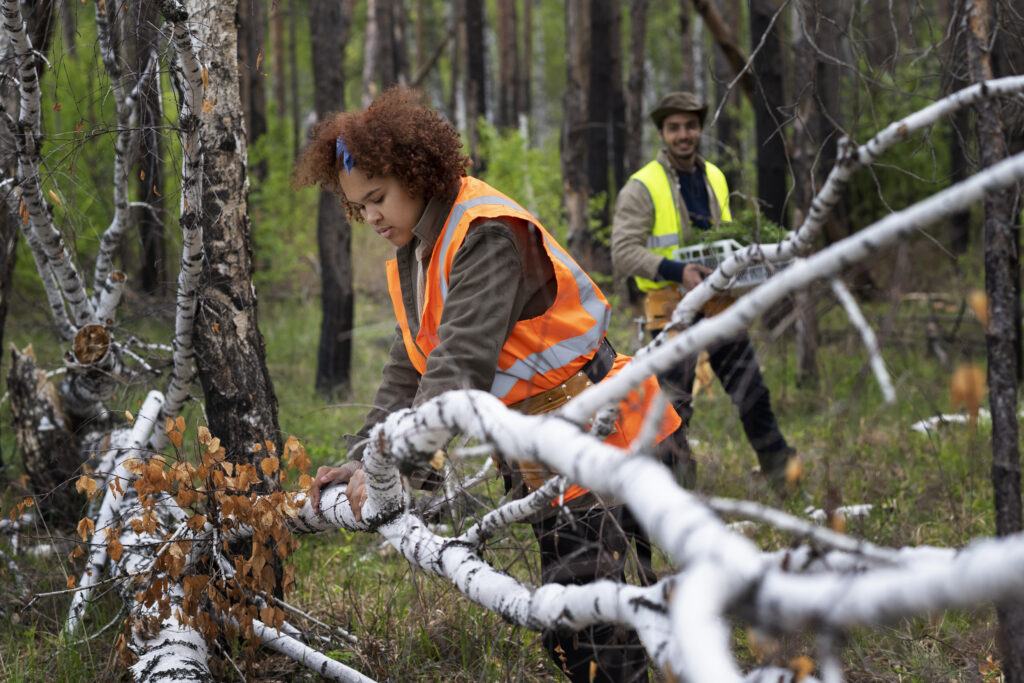
The best practice to prune a mature tree is to prune only what is necessary, preserve the natural structure of the tree, follow accepted arboricultural standards, and use a qualified arborist who understands tree biology, risk and long-term tree health. This guide explains how professional arborists approach mature tree pruning, what should be avoided, and how the right pruning can reduce risk without causing unnecessary damage.
Quick Summary
Best practice for pruning mature trees includes:
- Inspecting the tree before pruning
- Having a clear pruning objective
- Removing dead, damaged or hazardous branches
- Avoiding excessive canopy removal
- Making correct pruning cuts
- Protecting the branch collar
- Avoiding tree lopping and topping
- Following AS 4373 Pruning of Amenity Trees where appropriate
- Considering wildlife, habitat and seasonal timing
- Using qualified arborists for large or high-risk trees
For mature trees, less is often better when pruning is planned properly.
Table of Contents
- Why Mature Tree Pruning Needs Professional Care
- Start With a Proper Tree Inspection
- Set a Clear Pruning Objective
- Follow Australian Pruning Standards
- Remove Dead, Diseased and Damaged Branches
- Reduce Risk Without Over-Pruning
- Preserve the Natural Shape of the Tree
- Use Correct Pruning Cuts
- Avoid Tree Lopping and Topping
- Manage Canopy Weight Carefully
- Consider Clearance Around Buildings and Roads
- Protect Wildlife and Habitat
- Understand the Best Timing for Pruning
- Use the Right Equipment and Safety Methods
- Know When Pruning Is Not Enough
- Common Mistakes in Mature Tree Pruning
- Real World Examples
- FAQs
- Summary
- Call Banyan Tree Care
1. Why Mature Tree Pruning Needs Professional Care
Mature trees are valuable landscape assets.
They provide:
- Shade
- Privacy
- Habitat
- Cooling
- Wind protection
- Streetscape appeal
- Property value
- Biodiversity benefits
Because they are large and slow to recover, mature trees need careful pruning.
Poor pruning can create long-term problems such as:
- Large wounds
- Internal decay
- Weak regrowth
- Sunburn on exposed limbs
- Canopy imbalance
- Increased storm failure risk
- Reduced tree health
A qualified Arborist Melbourne understands how mature trees respond to pruning and can make decisions that support both safety and tree preservation.
2. Start With a Proper Tree Inspection
Every mature tree should be inspected before pruning begins.
The arborist should assess:
- Tree species
- Tree age and size
- Canopy density
- Branch structure
- Deadwood
- Cracks
- Cavities
- Fungal growth
- Previous pruning wounds
- Root zone condition
- Surrounding targets
This inspection helps determine whether pruning is needed, what type of pruning is suitable, and whether there are safety concerns that require further assessment.
Pruning without inspection often leads to unnecessary cutting.
A mature tree may not need heavy pruning. It may only need deadwood removal, minor clearance pruning or ongoing monitoring.
3. Set a Clear Pruning Objective
Best practice pruning always starts with a clear purpose.
Common pruning objectives include:
- Removing dead branches
- Reducing risk over a roof or driveway
- Improving clearance from buildings
- Managing storm-damaged limbs
- Reducing end weight on heavy branches
- Improving canopy balance
- Managing branch defects
- Supporting long-term tree health
- Improving pedestrian or vehicle clearance
Each cut should support the objective.
A professional arborist does not prune a mature tree simply to “tidy it up” or make it smaller without reason. Unnecessary pruning can reduce the tree’s energy reserves and create avoidable wounds.
4. Follow Australian Pruning Standards
Professional tree pruning Melbourne should follow recognised arboricultural practice.
AS 4373 Pruning of Amenity Trees is the key Australian Standard used for pruning trees in urban environments.
It provides guidance on:
- Correct pruning methods
- Branch removal
- Reduction pruning
- Crown lifting
- Crown thinning
- Structural pruning
- Avoiding harmful pruning practices
- Preserving tree health and structure
Following recognised standards helps ensure pruning is planned, measured and suitable for the tree.
This is especially important for mature trees near homes, roads, schools, commercial sites and public spaces.
5. Remove Dead, Diseased and Damaged Branches
Deadwood removal is one of the most common and useful types of mature tree pruning.
Dead branches can fall during:
- Strong winds
- Heavy rain
- Hot weather
- Natural branch shedding
- Storm events
Removing dead, diseased or damaged branches can reduce risk around:
- Homes
- Driveways
- Footpaths
- Schools
- Car parks
- Commercial buildings
- Public access areas
Deadwood removal should still be done carefully.
Some dead branches provide habitat for birds, insects and possums. Where safe and appropriate, habitat features may be retained in low-risk areas.
A qualified arborist balances safety with environmental value.
6. Reduce Risk Without Over-Pruning
Risk reduction does not always require heavy pruning.
In many cases, the best approach is targeted pruning.
This may include:
- Removing a cracked branch
- Reducing end weight on a long limb
- Removing deadwood over a driveway
- Pruning a branch away from a roof
- Reducing a storm-damaged section
- Managing a weak branch union
Heavy canopy reduction can stress mature trees and increase future problems.
Removing too much foliage reduces the tree’s ability to produce energy. It can also trigger weak regrowth that requires more maintenance later.
Good arborist services Melbourne focus on reducing risk while keeping as much healthy canopy as possible.
7. Preserve the Natural Shape of the Tree
Mature trees have a natural form that should be respected.
Best practice pruning works with the tree’s structure, rather than forcing it into an artificial shape.
This is especially important for:
- Gum trees
- Eucalyptus trees
- Oaks
- Elms
- Plane trees
- Ornamental pears
- Jacarandas
- Mature palms
- Native trees
Poor shaping can leave the tree unbalanced, exposed or structurally weaker.
Professional pruning aims to maintain:
- Natural canopy form
- Good branch spacing
- Balanced weight distribution
- Healthy foliage
- Long-term stability
A mature tree should still look like the same tree after pruning, only safer and better managed.
8. Use Correct Pruning Cuts
Correct pruning cuts are essential.
Poor cuts can damage the branch collar and allow decay to enter the trunk or major limbs.
A professional pruning cut should:
- Be made in the correct position
- Avoid leaving long stubs
- Avoid cutting flush against the trunk
- Protect the branch collar
- Reduce tearing of bark
- Be appropriate for branch size
Large branches may require a multi-step cutting method to prevent bark tearing.
Incorrect cuts are a common cause of decay in mature trees.
Once decay enters a large wound, the tree may not be able to fully contain it. This can create future structural weakness.
9. Avoid Tree Lopping and Topping
Tree lopping is one of the most damaging practices for mature trees.
Aggressive lopping or topping can lead to:
- Large open wounds
- Decay
- Weak regrowth
- Sunburn
- Canopy stress
- Loss of natural form
- Increased maintenance costs
- Higher future failure risk
Many homeowners request tree lopping Melbourne because they want a tree made smaller quickly. A qualified arborist will usually recommend proper reduction pruning, crown thinning or selective branch management instead.
The aim is to manage the tree safely without damaging its long-term structure.
10. Manage Canopy Weight Carefully
Large mature branches can develop excessive end weight.
This is common where branches:
- Extend over roofs
- Grow horizontally
- Have heavy foliage at the tips
- Have old pruning wounds
- Have weak attachments
- Have storm damage
- Grow towards one side of the tree
Selective reduction pruning can reduce load on specific branches.
This does not mean cutting the whole tree back heavily.
It means reducing the right branch sections in the right way.
Managing canopy weight is often useful for mature trees near homes, garages, schools, car parks and commercial properties.
11. Consider Clearance Around Buildings and Roads
Mature trees often need pruning for clearance.
This may include clearance from:
- Roofs
- Gutters
- Walls
- Solar panels
- Driveways
- Footpaths
- Roads
- Signs
- Powerlines
- Fences
- Neighbouring properties
Clearance pruning should be planned so the tree remains balanced.
Removing all branches from one side can create structural imbalance and poor appearance.
For branches near powerlines, homeowners should use the relevant authority or qualified professionals approved for that type of work. Powerline pruning can be extremely dangerous and should never be attempted by untrained people.
12. Protect Wildlife and Habitat
Mature trees often support wildlife.
They may contain:
- Bird nests
- Possum dreys
- Hollows
- Bees
- Insects
- Roosting sites
- Habitat deadwood
Before pruning, arborists should check for wildlife where practical.
If active nesting or habitat is present, pruning may need to be delayed, modified or carried out with extra care.
Habitat branches may be retained where they do not present unacceptable risk.
Good tree care protects people while respecting the ecological value of mature trees.
13. Understand the Best Timing for Pruning
The best pruning time depends on the species, season, tree health and reason for pruning.
Some pruning can be done year-round when safety is a concern.
However, for non-urgent work, arborists may consider:
- Avoiding extreme heat
- Avoiding drought stress periods
- Avoiding heavy pruning during active stress
- Considering flowering or fruiting cycles
- Considering wildlife nesting periods
- Avoiding unnecessary pruning before severe weather where possible
Emergency pruning after storm damage is different from planned maintenance.
If a branch is cracked, hanging or dangerous, safety comes first.
For routine mature tree pruning, timing should support recovery and long-term health.
14. Use the Right Equipment and Safety Methods
Mature tree pruning is high-risk work.
It often involves:
- Working at height
- Chainsaws
- Climbing systems
- Elevated work platforms
- Ropes and rigging
- Large falling branches
- Nearby roofs, fences and vehicles
- Public access areas
- Powerlines
Professional tree cutters Melbourne use controlled methods to lower branches safely.
This protects:
- Workers
- Homes
- Gardens
- Vehicles
- Neighbouring properties
- The tree itself
DIY pruning of large mature trees is dangerous and can result in serious injury or property damage.
15. Know When Pruning Is Not Enough
Pruning can reduce risk, improve structure and extend the useful life of many mature trees.
Some trees require more than pruning.
A qualified arborist may recommend further assessment or Tree Removal Melbourne where there is:
- Severe trunk decay
- Major root failure
- Advanced fungal decay
- Large structural cracks
- Significant storm damage
- Severe canopy decline
- Dead tree condition
- Unacceptable risk near targets
Pruning should never be used to hide a serious structural problem.
Where a tree cannot be made reasonably safe through pruning, removal may be the most responsible recommendation.
16. Common Mistakes in Mature Tree Pruning
Many mature trees are damaged by poor pruning decisions.
Common mistakes include:
- Removing too much canopy
- Cutting large branches without reason
- Leaving long stubs
- Flush cutting against the trunk
- Topping the tree
- Lopping major limbs
- Ignoring decay and cracks
- Removing lower branches excessively
- Pruning during severe stress
- Using unqualified contractors
- Focusing only on appearance
- Ignoring wildlife habitat
- Pruning without checking council requirements
These mistakes can reduce tree health and increase future risk.
Professional pruning should improve the tree’s condition, safety and long-term value.
17. Real World Examples
Example 1: Mature Gum Tree Over a Driveway
A homeowner contacted Banyan Tree Care about a mature gum tree overhanging a driveway. They were worried about falling branches during strong winds and asked whether the tree should be removed.
Our arborist inspected the tree and found it was generally healthy, but several dead branches and one long lateral limb had excessive end weight.
Instead of recommending full tree removal Melbourne, the arborist recommended targeted deadwood removal and selective branch reduction.
The pruning reduced the risk over the driveway while retaining the mature tree’s shade, habitat and visual value.
Example 2: Large Tree Damaged by Previous Lopping
A commercial property had a large tree that had been heavily lopped years earlier. The regrowth was dense, upright and weakly attached around old pruning wounds.
The tree now required regular maintenance because the previous cuts had created long-term structural issues.
Banyan Tree Care recommended staged remedial pruning to reduce the most problematic regrowth and manage risk. The arborist also explained that the original lopping had created many of the current problems.
This shows why correct pruning from the start is so important.
Example 3: Mature Tree Near a Renovation Site
A builder needed clearance around a mature tree before scaffolding could be installed. Instead of allowing contractors to cut branches randomly, the property owner arranged professional tree pruning Melbourne.
The arborist selected branches carefully, maintained canopy balance and avoided unnecessary large wounds.
The construction work proceeded with safe clearance, and the tree remained healthy after the project.
FAQs
1. Why is pruning mature trees important?
Pruning mature trees helps manage safety, remove deadwood, reduce branch failure risk, improve clearance and support long-term tree health. Mature trees often grow near homes, driveways, roads and public areas, so targeted pruning can reduce hazards without removing the tree. The key is to prune only what is necessary and avoid excessive canopy loss.
2. How often should mature trees be pruned?
The frequency depends on species, condition, location and risk level. Some mature trees may only need inspection every few years with minor pruning as required. Trees near homes, schools, roads or commercial areas may need more regular assessment. A qualified arborist can recommend a suitable maintenance schedule after inspecting the tree.
3. What is the best pruning method for mature trees?
The best method depends on the tree and the objective. Common methods include deadwood removal, crown lifting, selective crown reduction, crown thinning and structural pruning. Best practice focuses on targeted cuts that reduce risk while preserving healthy canopy and natural form. Heavy lopping or topping should be avoided.
4. Is tree lopping the same as pruning?
No. Tree lopping usually involves cutting large limbs or topping a tree without proper regard for tree biology or structure. Professional pruning is selective, planned and carried out to support health, safety and long-term stability. Lopping can cause decay, weak regrowth and future hazards, especially in mature trees.
5. Can pruning make a mature tree safer?
Yes, when done correctly. Pruning can remove deadwood, reduce weight on heavy limbs, manage cracked branches and improve clearance from buildings or access areas. However, pruning cannot fix every structural problem. If a tree has severe decay, root failure or major instability, a Tree Risk Assessment may be required.
6. How much canopy can be removed from a mature tree?
As little as necessary should be removed. Excessive canopy removal can stress mature trees and reduce their energy production. The amount depends on species, health, age, site conditions and pruning objective. A qualified arborist will avoid unnecessary heavy pruning and follow accepted arboricultural standards.
7. Should mature trees be pruned before storm season?
A professional inspection before storm season can be very useful, especially for trees near homes, roads or public areas. Dead branches, cracked limbs and heavy overextended branches can be identified and managed before strong winds expose those weaknesses. Preventative pruning is often safer and more affordable than emergency tree work.
8. Can pruning damage a mature tree?
Yes. Poor pruning can damage mature trees permanently. Large incorrect cuts, topping, flush cuts, excessive canopy removal and rough branch removal can lead to decay, stress and weak regrowth. Mature trees recover more slowly than young trees, so professional pruning is important.
9. When is the best time to prune mature trees?
The best time depends on species, tree health and the reason for pruning. Safety-related pruning may be needed at any time. Routine pruning is often best planned outside periods of extreme heat, drought stress or active wildlife nesting. A local arborist can recommend suitable timing for Melbourne conditions.
10. Do I need council approval to prune a mature tree?
You may need council approval if the tree is protected by local laws, planning overlays, heritage controls or native vegetation rules. Requirements vary between Melbourne councils. Before carrying out significant pruning, especially on large or protected trees, check council requirements or speak with a qualified arborist.
11. Can mature trees be reduced in height?
Some height reduction may be possible using proper reduction pruning, but mature trees should not be topped. Topping creates large wounds, weak regrowth and long-term structural problems. If height is a concern, an arborist can assess whether selective reduction, canopy management or other options are suitable.
12. What is crown thinning?
Crown thinning is the selective removal of smaller branches within the canopy to reduce density while maintaining the tree’s natural shape. It may improve airflow and reduce some wind resistance, but it must be done carefully. Over-thinning can stress the tree and create weak or exposed branches.
13. What is crown lifting?
Crown lifting removes selected lower branches to provide clearance under the tree. It may be used for footpaths, driveways, roads, buildings or garden access. Crown lifting should be balanced and not remove too many lower limbs, as this can affect trunk taper, canopy balance and tree appearance.
14. Should dead branches always be removed?
Dead branches should usually be removed when they are over homes, driveways, paths, roads or areas where people gather. In low-risk locations, some deadwood may provide habitat and can sometimes be retained. An arborist can decide what should be removed based on safety and environmental value.
15. Who should prune mature trees?
Mature trees should be pruned by qualified arborists or experienced tree professionals who understand tree biology, safety, rigging and Australian pruning standards. Large tree pruning is dangerous and should not be attempted without proper training and equipment. Banyan Tree Care provides professional arborist services Melbourne for mature tree pruning, risk assessment and safe tree management.
Summary
The best practice for pruning mature trees is to inspect first, prune with a clear purpose, use correct cuts, preserve natural structure and avoid unnecessary canopy removal. Mature trees are valuable and sensitive, so poor pruning can create long-term problems that are expensive or impossible to reverse. Proper pruning can reduce risk, improve clearance, manage storm damage and support long-term tree health.
A qualified arborist can determine whether your mature tree needs deadwood removal, structural pruning, canopy reduction, crown lifting, monitoring or, in some cases, safe tree removal. The right approach protects your property while preserving the benefits mature trees provide.
Call Banyan Tree Care for Mature Tree Pruning in Melbourne
If you have a mature tree that needs pruning, clearance, risk assessment or professional advice, Banyan Tree Care can help.
We provide expert tree pruning Melbourne, arborist services Melbourne, Tree Risk Assessments, Arborist Reports, stump grinding Melbourne, tree maintenance and safe tree removal Melbourne where removal is genuinely required. Contact Banyan Tree Care on 0432 277 627 to arrange a professional arborist assessment and pruning quote.