
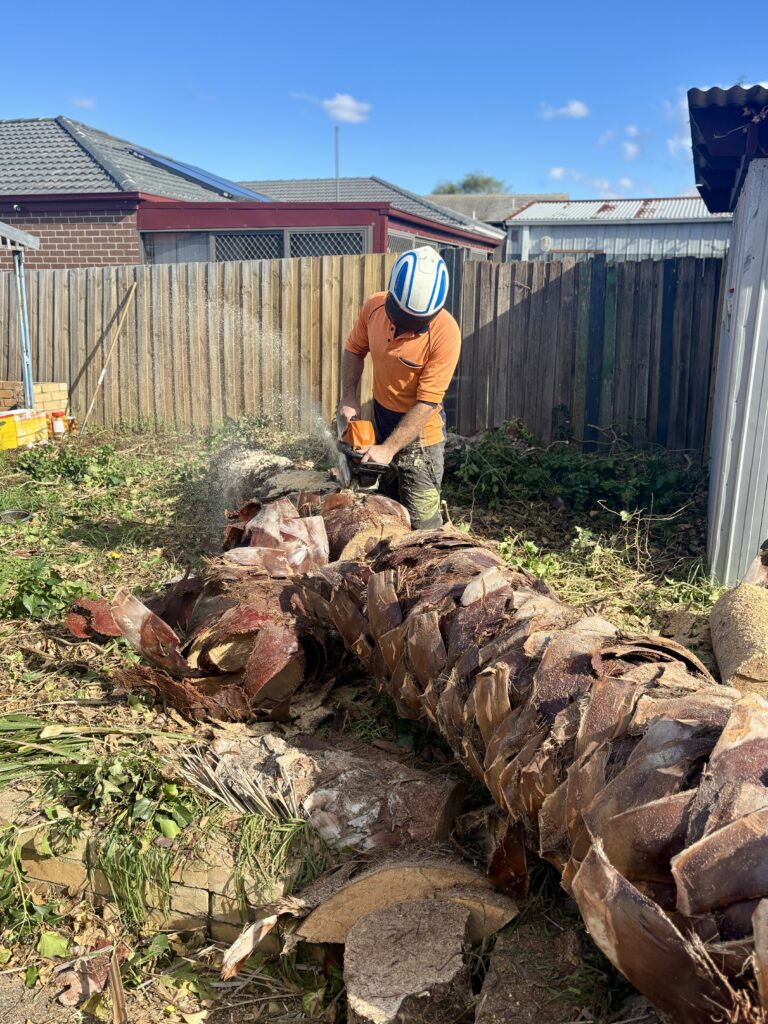
A Dying Palm Tree will often show clear warning signs long before it becomes a safety hazard. Yellowing or browning fronds, a thinning canopy, slow growth, trunk damage, fungal growth, and leaning are some of the most common indicators that a palm is struggling. While some problems can be corrected with proper care and maintenance, others may point to serious disease, root failure, or structural issues. In this article, we’ll cover the most common signs of a dying palm tree, what causes them, and when it’s time to seek professional help.
Yellowing or Browning Fronds
One of the earliest signs of a struggling palm tree is discoloured leaves.
Common causes include:
- Nutrient deficiencies
- Overwatering
- Underwatering
- Poor soil conditions
- Disease or pest activity
While older fronds naturally die off over time, widespread yellowing throughout the canopy often indicates a larger issue.
A Thinning or Sparse Canopy
A healthy palm should have a full, vibrant crown of fronds.
If the canopy starts looking sparse or uneven, it may indicate:
- Nutrient deficiencies
- Root problems
- Pest infestations
- Environmental stress
A thinning canopy is often a sign that the tree is not producing healthy new growth.
Slow or Stunted Growth
Palm trees naturally grow at different rates depending on the species, but a noticeable slowdown in growth can indicate poor health.
Factors that can contribute include:
- Lack of nutrients
- Root damage
- Poor drainage
- Soil compaction
If a palm appears to have stopped growing altogether, it may require professional assessment.
Dead or Hanging Fronds
Dead fronds are normal occasionally, but excessive dead growth can signal trouble.
Watch for:
- Large numbers of dead fronds
- Fronds dying prematurely
- Fronds remaining attached long after they die
Dead fronds can also become a safety hazard if they fall unexpectedly.
Soft Spots or Decay in the Trunk
A palm tree trunk should feel solid and stable.
Warning signs include:
- Soft or spongy areas
- Cracks in the trunk
- Visible holes
- Signs of rot
Trunk damage often indicates internal decay, which can affect the tree’s structural integrity.
Leaning or Unstable Growth
A slight lean may be natural for some palms. However, a sudden lean or increasing tilt can indicate:
- Root failure
- Soil movement
- Storm damage
- Structural weakness
A leaning palm should be inspected promptly, especially if it is near buildings, driveways, or outdoor living areas.
Fungal Growth Around the Base
Mushrooms or fungal growth near the trunk can be a sign of decay below the surface.
This may indicate:
- Root rot
- Excess moisture
- Internal deterioration
Fungal growth should never be ignored, as it often points to deeper health issues.
Reduced or Distorted New Growth
Healthy palms regularly produce new fronds from the crown.
Warning signs include:
- Smaller-than-normal fronds
- Deformed growth
- Discoloured new leaves
- No new growth at all
Problems affecting the crown can be particularly serious because this is the palm’s primary growing point.
Pest Infestations
Insects can weaken a palm tree and make it more vulnerable to disease.
Signs of pest activity include:
- Holes in the trunk
- Damaged fronds
- Excessive leaf drop
- Visible insects around the tree
Early treatment can often prevent significant damage.
When to Take Action
The earlier a problem is identified, the greater the chance of saving the tree. If you notice multiple symptoms such as yellowing fronds, canopy thinning, trunk decay, or leaning, it’s best to arrange a professional inspection.
A qualified arborist can determine whether the palm can be restored through maintenance and pruning or whether removal is the safest option.
Need Professional Palm Tree Advice?
If your palm tree is showing signs of decline, Banyan Tree Care can help. Our experienced arborists assess palm health, identify potential hazards, and provide practical recommendations to keep your property safe and your trees in the best possible condition.