
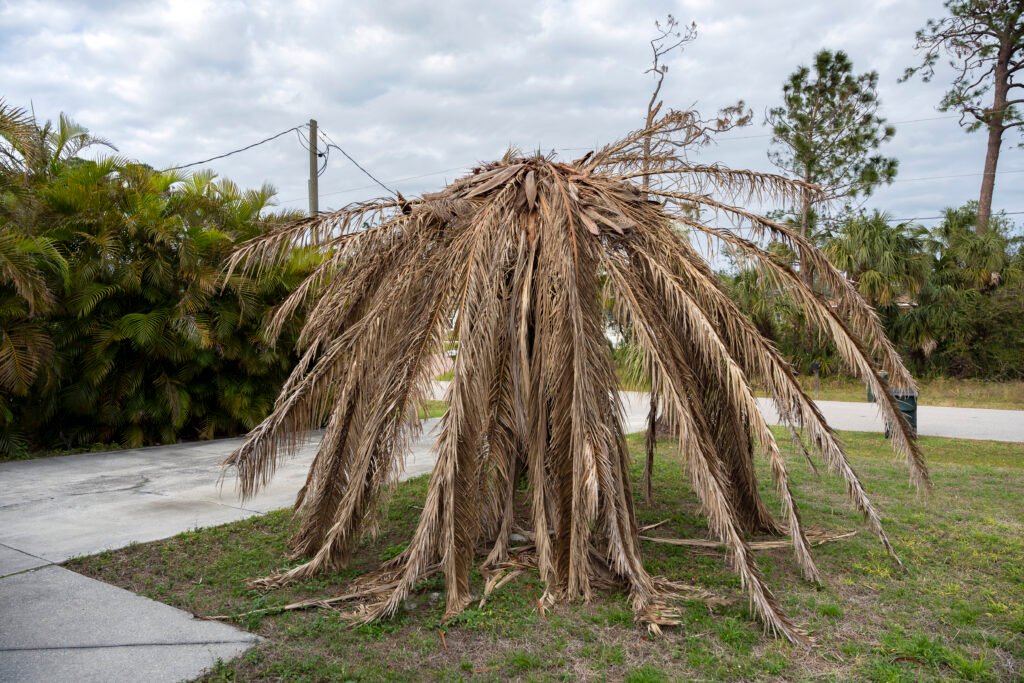
A dead tree in your backyard should always be taken seriously. Once a tree dies, it stops defending itself against decay, pests, fungi and weather damage. The timber becomes weaker over time, branches can break without much warning, and the whole tree may eventually fail from the trunk or roots.
That does not mean every dead tree will fall immediately. Some may stand for months or years. The concern is that dead trees become less predictable as they deteriorate. If the tree is near a house, fence, driveway, shed, outdoor area, pool, neighbouring property or children’s play space, it should be inspected by a professional Tree Services Melbourne provider as soon as possible.
Quick Summary
A dead backyard tree may be dangerous because of:
- Falling dead branches
- Weak or brittle timber
- Trunk decay
- Root failure
- Fungal breakdown
- Termite or borer activity
- Storm damage risk
- Sudden limb drop
- Leaning or cracking
- Damage to nearby structures
- Risk to people, pets and property
Dead trees are usually easier and safer to remove before they become unstable.
Table of Contents
- Why Dead Trees Become Unsafe
- Signs a Dead Tree May Be Dangerous
- What Can Happen if You Leave It
- Can a Dead Tree Be Retained?
- Why Dead Tree Removal Can Become More Expensive
- Council Approval and Dead Trees
- What Homeowners Should Avoid
- FAQs
- Summary
- Call Banyan Tree Care
1. Why Dead Trees Become Unsafe
A living tree can respond to wounds, grow around defects and continue moving water through its system. A dead tree no longer has that ability. Once it dies, decay organisms begin breaking down the wood.
Over time, this can weaken:
- Branches
- Trunk sections
- Root plate
- Major unions
- Bark attachment
- Internal timber
Dead branches can become brittle and snap during wind, rain or even calm conditions. The trunk may also become hollow or soft inside while still standing upright.
A dead tree may look stable from a distance, but its strength is gradually reducing. This is why professional tree assessment is important before deciding to leave it.
2. Signs a Dead Tree May Be Dangerous
Some warning signs suggest the tree may already be unsafe.
Look for:
- Large dead branches
- Peeling or falling bark
- Cracks in the trunk
- Hollow sections
- Fungal growth near the base
- Termite activity
- Sawdust-like material
- Sudden leaning
- Soil lifting around roots
- Broken limbs caught in the canopy
- Soft or crumbly timber
- Dead limbs over buildings or fences
The location matters as much as the condition. A dead tree in the middle of an unused paddock may be lower risk. A dead tree over a house, driveway, garage, footpath or neighbour’s yard is a much bigger concern.
3. What Can Happen if You Leave It
Leaving a dead tree can create several problems.
Possible outcomes include:
- Branches falling onto lawns or paths
- Damage to roofs, gutters or fences
- Trunk failure during storms
- Pest activity spreading into nearby timber
- Increased difficulty removing the tree later
- Neighbour disputes if branches overhang
- Damage to gardens, sheds or vehicles
- Emergency tree removal after failure
A dead tree can also become a liability issue if it was obviously unsafe and no action was taken.
Many homeowners wait because the tree has been standing for a long time. The problem is that dead timber can deteriorate quietly. Once it becomes brittle or unstable, removal may require more care, more equipment and higher cost.
4. Can a Dead Tree Be Retained?
Sometimes a dead tree may be retained as habitat if it is in a safe location. Standing dead trees can provide nesting hollows, insect habitat and food sources for birds and wildlife.
Retention may be considered if:
- The tree is far from people and buildings
- Falling branches will not damage property
- The trunk is stable
- The site is low-use
- Wildlife habitat is important
- The tree can be reduced to a safer habitat pole
In suburban backyards, full retention is often not practical if the tree is close to homes, fences, play areas or access routes.
An arborist may recommend reducing the tree to a habitat stump or removing hazardous branches while keeping some ecological value where safe and suitable.
5. Why Dead Tree Removal Can Become More Expensive
Dead Tree Removal can be more complex than removing a healthy tree. Brittle timber may break unexpectedly. Decayed trunks may be unsafe to climb. Branches may not hold rigging loads properly.
This can mean the crew needs:
- Elevated work platforms
- Extra rigging
- More controlled dismantling
- Larger exclusion zones
- Additional workers
- Careful access planning
- Stump grinding equipment
- Waste removal planning
If the dead tree is left too long, the risk increases and removal may become harder.
This is why early tree removal Melbourne advice is usually better. A planned tree removal service is safer and more predictable than emergency removal after the tree has partly collapsed.
6. Council Approval and Dead Trees
Some dead trees may still be affected by council rules, depending on the property, species, size, planning overlays or local vegetation controls. Requirements vary across Melbourne.
In some cases, council may allow removal of a dead or dangerous tree with evidence. In other situations, they may ask for photos, an arborist inspection or a written report before work proceeds.
Before removing a large dead tree, especially if it is protected or located on a development site, check whether approval is required.
A qualified arborist can inspect the tree, document its condition and advise whether an Arborist Report or permit support may be needed.
7. What Homeowners Should Avoid
Dead trees can be unpredictable, so avoid taking risks.
Do not:
- Stand under dead branches
- Let children play near the tree
- Park vehicles beneath it
- Climb the tree yourself
- Cut large limbs without training
- Assume it is safe because it has stood for years
- Ignore cracks, fungi or leaning
- Delay inspection after storms
- Use unqualified tree cutters for complex removals
- Remove a protected tree without checking council requirements
Dead wood can split, drop or shatter unexpectedly. Large dead limbs should be handled by experienced tree removal professionals with suitable equipment.
FAQs
1. Is a dead tree always dangerous?
A dead tree is not always immediately dangerous, but it becomes more hazardous over time as decay, pests and weather weaken it. Risk depends on size, condition and location. Trees near homes, driveways or play areas should be inspected quickly. Even low-risk trees still require professional assessment.
2. How long can a dead tree stand before falling?
There is no set timeframe. Some dead trees stand for years, others fail quickly due to storms, decay, termites or root issues. Internal damage is often hidden, making failure unpredictable. Because of this uncertainty, dead trees should be assessed early, especially in residential areas.
3. Should I remove a dead tree from my backyard?
In most suburban yards, yes—especially if the tree is near structures or showing decay, cracks or leaning. Some low-risk trees may be retained for habitat, but this should be assessed by an arborist. They can recommend removal, reduction or monitoring based on safety and location.
4. Can a dead tree attract termites or pests?
Yes. Dead wood can attract termites, borers and fungi. While this doesn’t always spread to homes, nearby structures may be at risk. Decay also weakens the tree, making removal harder. A tree services Melbourne professional can assess risk and recommend removal, stump grinding or safe retention.
5. Is dead tree removal more dangerous than normal tree removal?
Often yes. Dead trees are brittle, hollow or structurally weak, making them unpredictable during cutting or rigging. Larger trees may require machinery and strict safety zones. Early removal is usually safer and simpler. A professional tree removal service will assess risk before starting work.
6. Do I need council approval to remove a dead tree?
Possibly. Rules vary across Melbourne depending on overlays, size and protections. Some dead trees can be removed with evidence, others require approval. An arborist can help with documentation or an Arborist Report if needed to support council requirements.
Summary
A dead tree in your backyard can be dangerous, especially if it is close to people, buildings, fences, cars or neighbouring property. Dead trees become weaker over time as branches, trunk and roots decay. Even if the tree has stood for a while, it may still fail without much warning.
The safest approach is to arrange a professional inspection early. An arborist can assess whether the tree should be removed, reduced for habitat, monitored, or documented for council requirements.
Call Banyan Tree Care for Dead Tree Removal in Melbourne
If you have a dead tree in your backyard, Banyan Tree Care can inspect it and recommend the safest next step.
We provide dead tree inspections, hazardous tree removal, emergency tree work, stump grinding, tree pruning, Tree Risk Assessments, Arborist Reports and professional tree removal Melbourne services for residential and commercial properties. Call Banyan Tree Care on 0432 277 627 to arrange a professional tree assessment.